Preston Lau: A Journey Through Memories, Tech, and Humanity
Welcome to my personal blog that delves into the intricate tapestry of personal albums and the fascinating intersection of ever-evolving technology and humanity. Come along on a journey with me as we delve into the seamless fusion of creativity, state-of-the-art AI and robotics, intricately interwoven within the tapestry of our shared awareness. Have fun!
From Tokyo to Nokogiriyama Day Trip: Ferry, Ropeway and Japan Largest Stone Buddha
AI Summary
If you live in Yokohama or nearby, there is a day trip that starts with a train, a short bus and a 40 minute ferry across Tokyo Bay, and ends at the cliffs of Nokogiriyama, a giant stone Buddha and a fishing port. This post covers the route, the history behind the Black Ship name you will see at the terminal, the real costs, and three places we ate and drank in Kanaya, Hota and Hamakanaya. The main takeaway is to treat it as a full day, check the ferry timetable and the ropeway hours first, and eat dinner earlier than you think you need to.
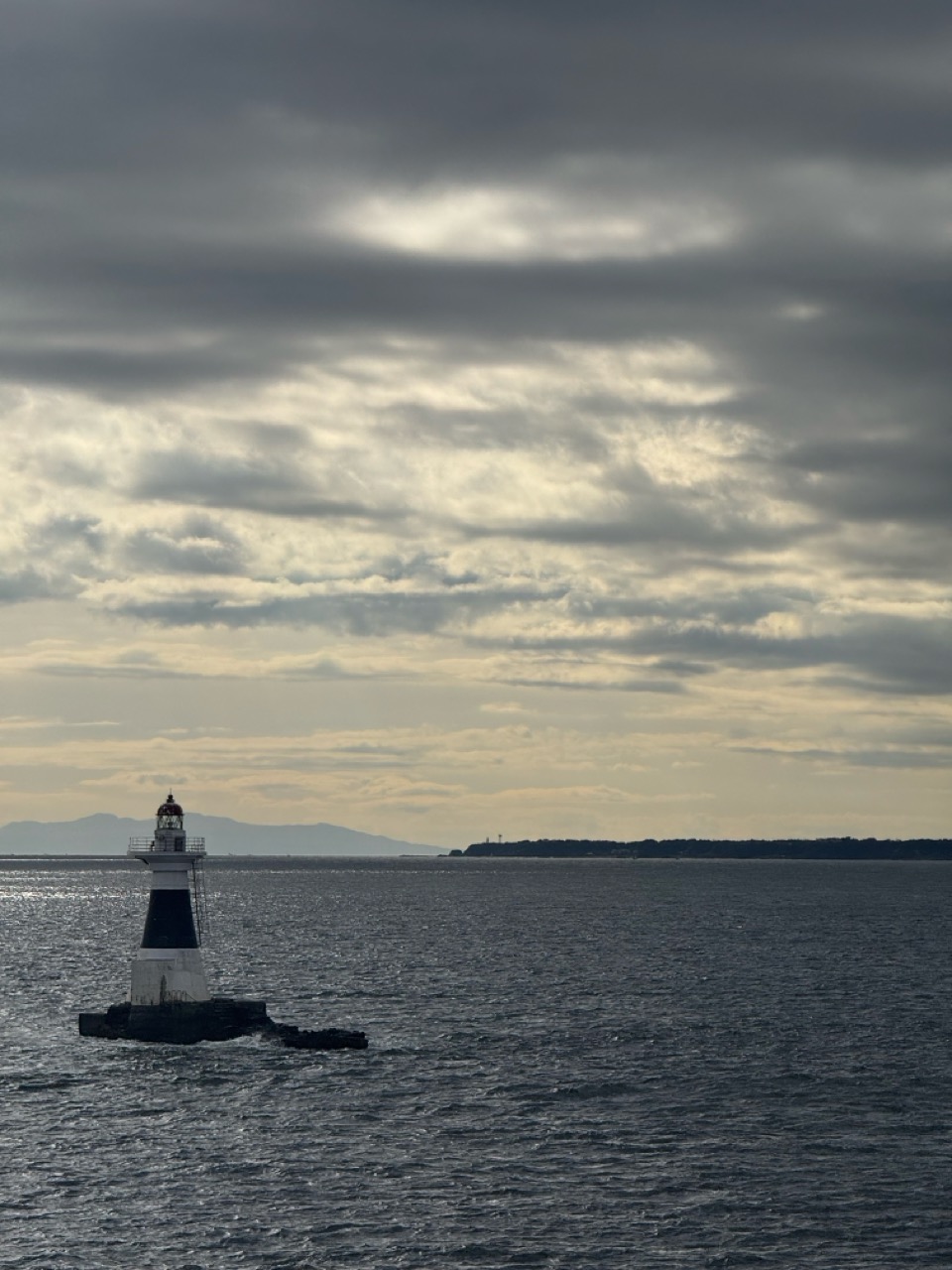
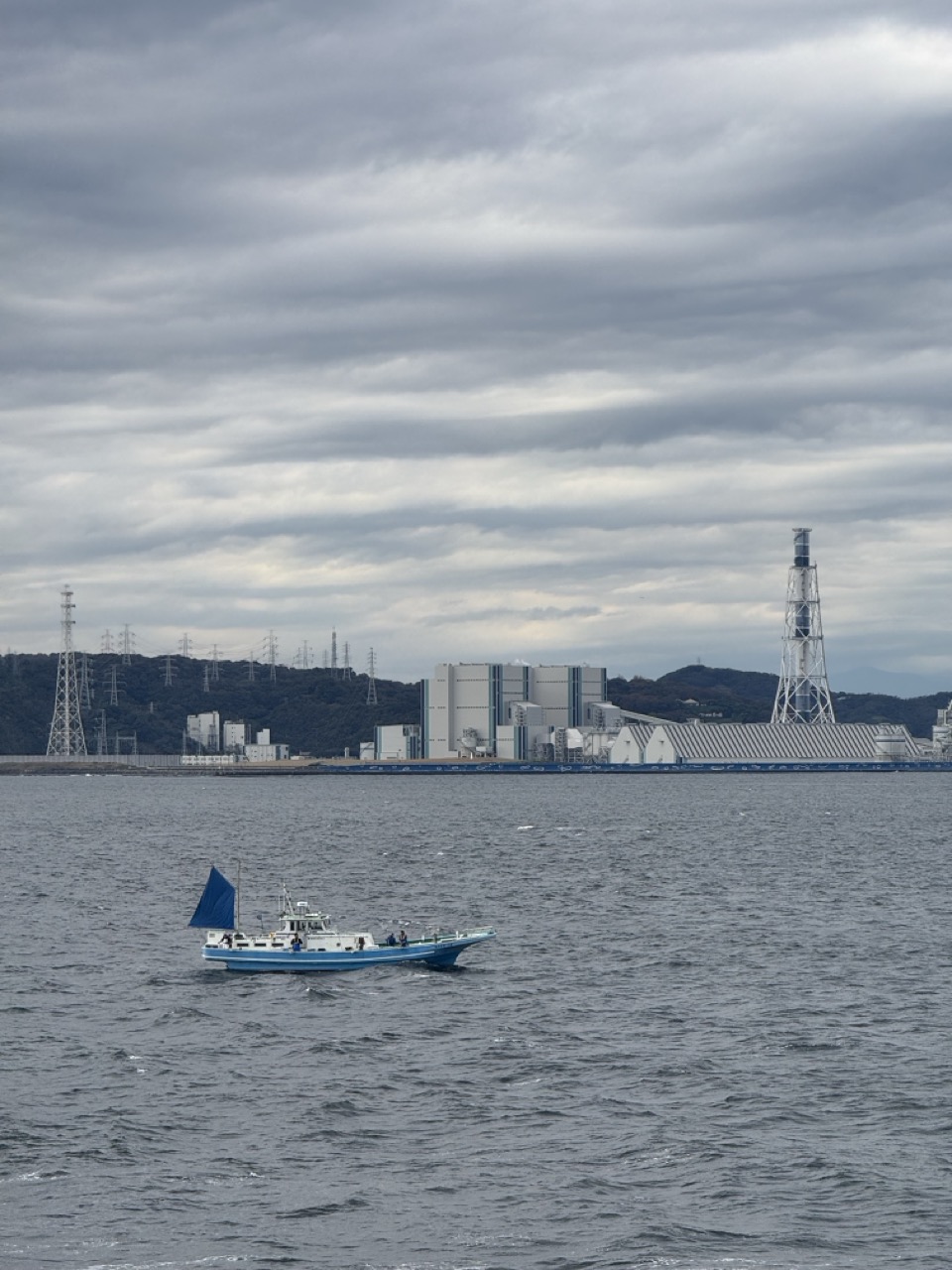
Nokogiriyama, which means Saw Tooth Mountain, is on the Chiba side of the bay, and most guides tell you to reach it by train around the bay or by car over the Aqua Line. Take the Keikyu line to the Miura Peninsula, cross the bay by ferry, and step off almost at the foot of the mountain. The crossing replaces a long train ride with something you will actually remember, and the ferry takes about 40 minutes with views of Mt Fuji, the Boso hills and large ships passing by.
Why Everything Here Is Called Black Ship
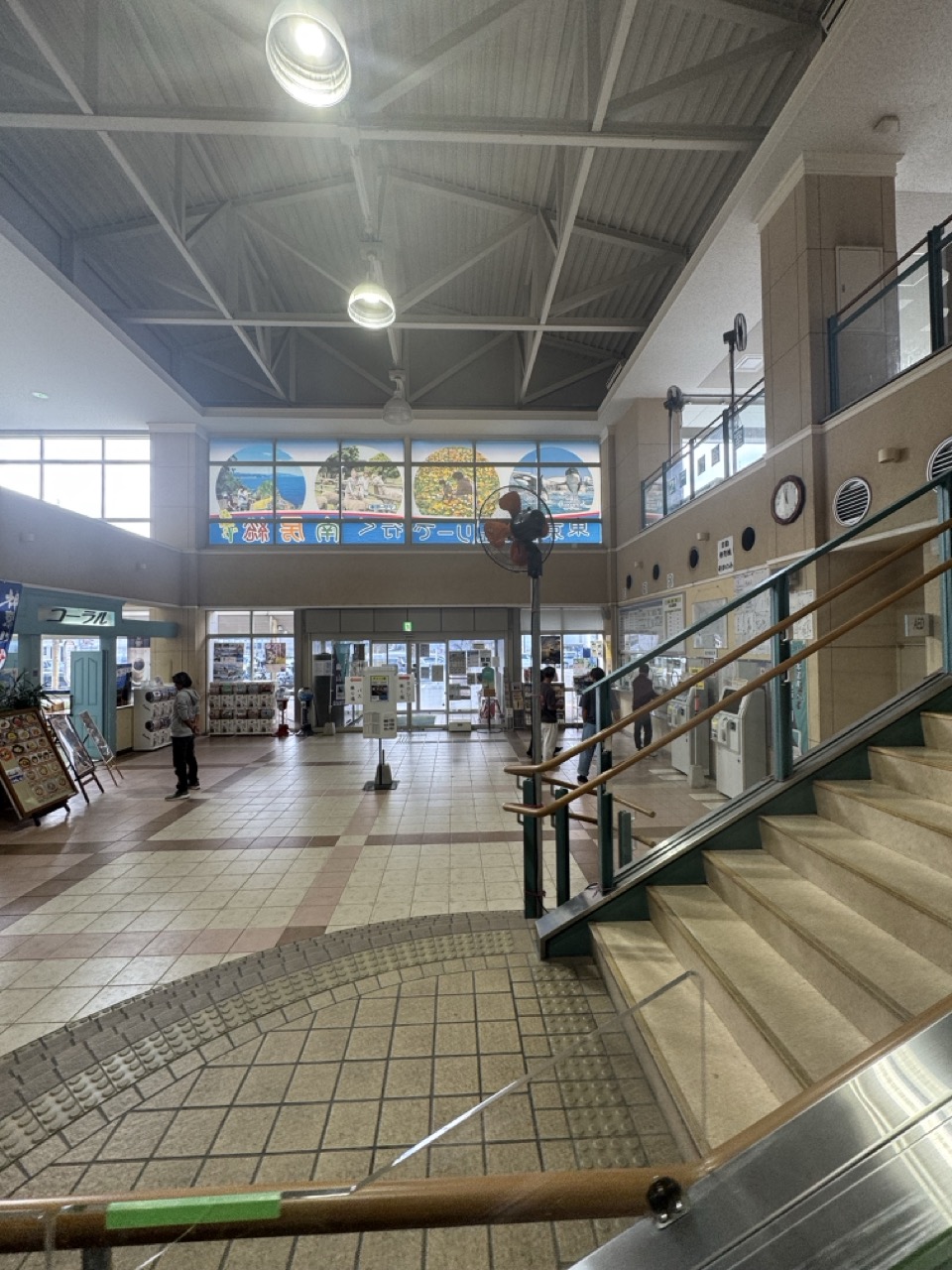
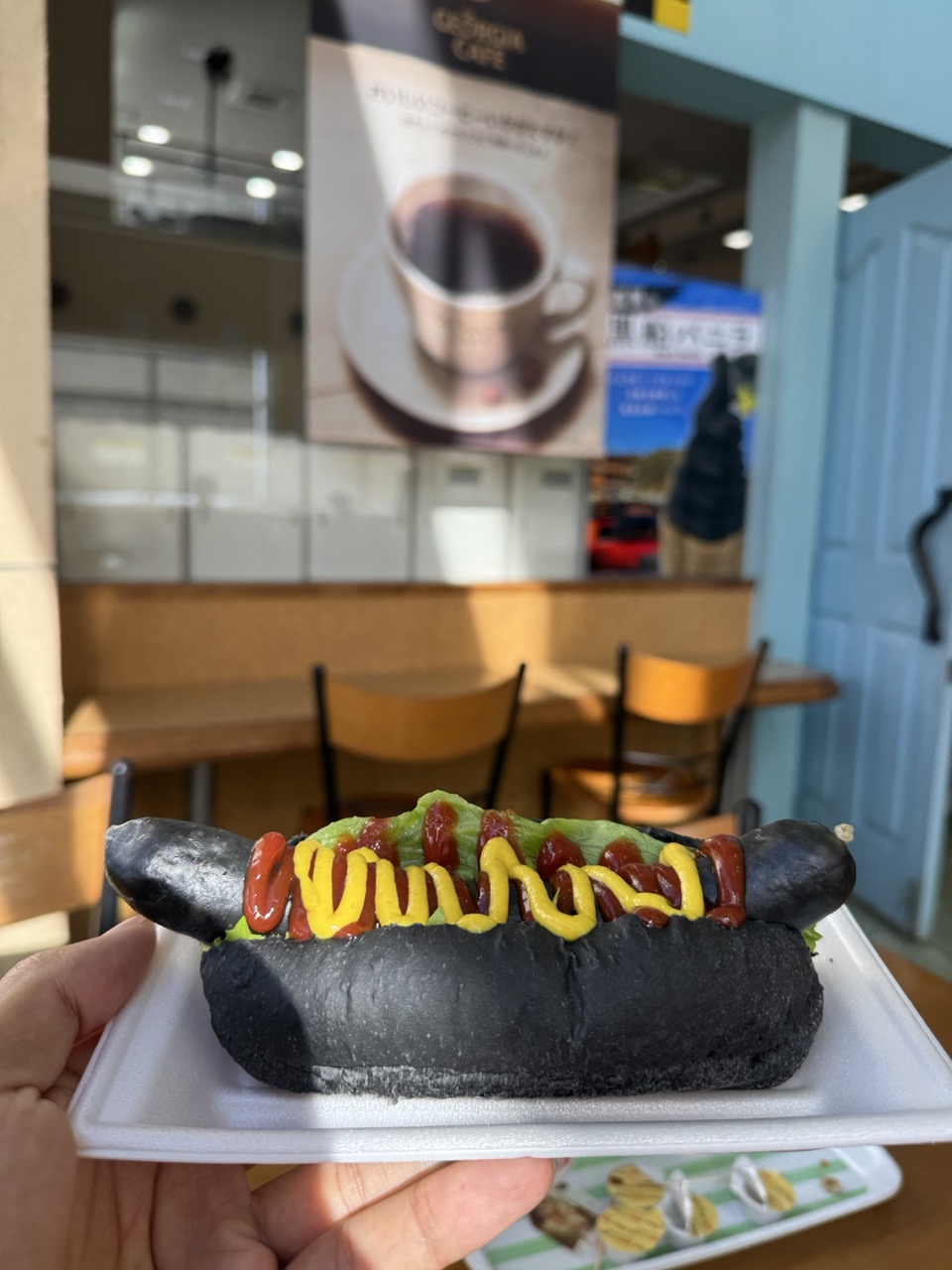
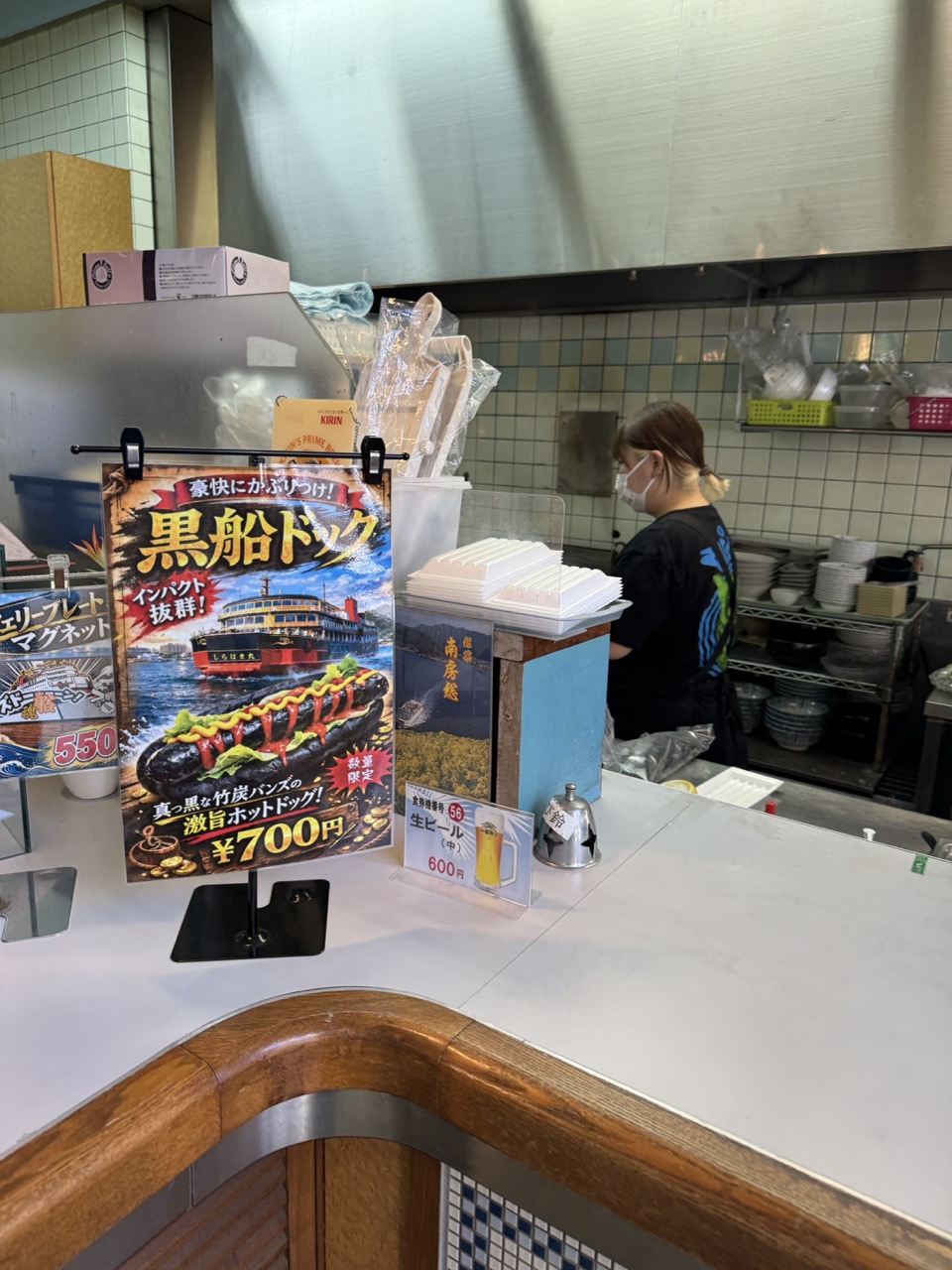
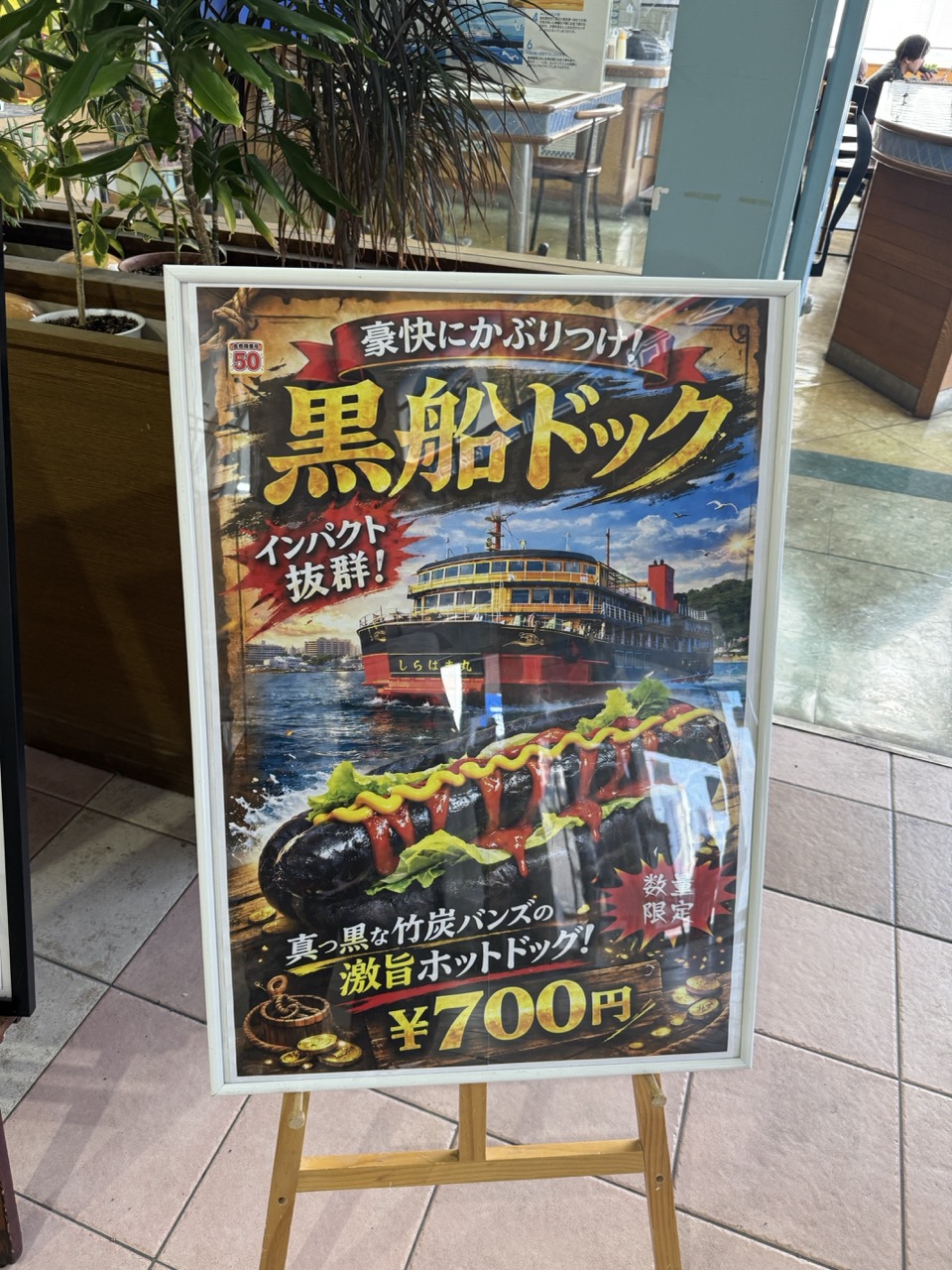
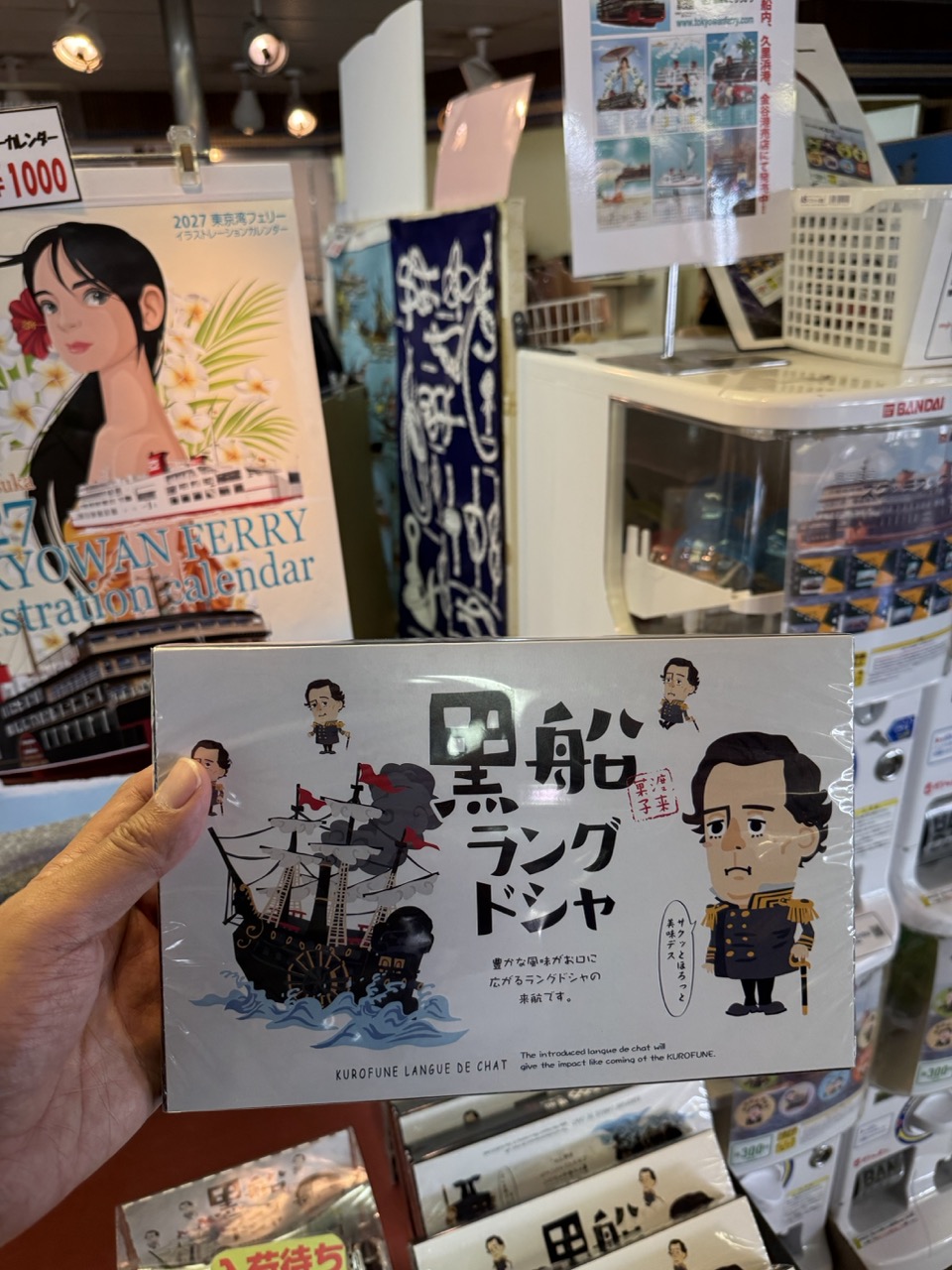
At the ferry terminal I had the Black Ship hot dog, and the name is not a gimmick. It points to the most famous thing that ever happened on this stretch of water. On July 8, 1853, US Navy Commodore Matthew Perry sailed into Uraga at the mouth of Tokyo Bay with four warships, and Japan, which had kept foreign contact tightly limited for more than two centuries, was suddenly forced to deal with the outside world.
Japanese people called the vessels kurofune, which means black ships. The reason is partly the dark paint, but the bigger factor was the smoke. Accounts differ, and one reference notes that the hulls were not actually black while the coal fired steam engines belched thick black smoke. Two of the ships were steamers towing sailing vessels against the wind, which looked frightening to anyone who had only seen sail.
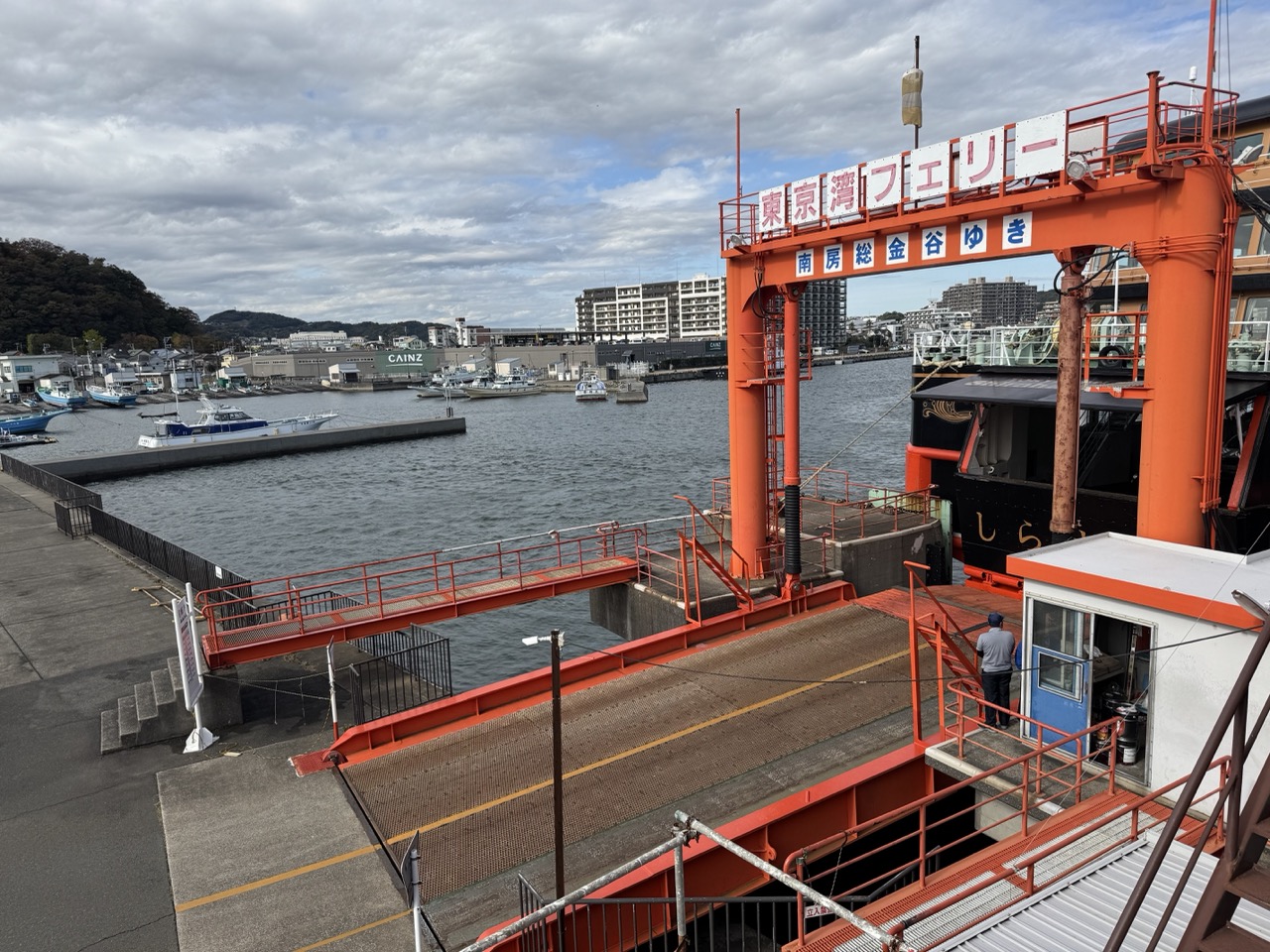
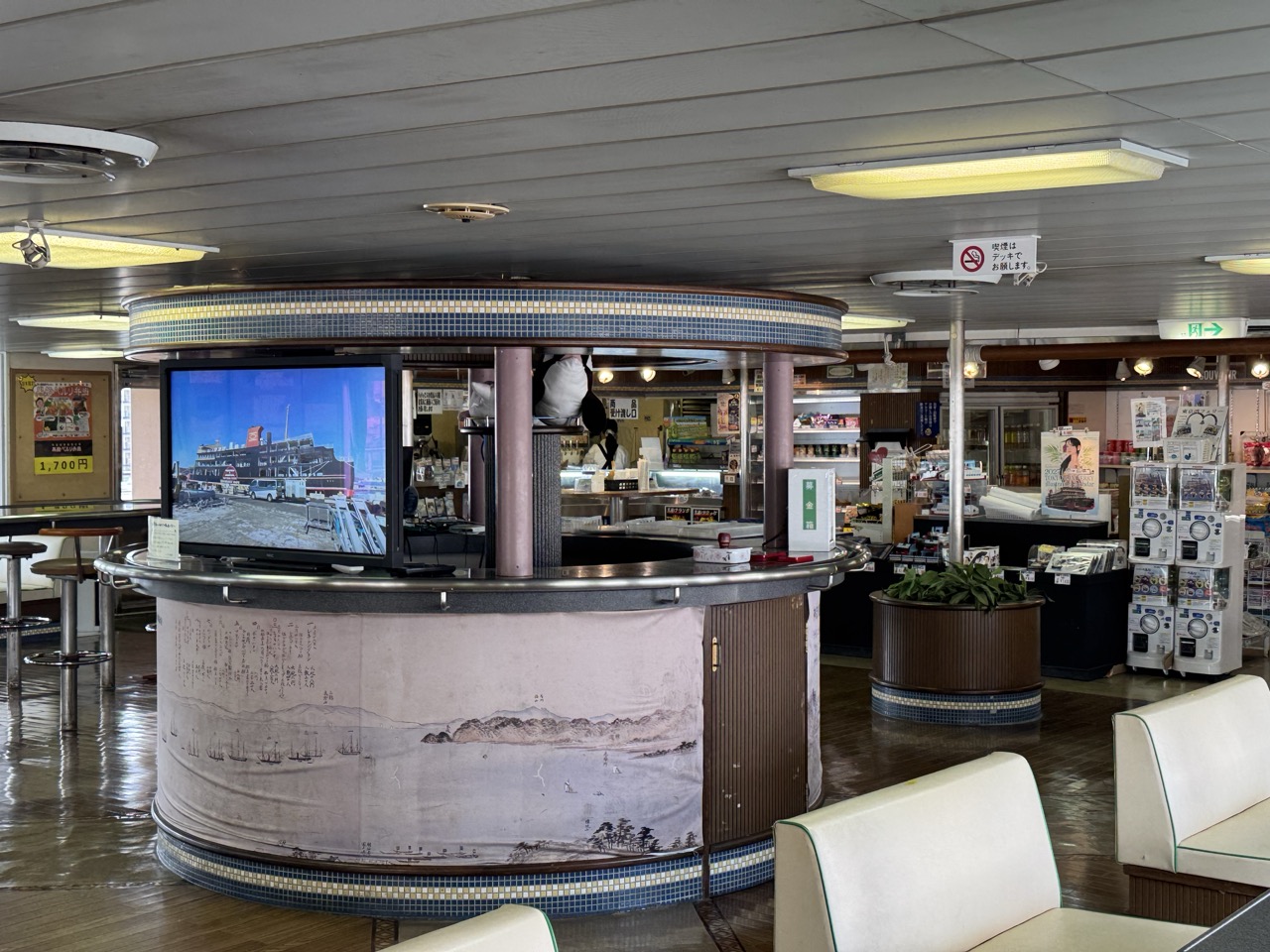
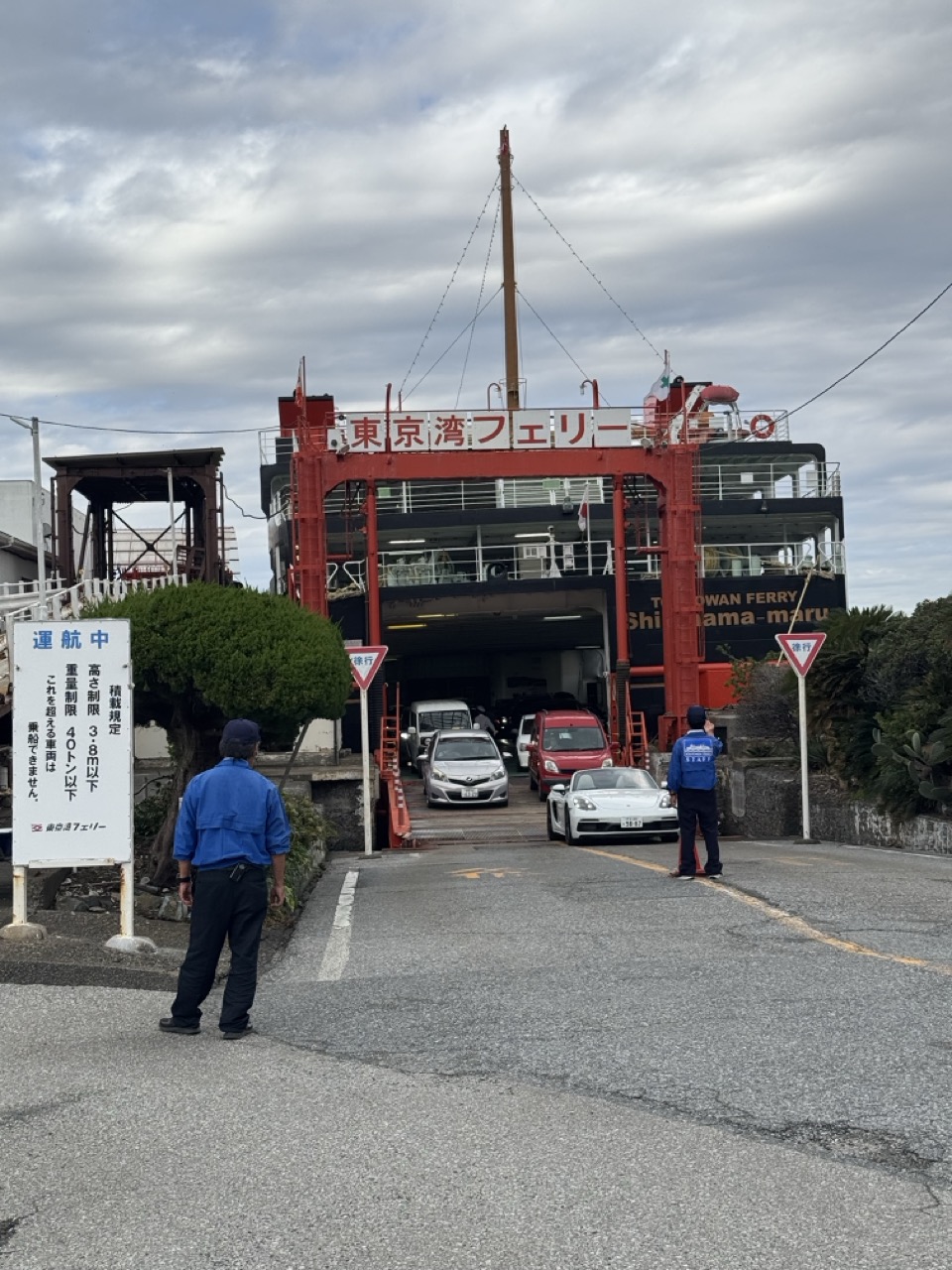
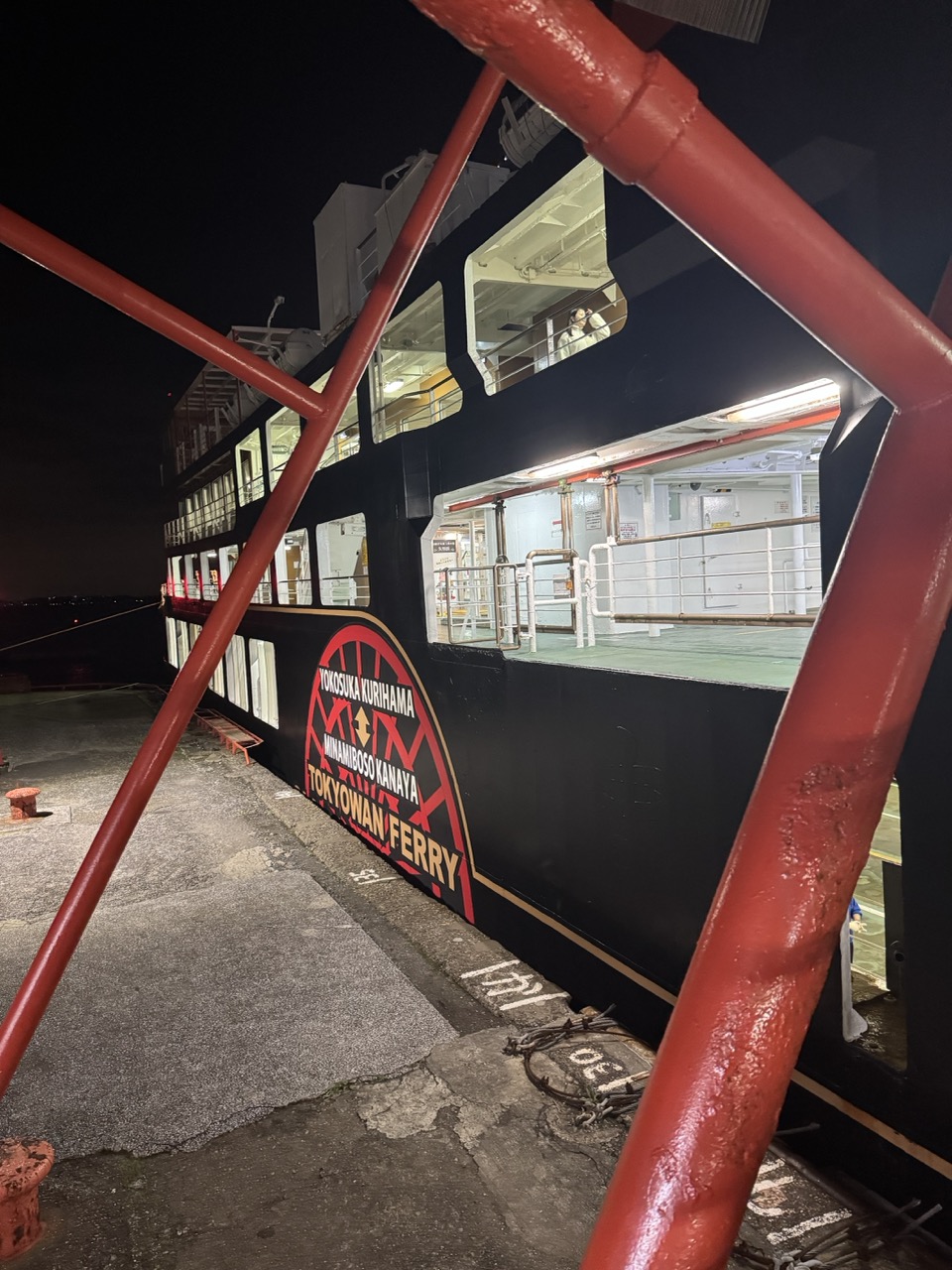
The part that matters for this trip is where Perry came ashore. He landed at Kurihama on July 14 to hand over a letter from President Fillmore, and a memorial at Kurihama marks the landing site that was unveiled in 1901. So the port where you buy your ticket sits on the exact stretch of coast where Japan’s isolation ended. The ferry company describes the ship Shirahama Maru as roughly the same size as the Susquehanna that Perry travelled on, and old illustrations of the Black Ships are displayed around the vessel.
Crossing Tokyo Bay on the Ferry
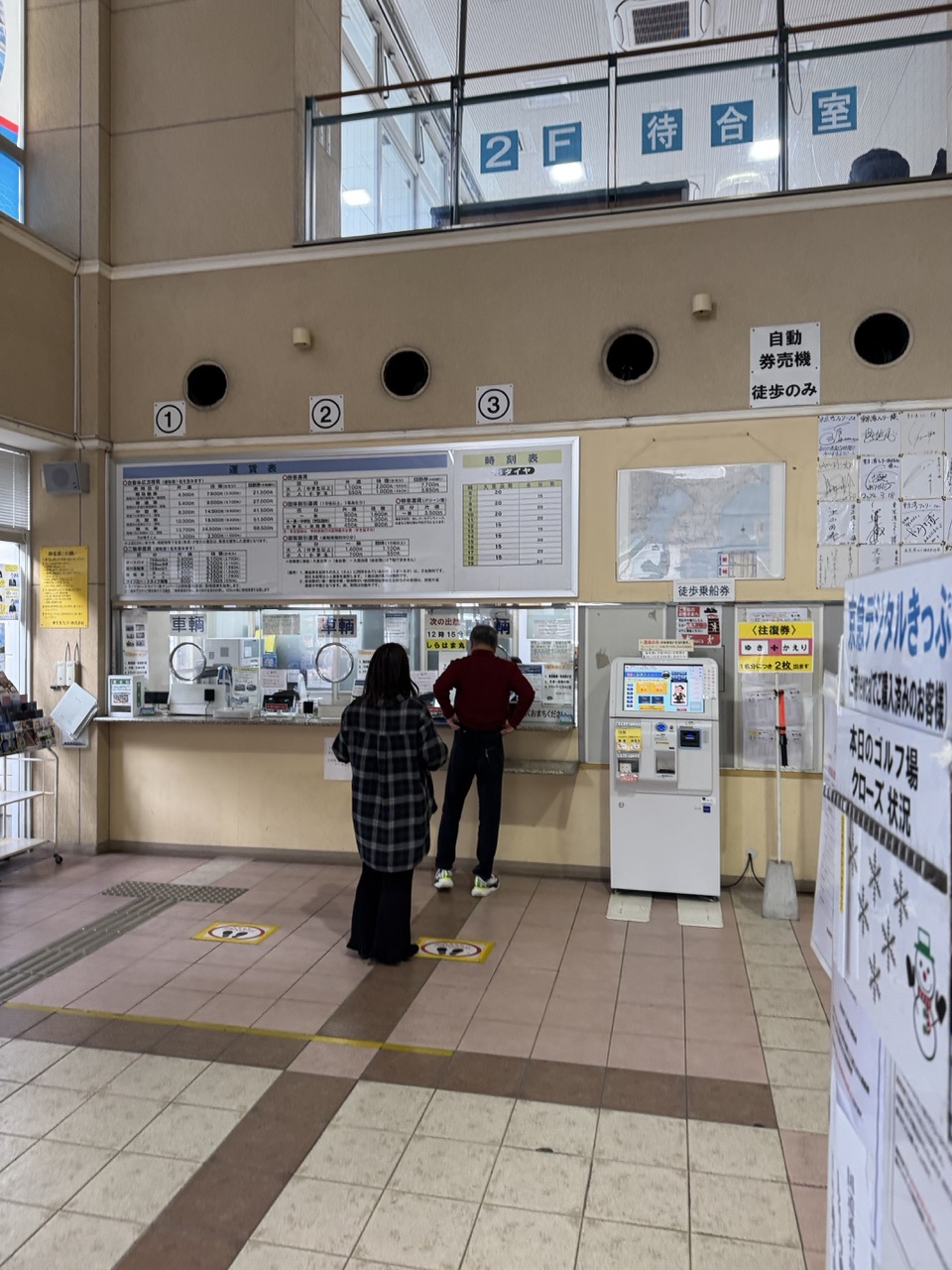
The ferry company runs two different timetables, called A and B, and a calendar on the official schedule page sets which one applies to each date through the end of March 2027. On busy days sailings are roughly hourly, and on quiet days they thin out to about every two hours.
Buy the round trip ticket at Kurihama Port. The adult fare works out to 2,000 yen round trip per person, split into 1,100 yen on the way out and 900 yen on the way back. Aim for a morning sailing so that you step off at Kanaya by about 10:40.
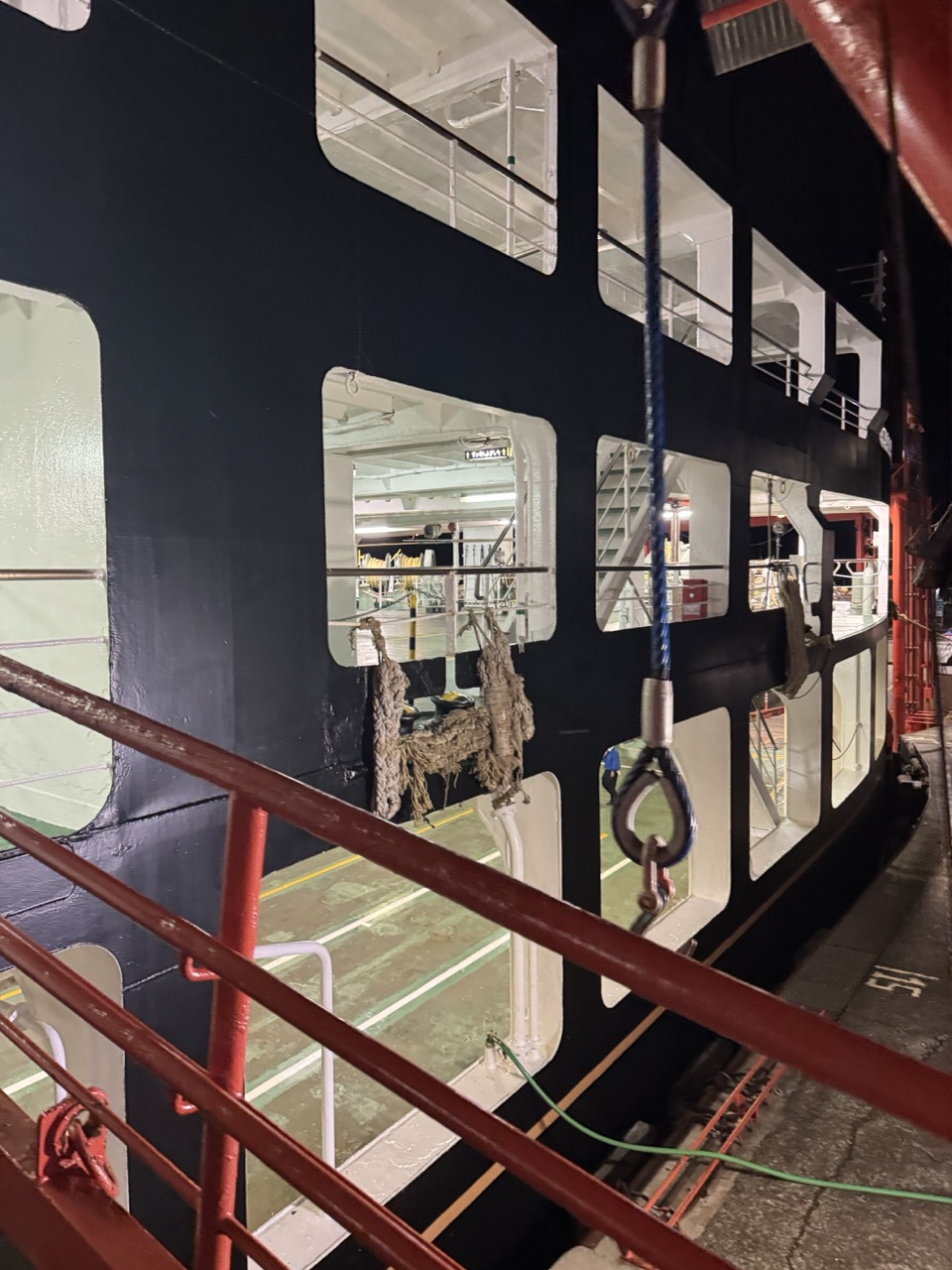
This is a car ferry, not just a passenger boat. It carries vehicles across the bay, and one traveller guide calls it reasonably priced relative to highway tolls if you are driving around the peninsula. You will see cars, motorbikes and buses lined up at the port, and it is part of why the ferry feels more like a local road link than a sightseeing cruise.
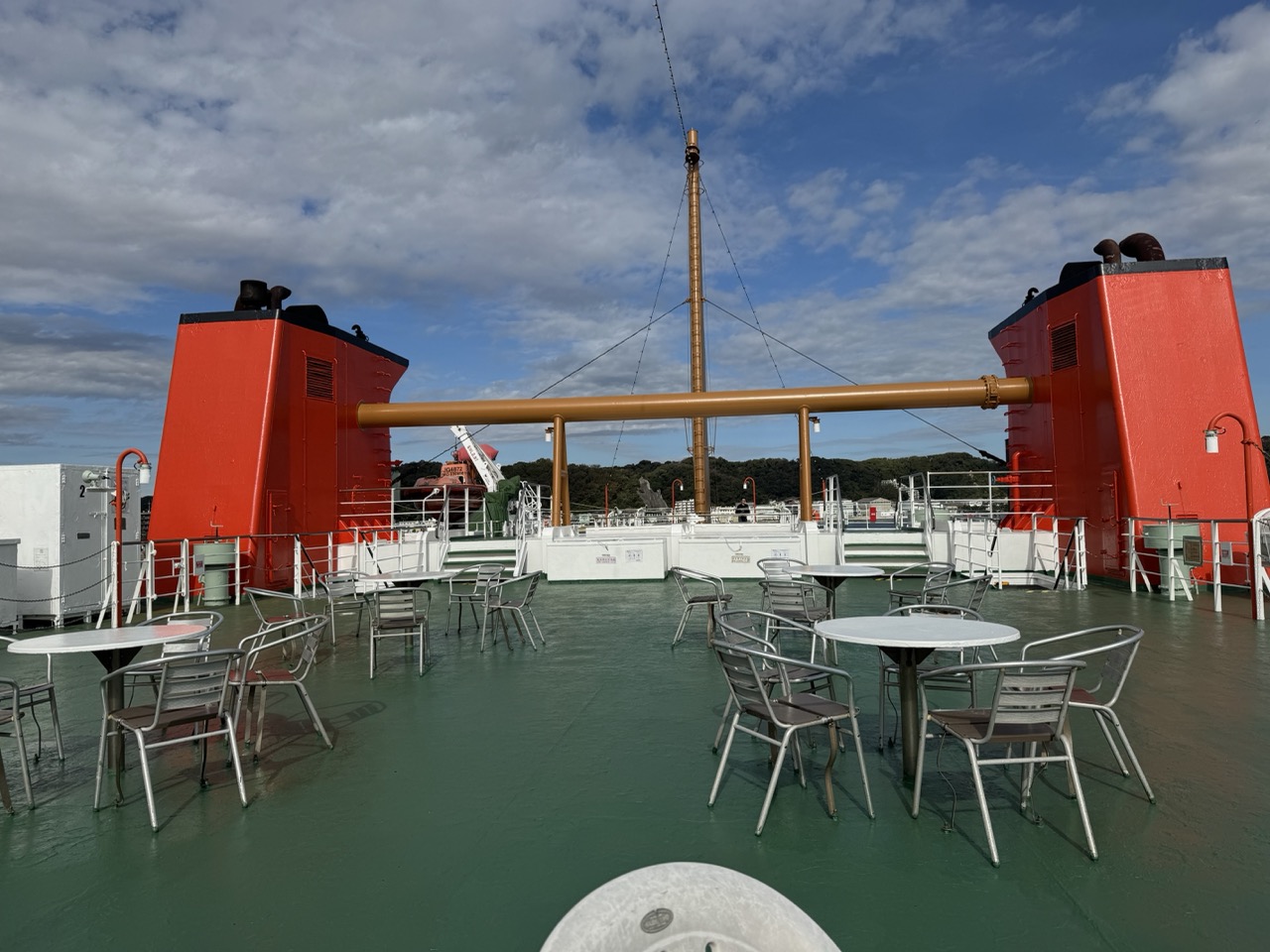
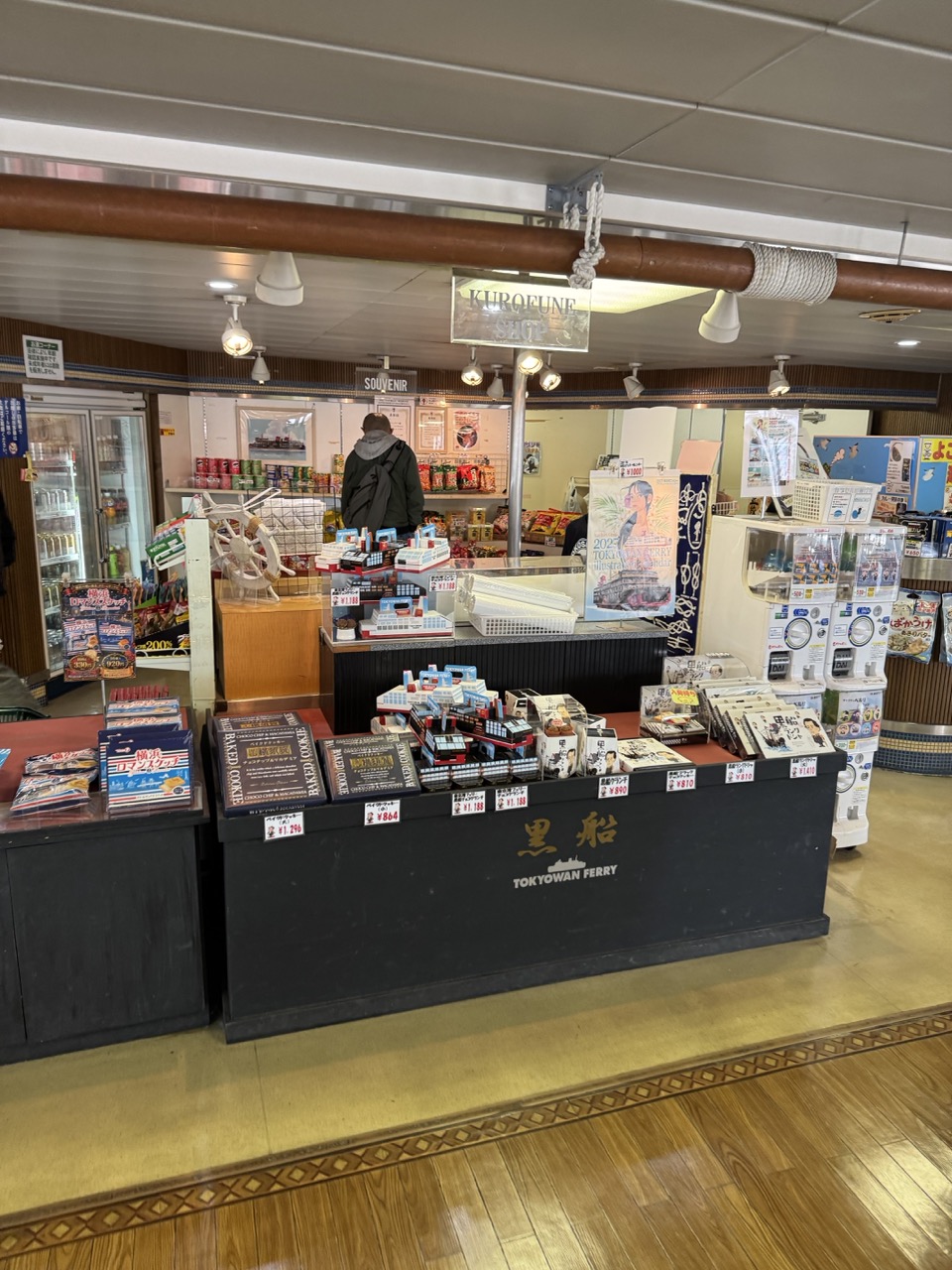
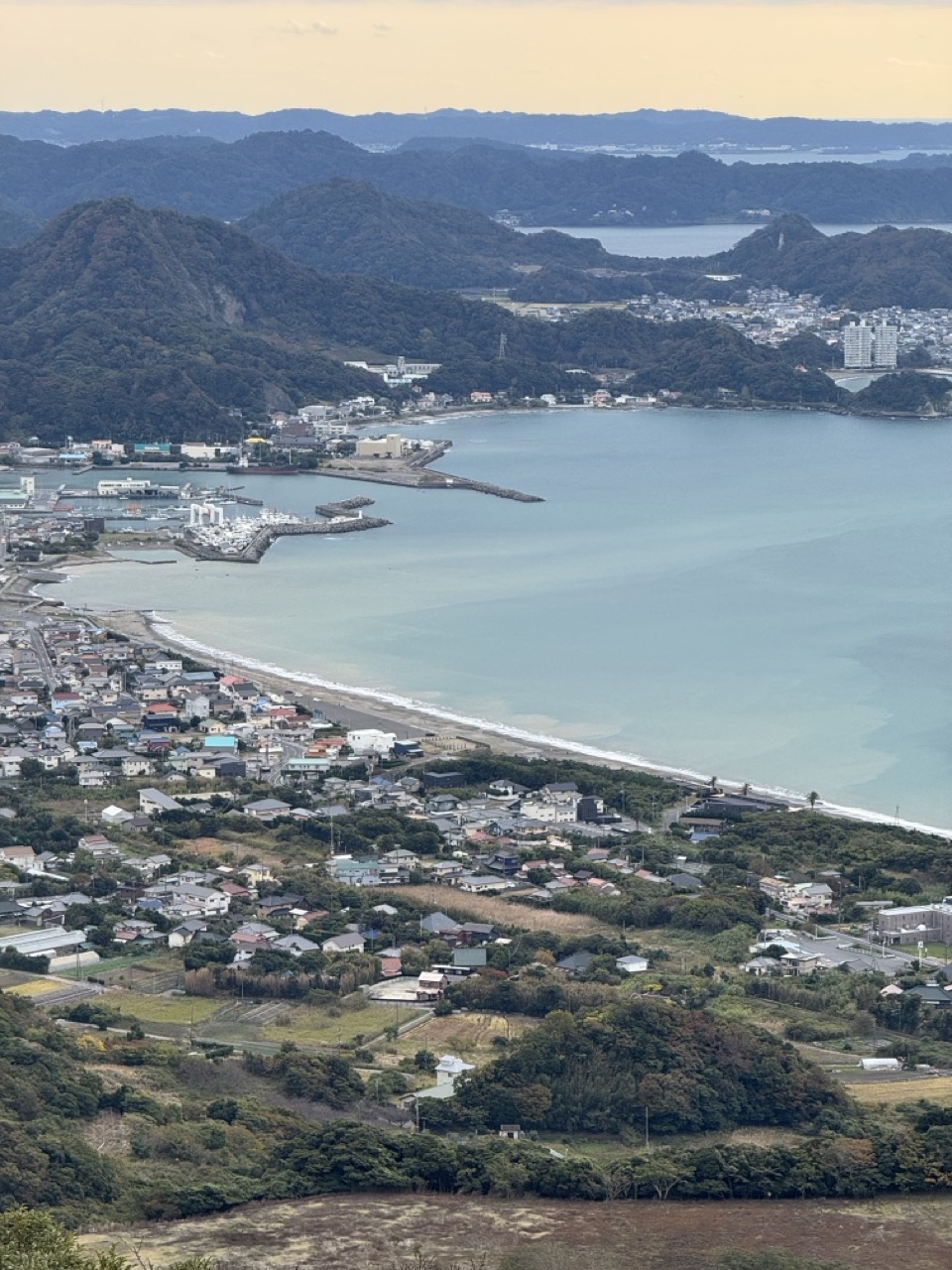
On board there is a shop deck with snacks, food and drinks, including beer. The operator describes it as selling Boso and Yokosuka gourmet food and original goods and points to a separate page for its opening hours, so do not assume it is open on every sailing. My advice is to take whatever you buy up to the top deck. Sit in the sun if the day allows it, and watch the bay open up around you. This is where the crossing earns its ticket price, because you get a wide view of the water, the Boso hills and the shipping lanes, and on a clear morning Mt Fuji often shows up to the west, though I would not promise it.
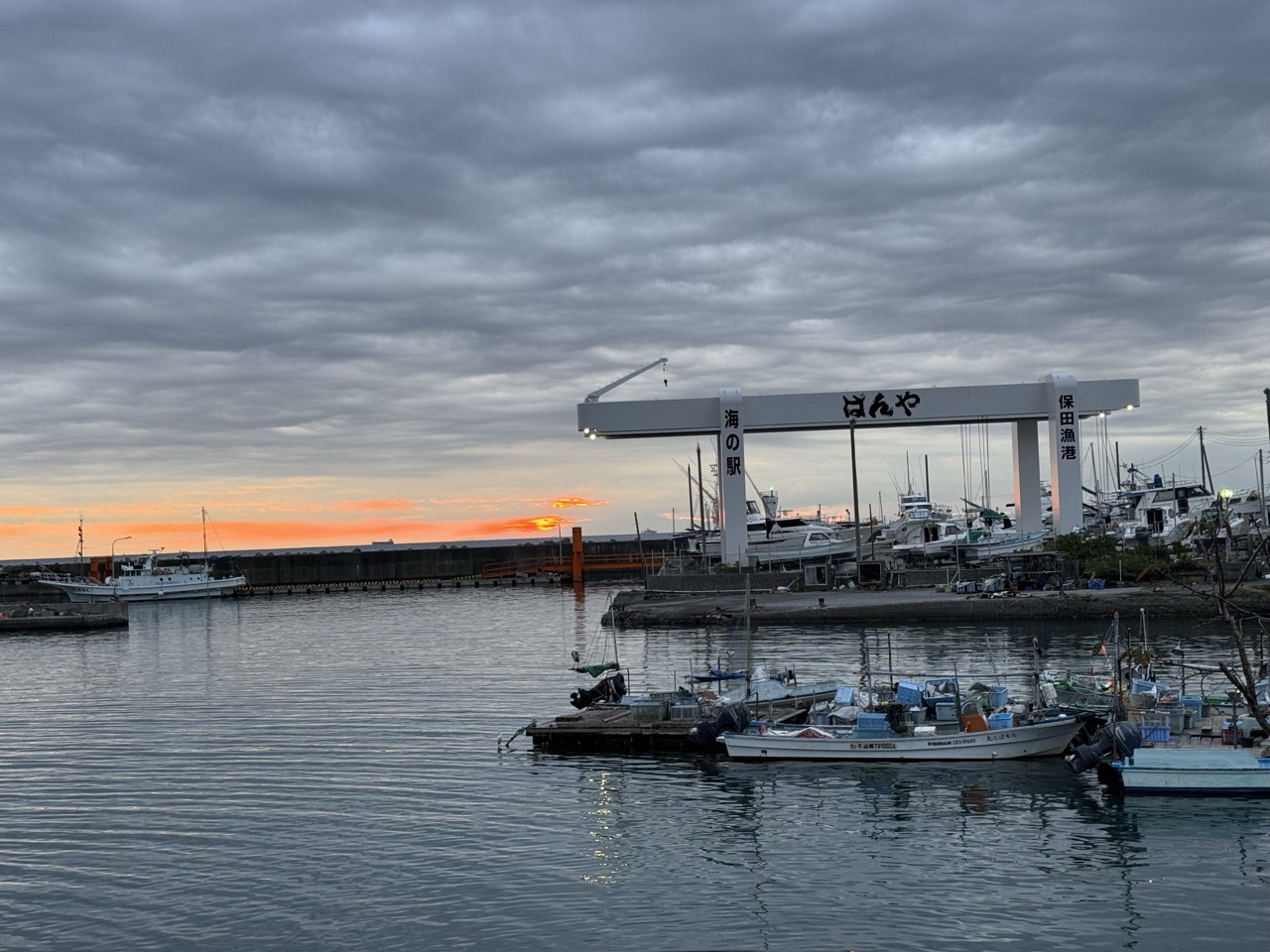
At Kanaya, the port is a working fishing harbour with a small cluster of shops and restaurants, and Hamakanaya Station is a short walk away. Keep that in mind, because the station matters later in the day.
Lunch at Kanaya Diner
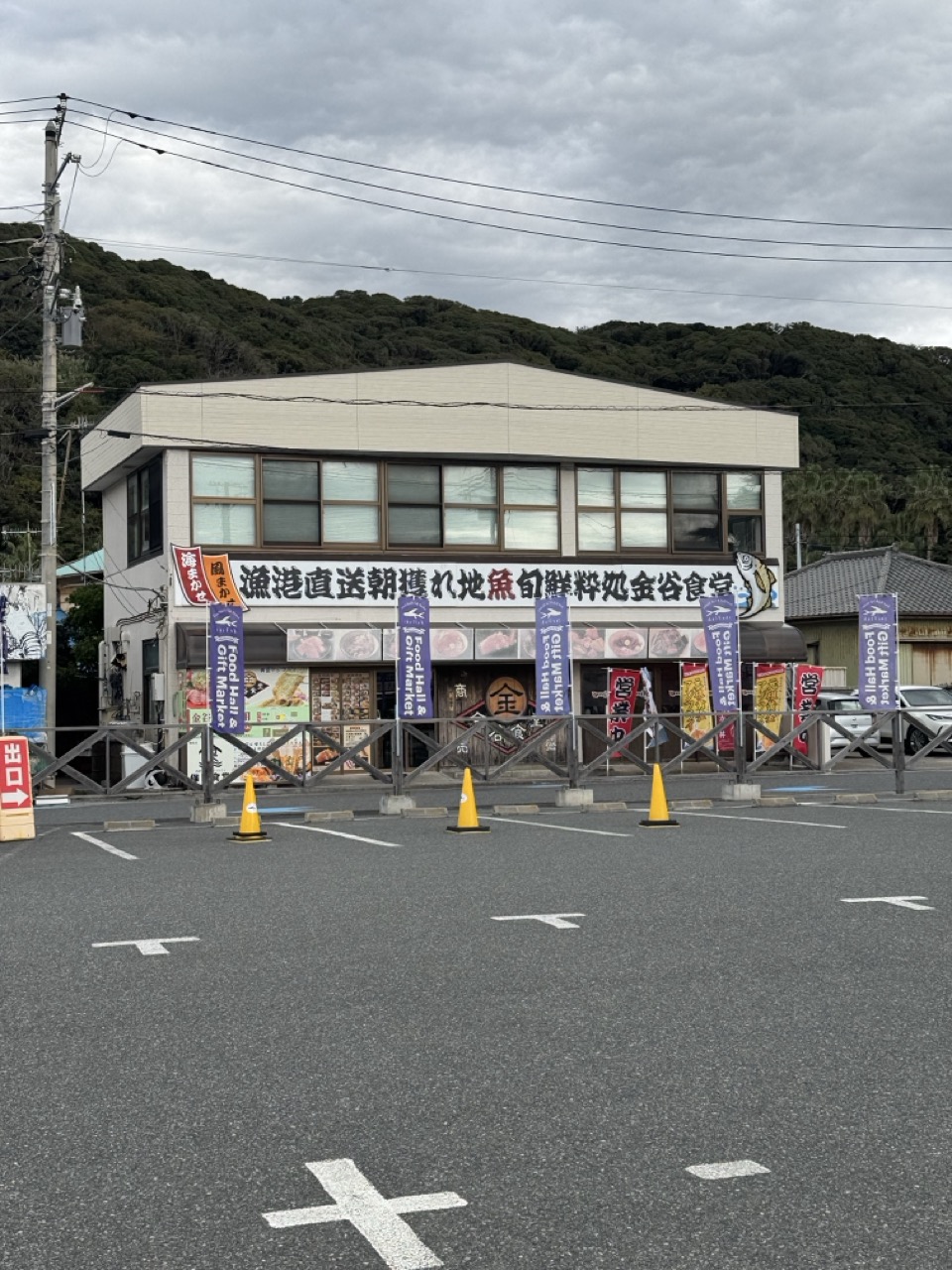
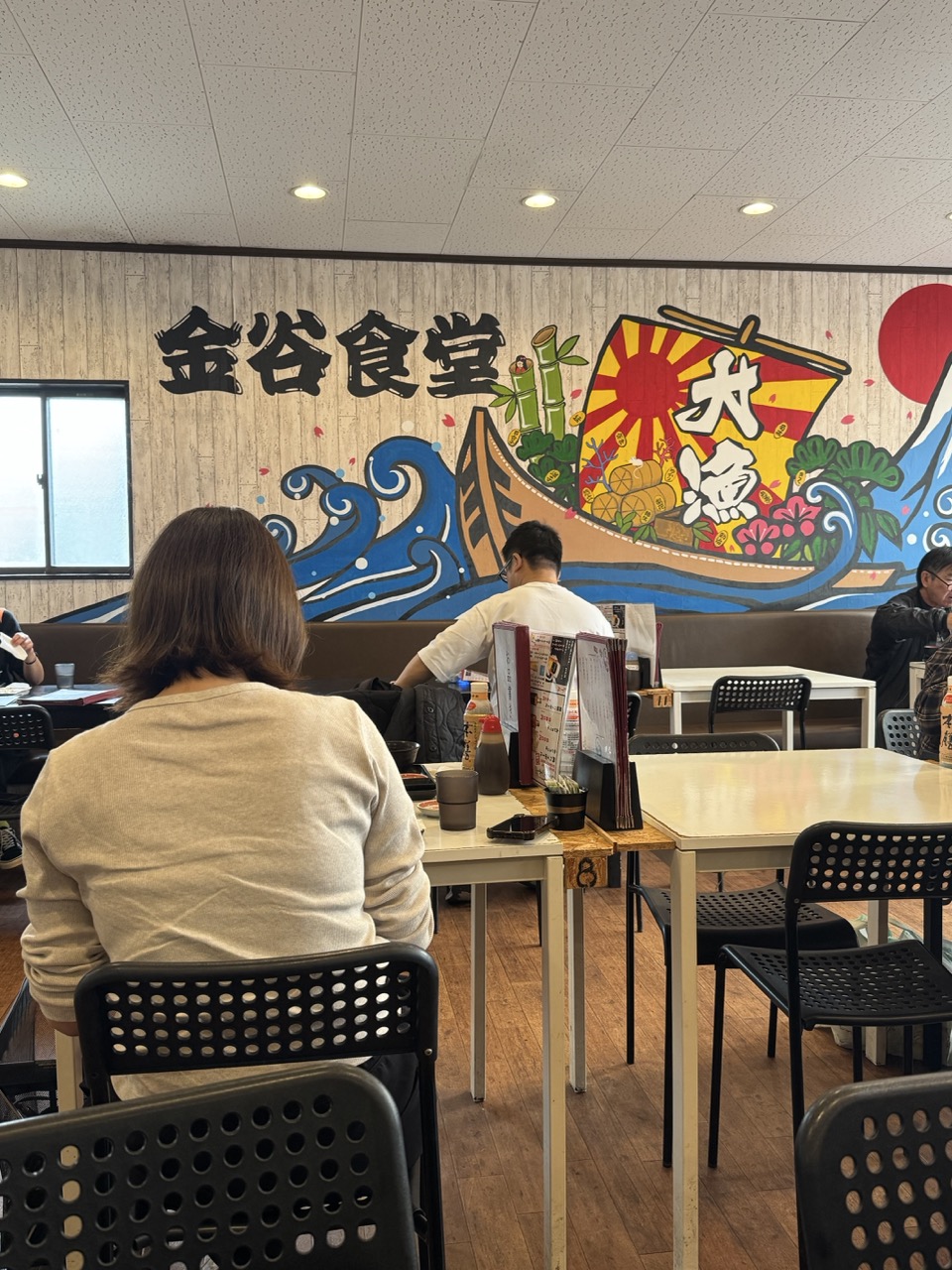
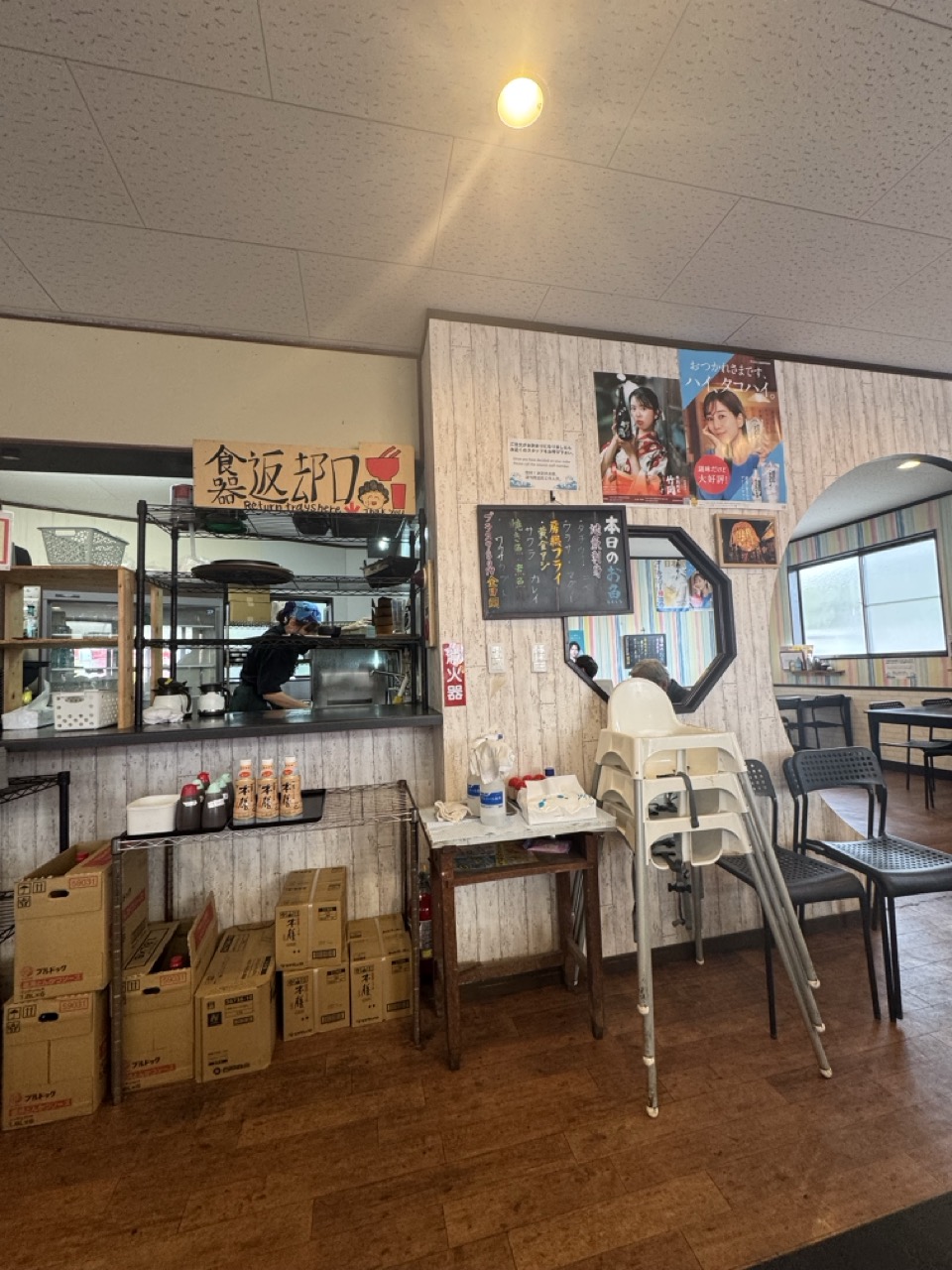
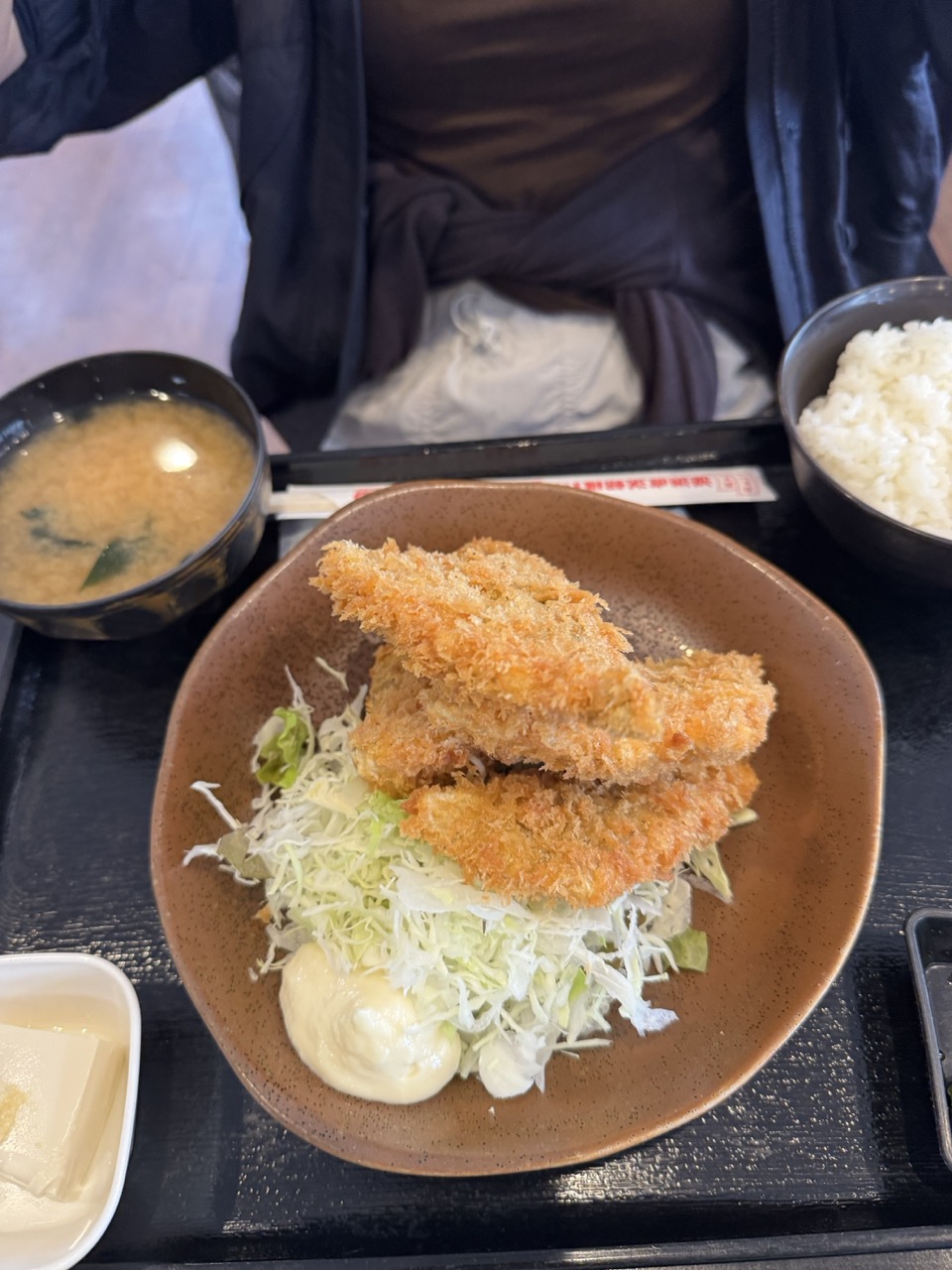
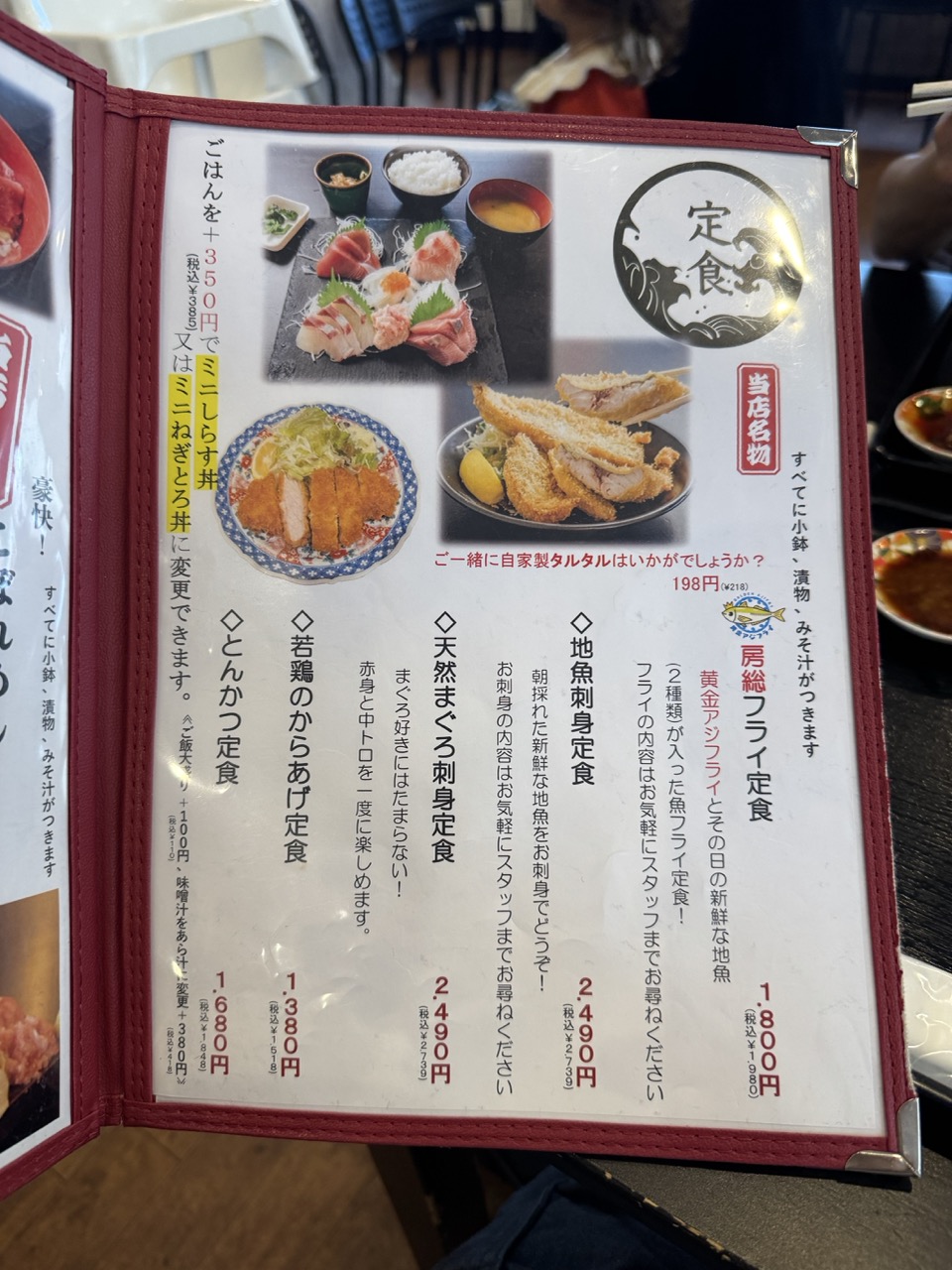
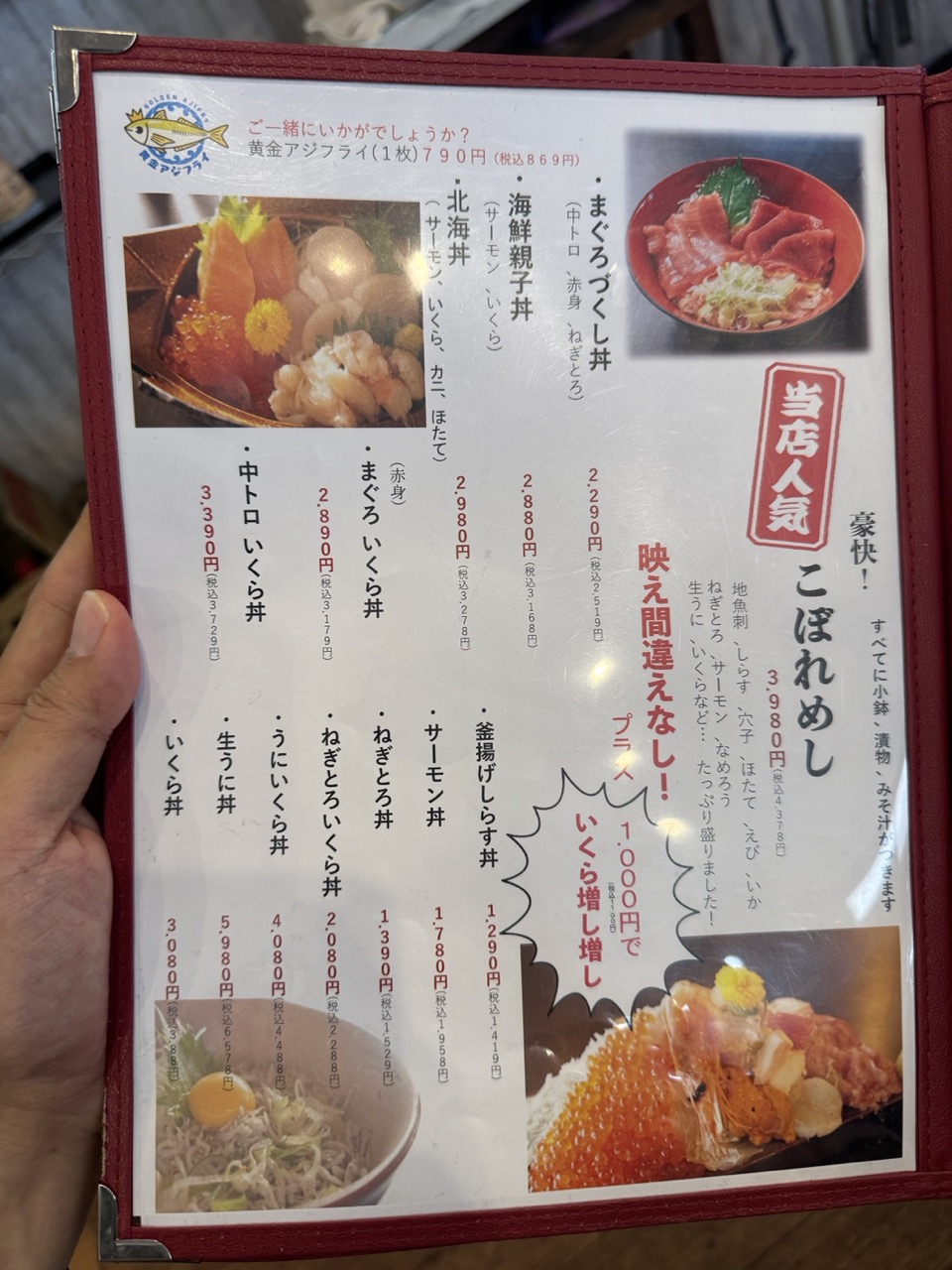
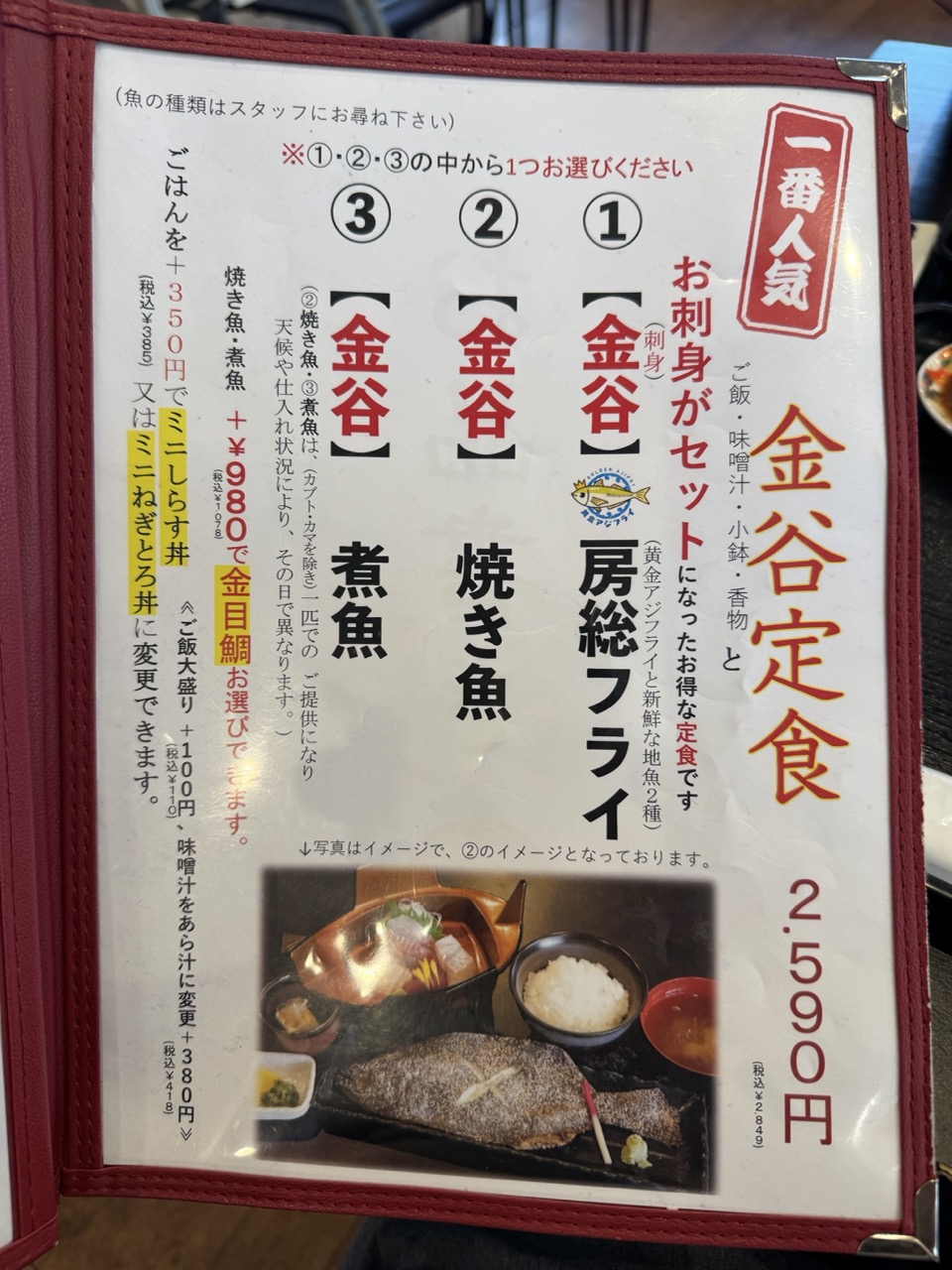
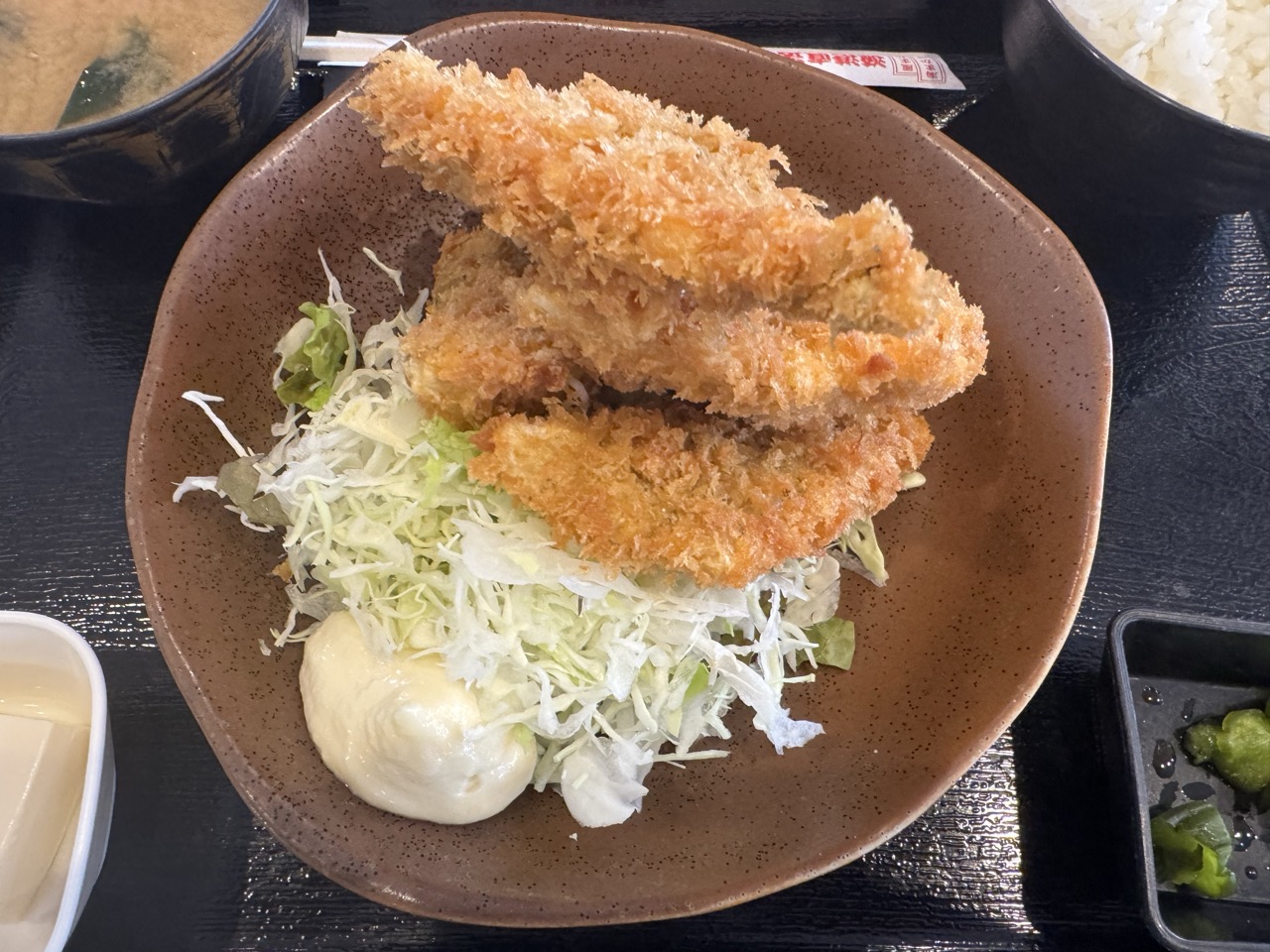
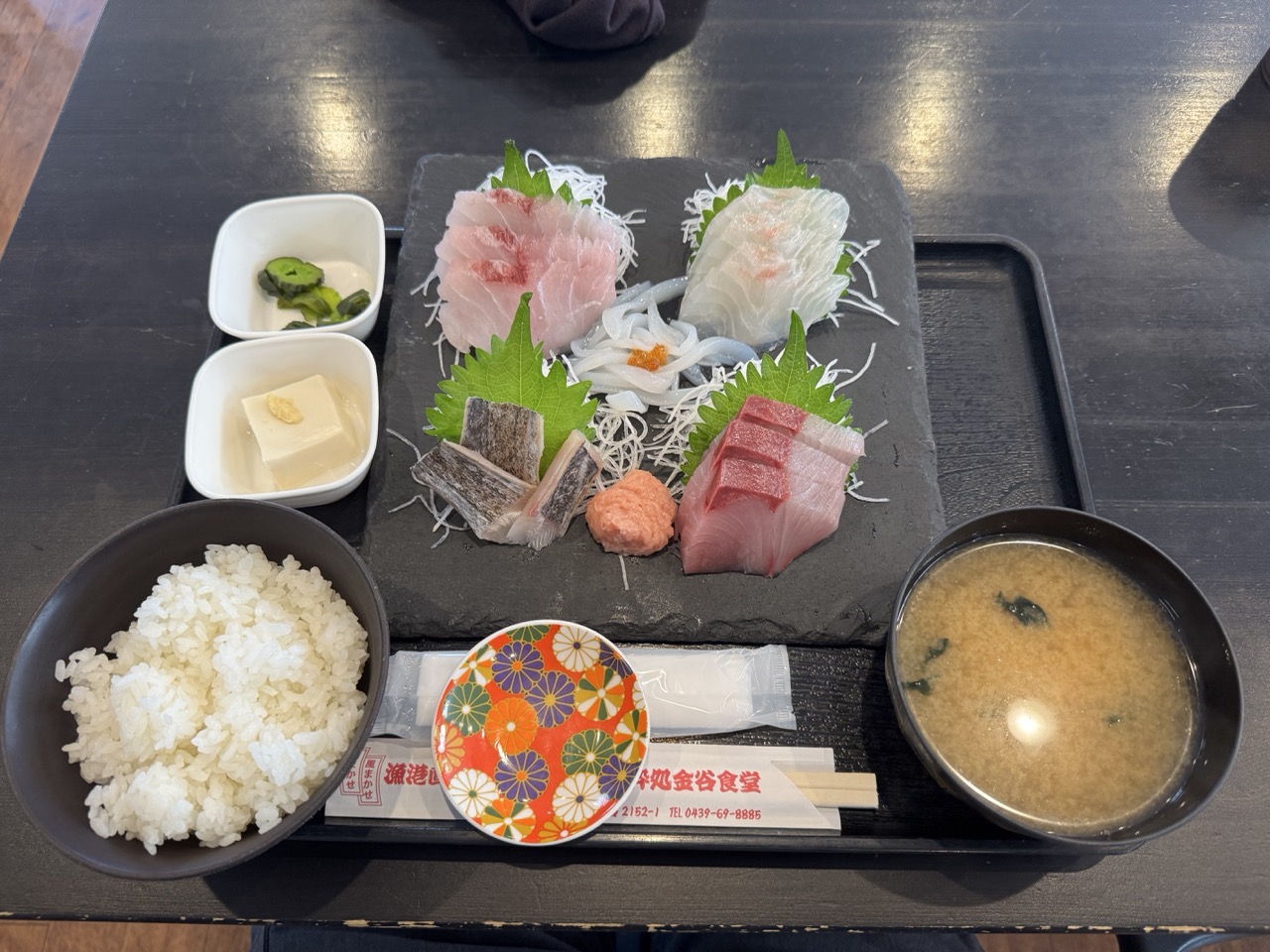
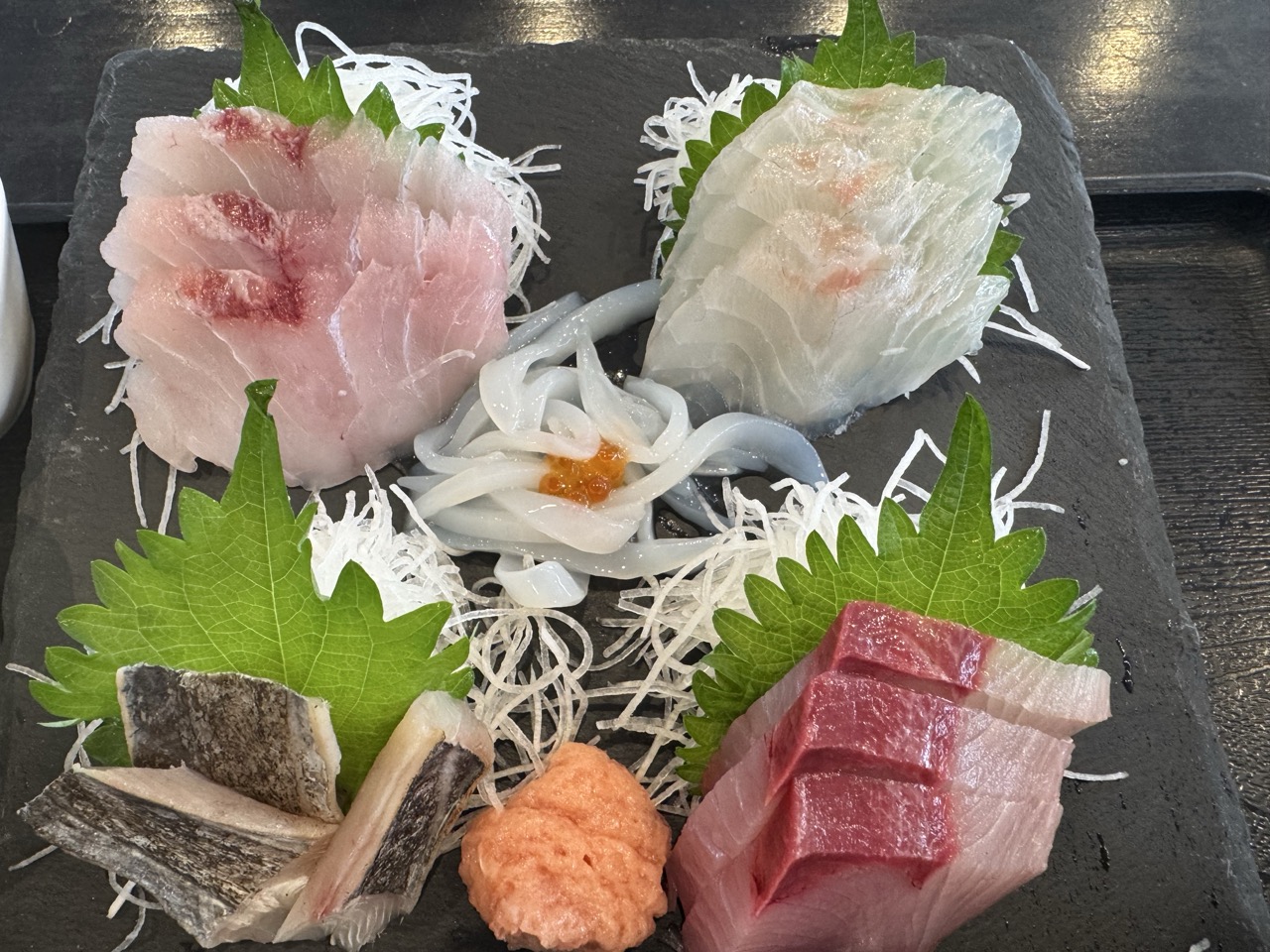
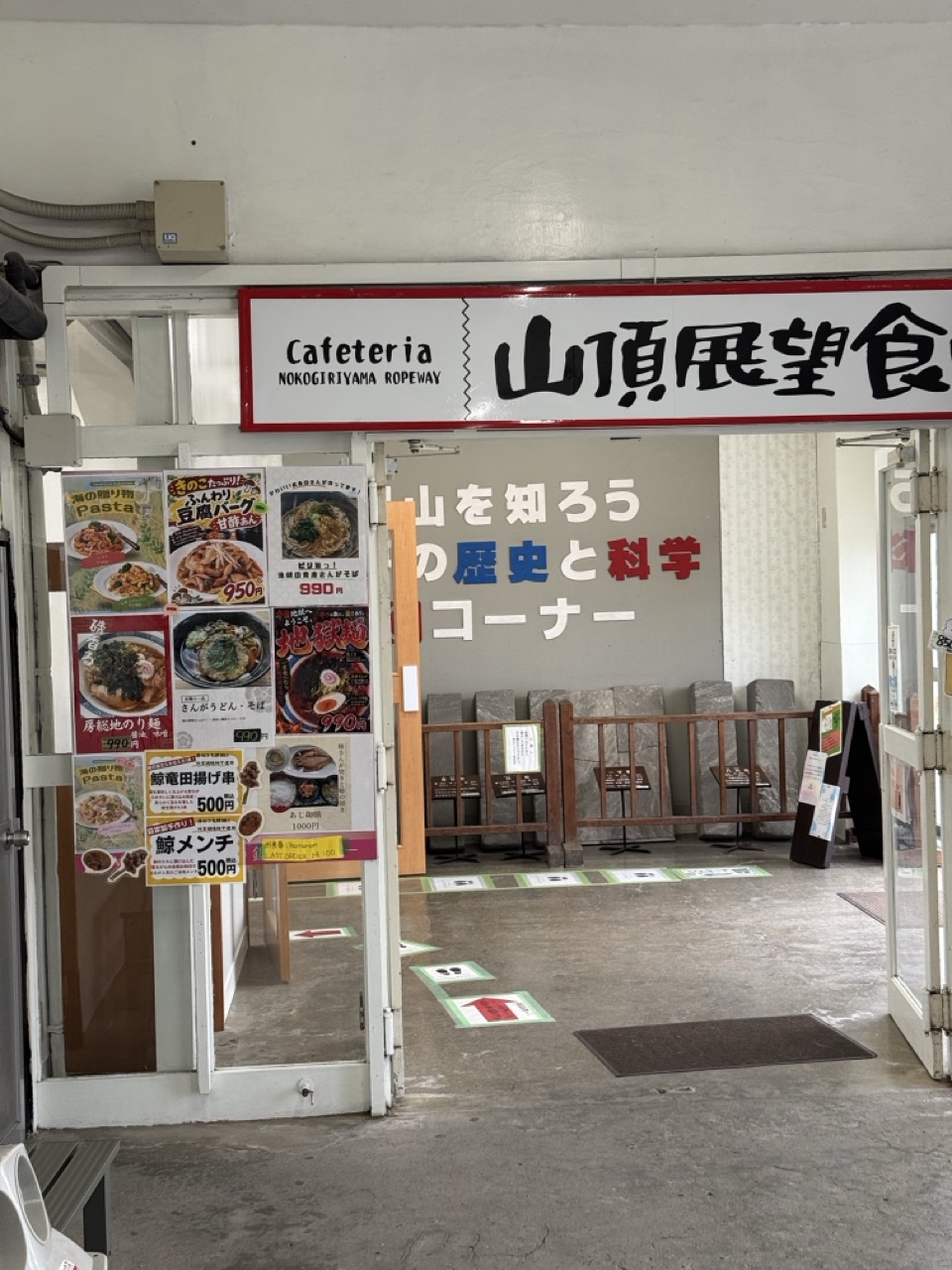
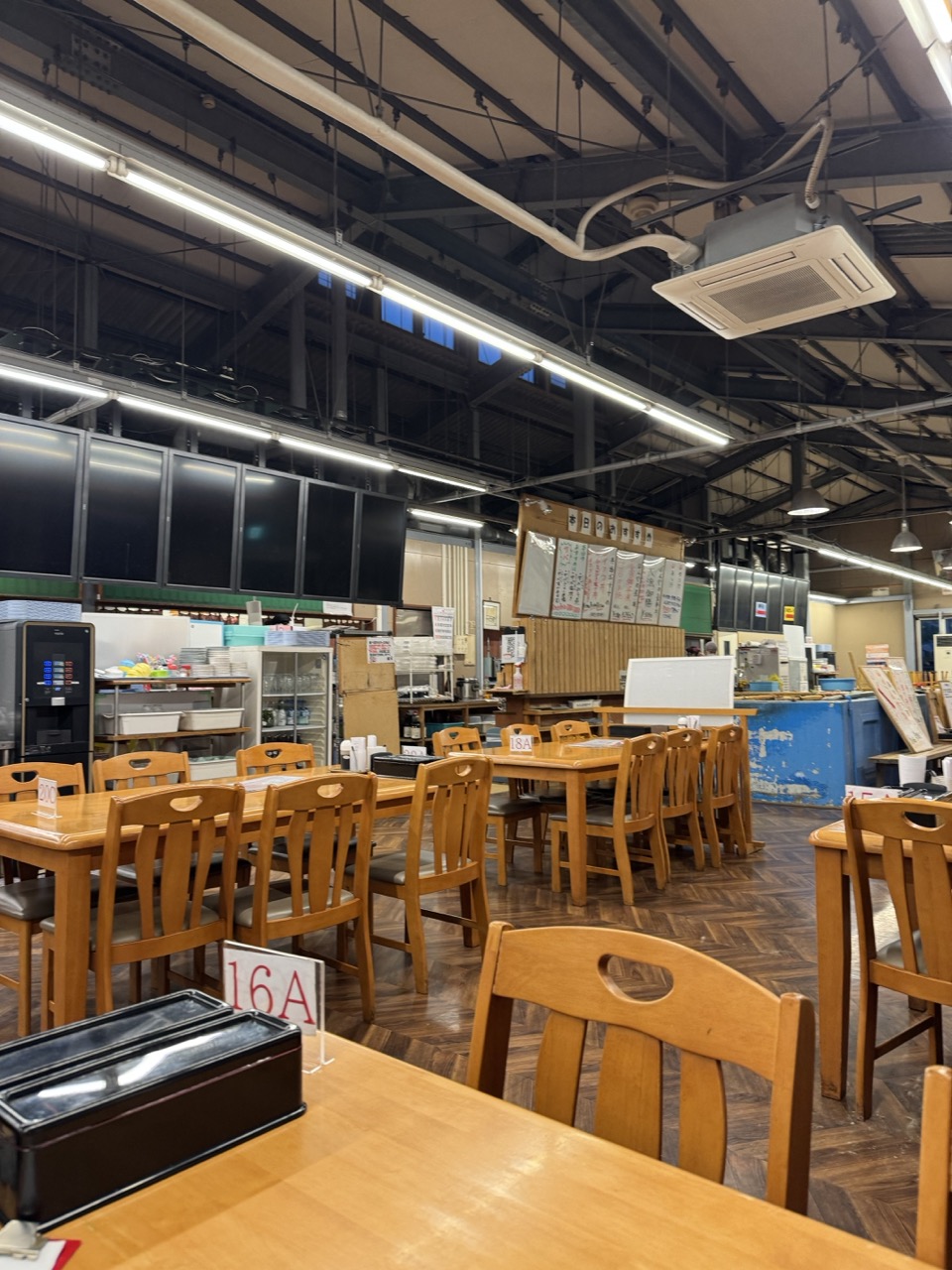
Kanaya Diner (金谷食堂) is right next to the ferry terminal, literally within a minute’s walk, so it suits the start or end of the day. We ordered the golden horse mackerel fried fish set and the sashimi set. Both were good. The sashimi was fresh and tasty, though you can find similar quality elsewhere.
The fried golden horse mackerel was the clear standout. It was fried to perfection, and it feels more special because you cannot easily get it just anywhere. Most of the other people coming in ordered that exact set, which told us we had chosen well. Service was quick too, and I would recommend it to anyone in the area.
Ropeway, Jigoku Nozoki and the Hyakushaku Kannon
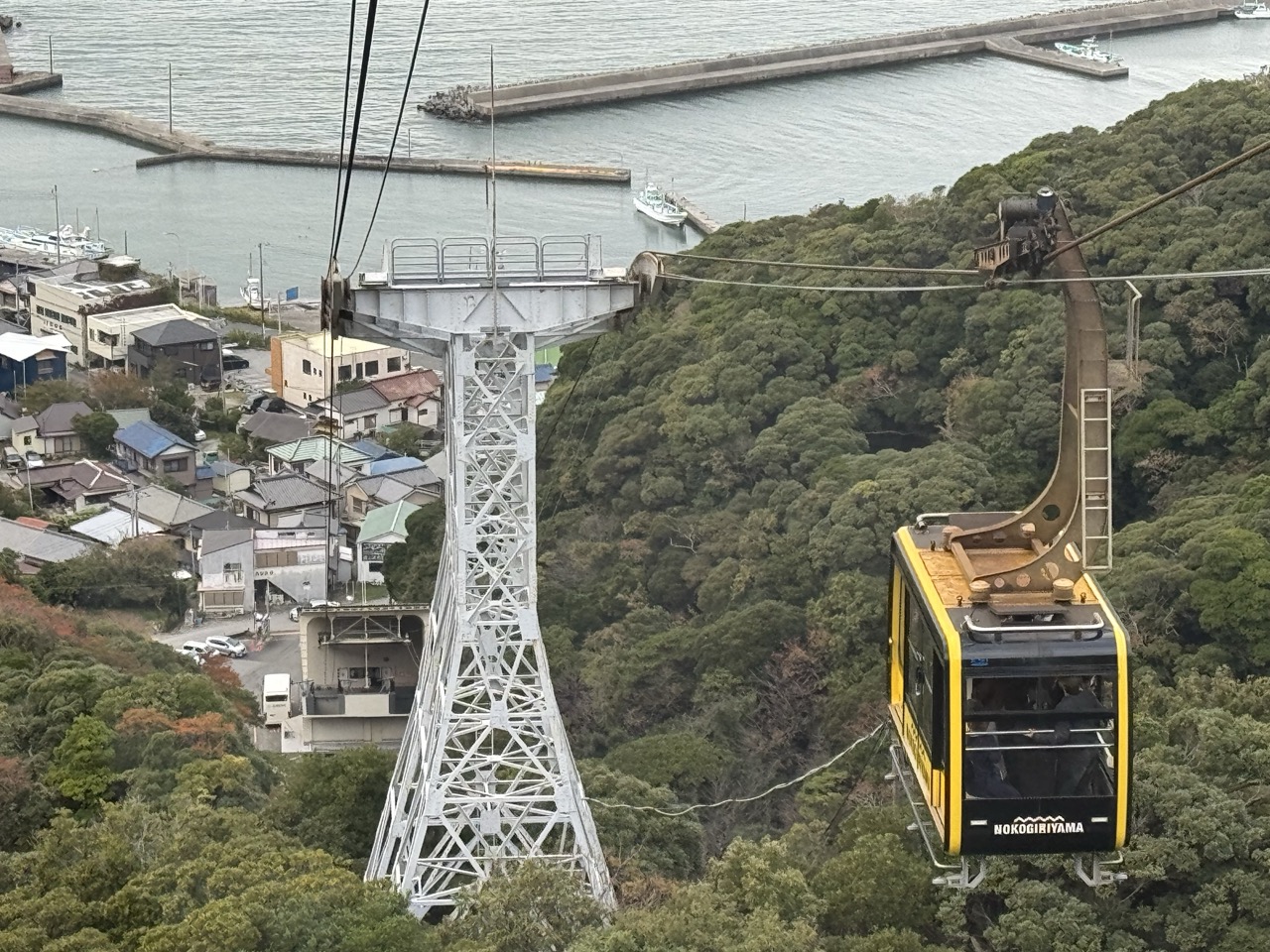
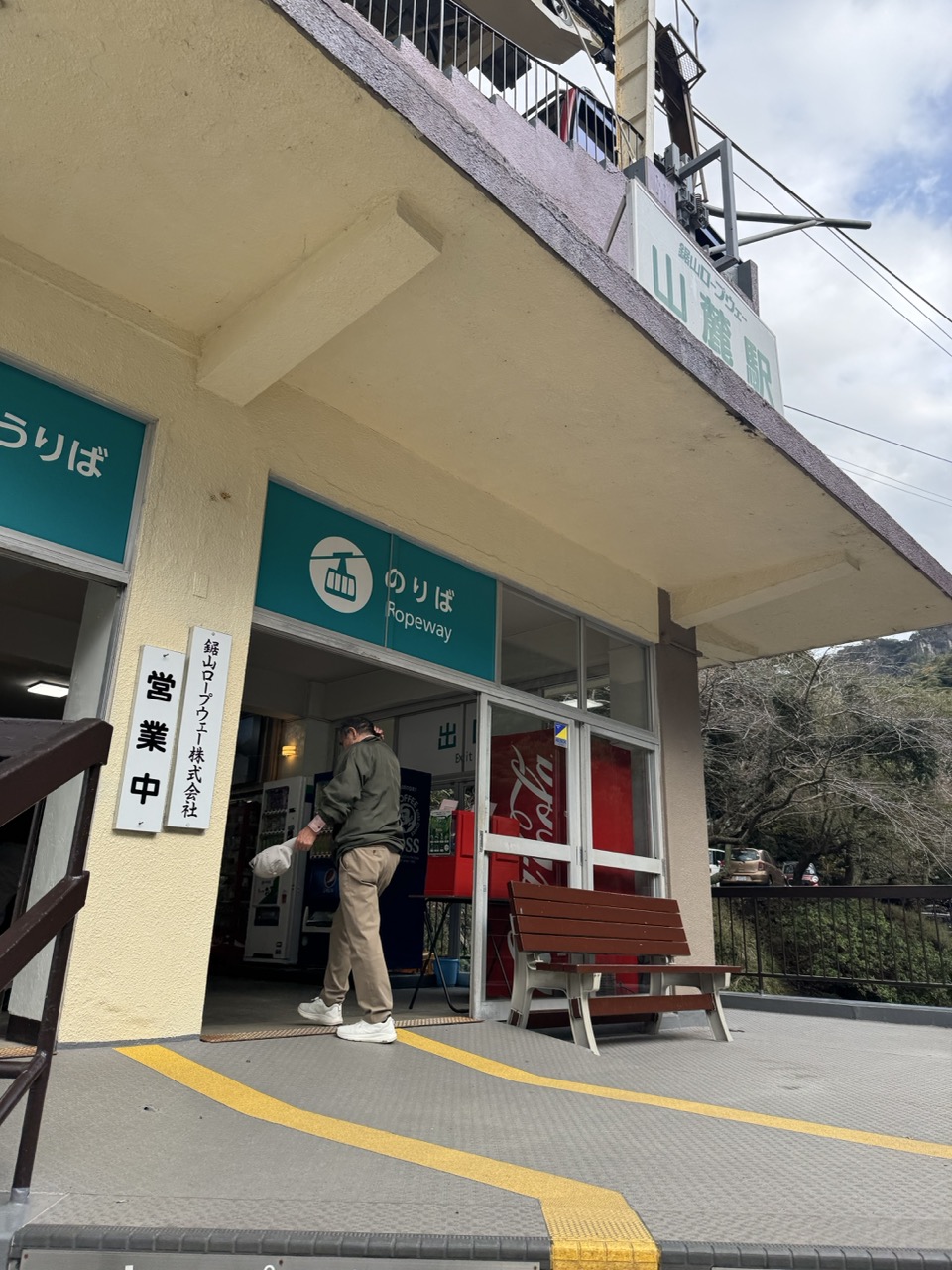
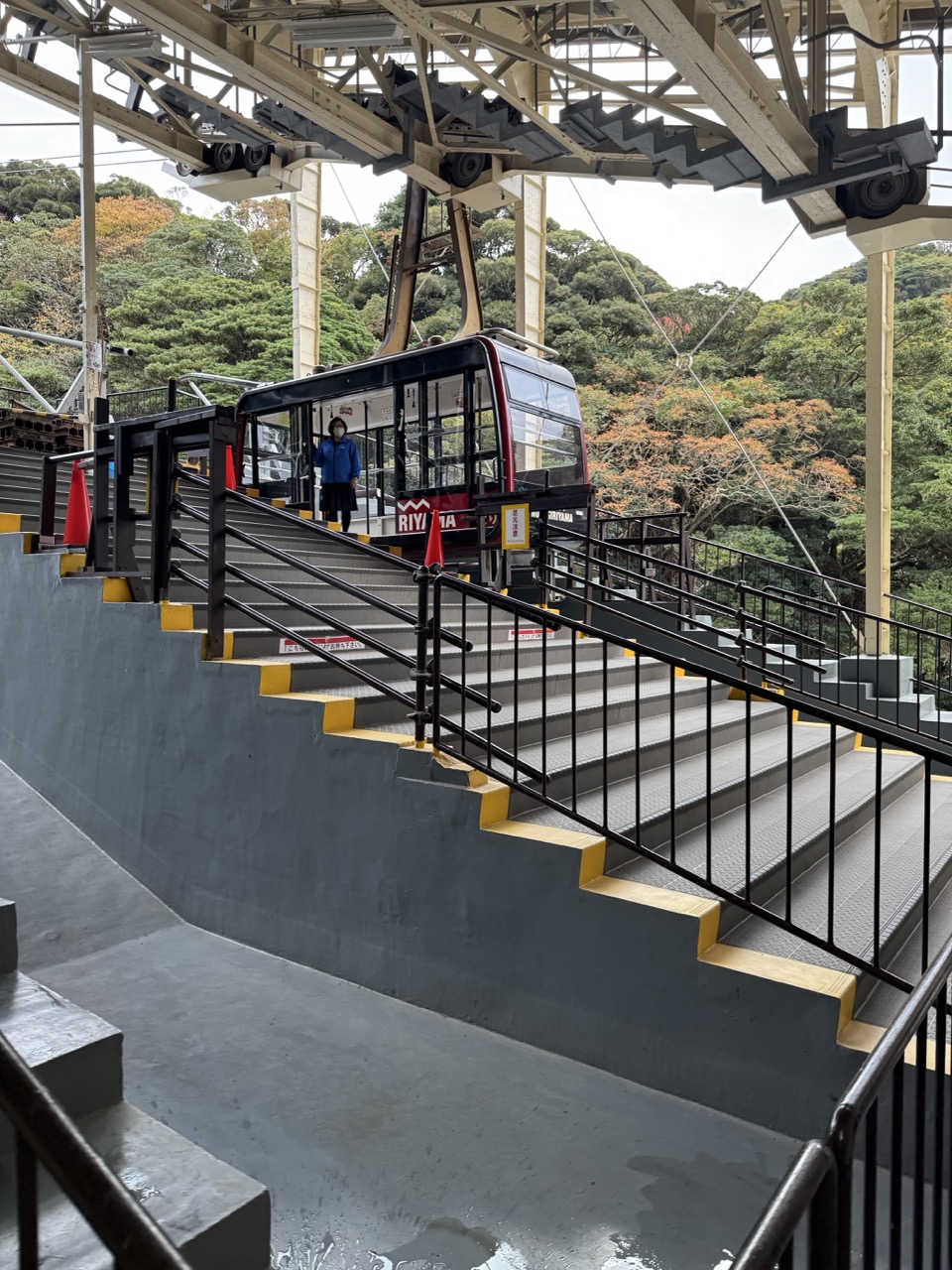
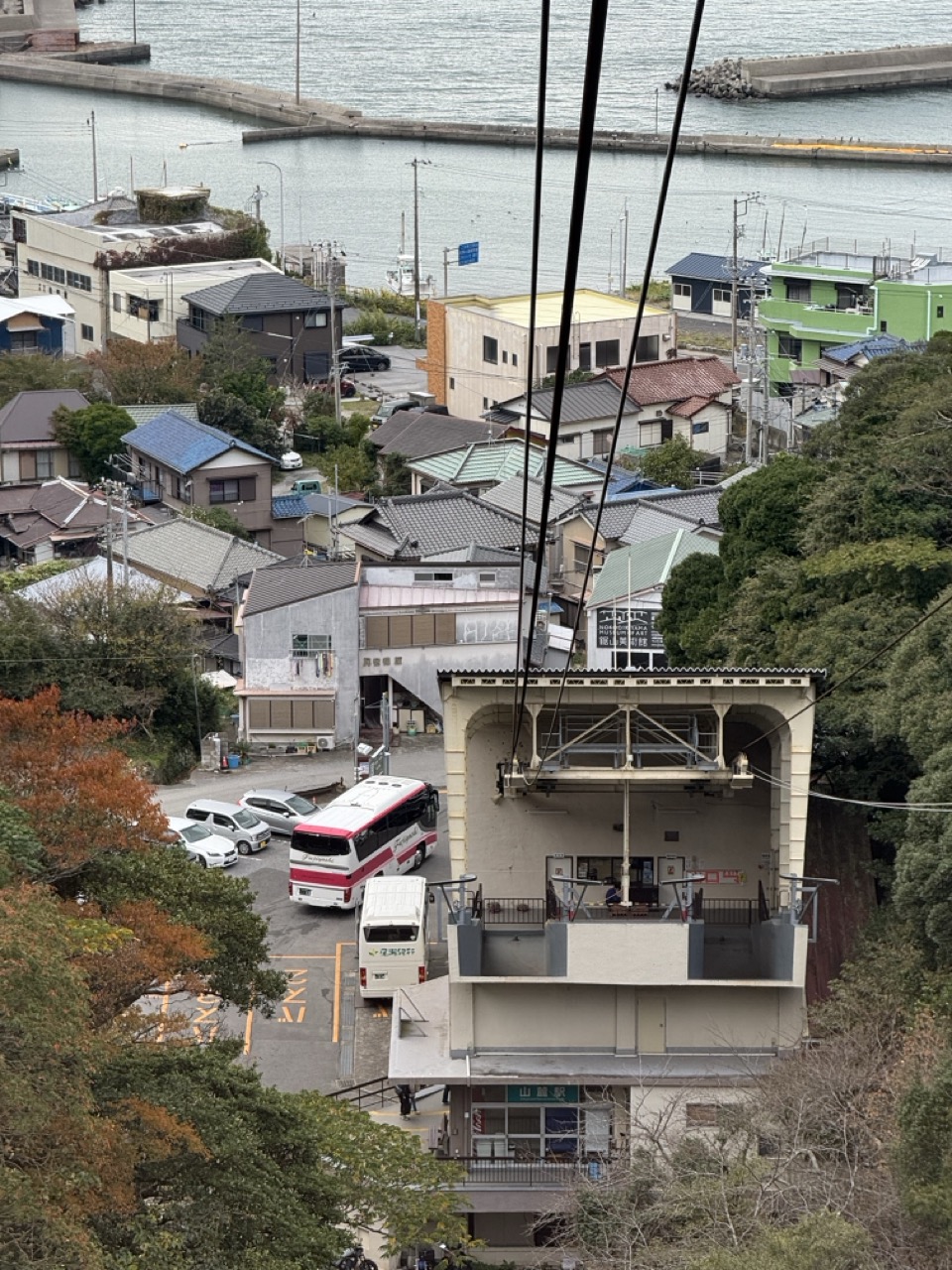
From Kanaya Port it is about a 12 minute walk to the ropeway base station. The ride up takes about 4 minutes, and a round trip ticket is 1,200 yen for an adult. The ropeway runs on winter hours from November 16 to February 15, and the last service is at 4:00 in the afternoon during that period. If you plan to ride down, do not leave it late.
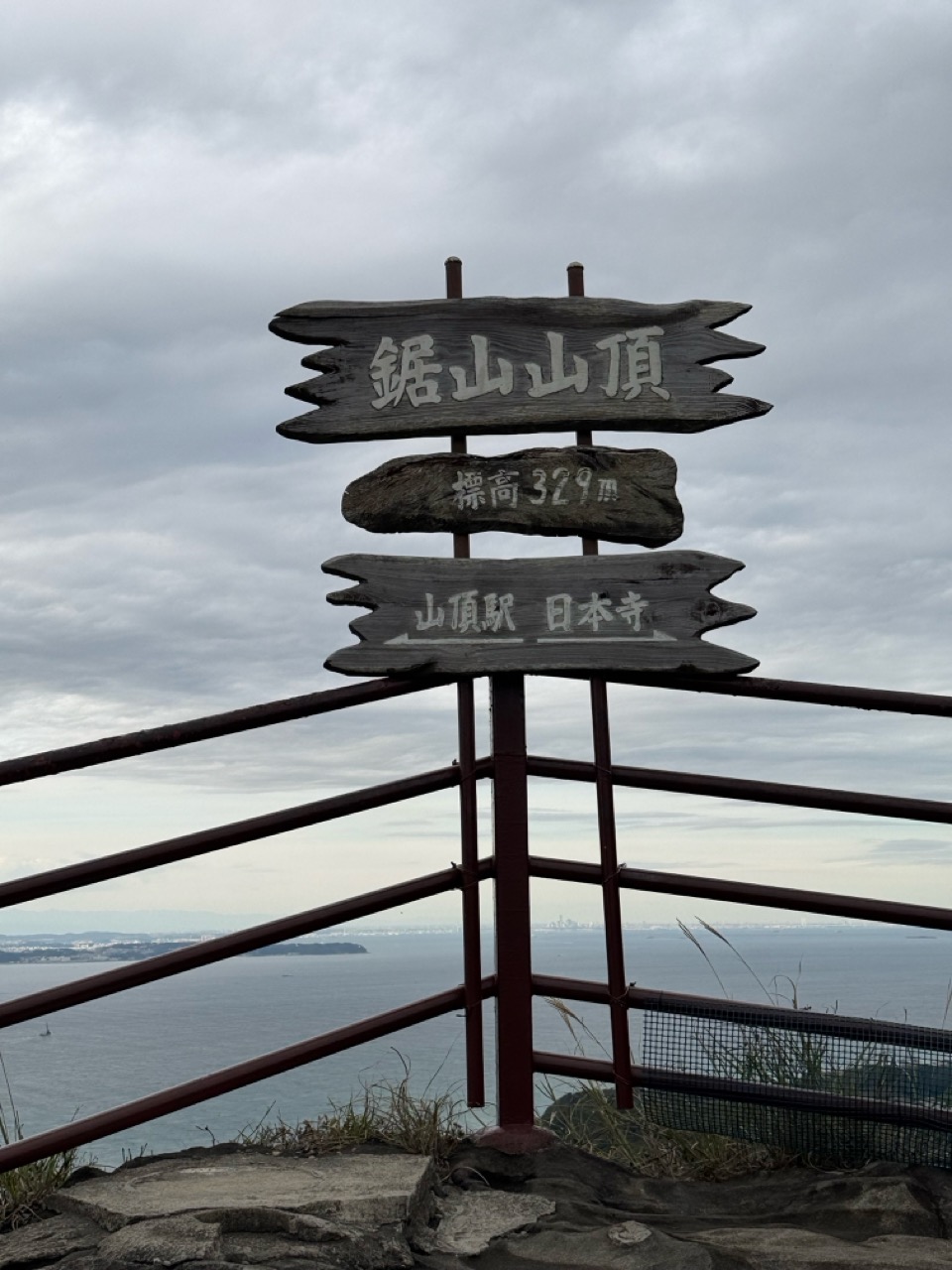
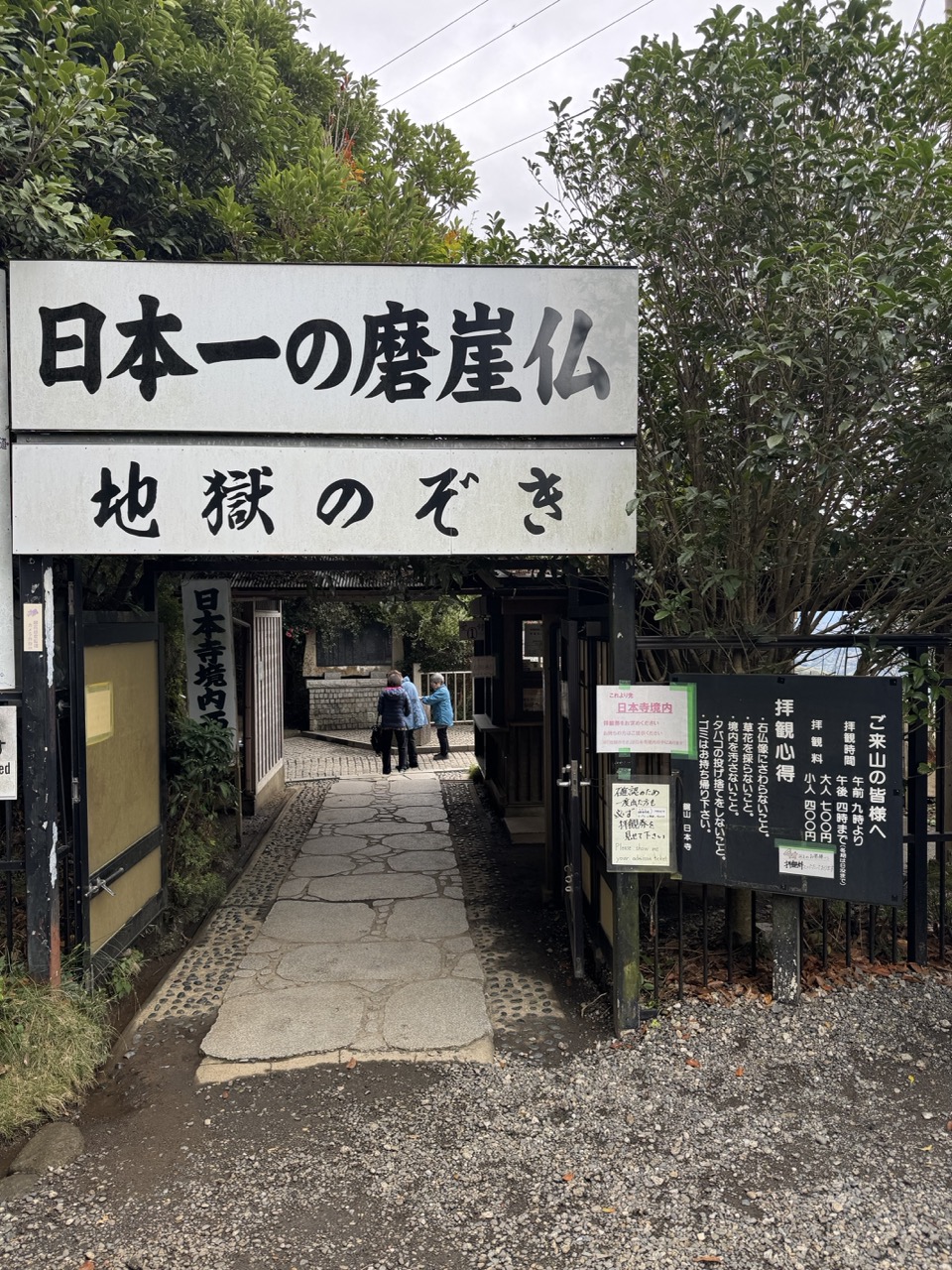
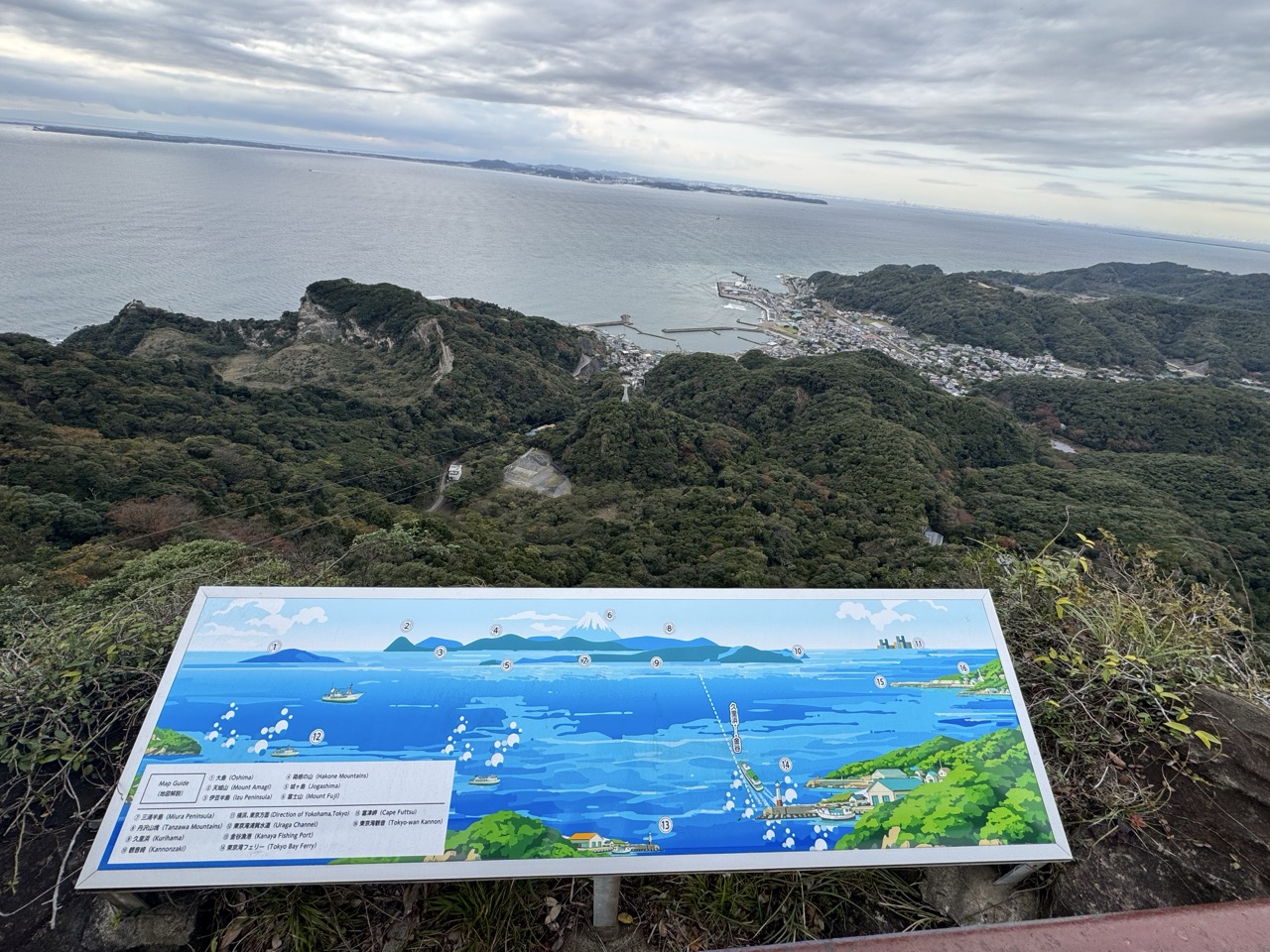
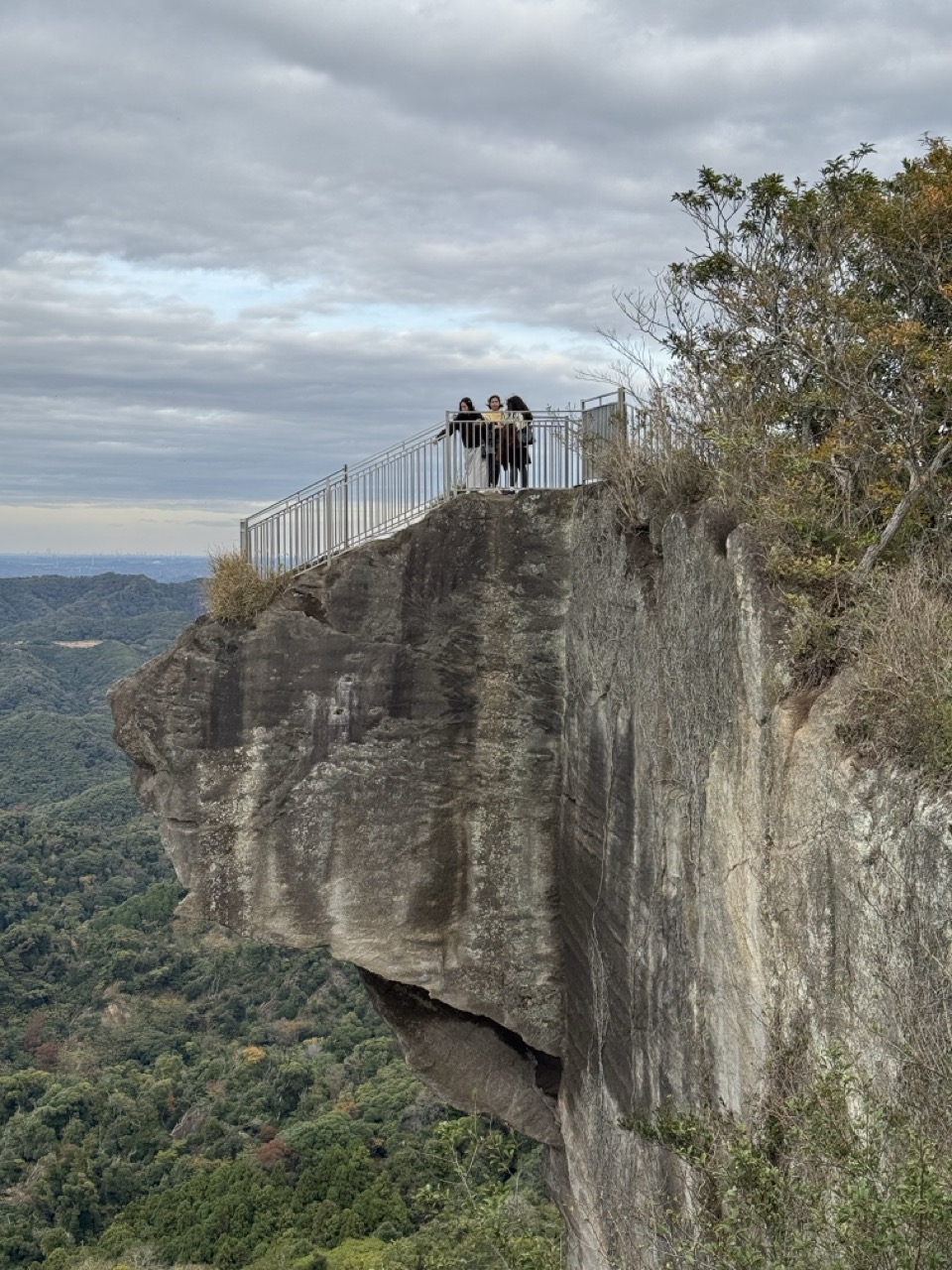
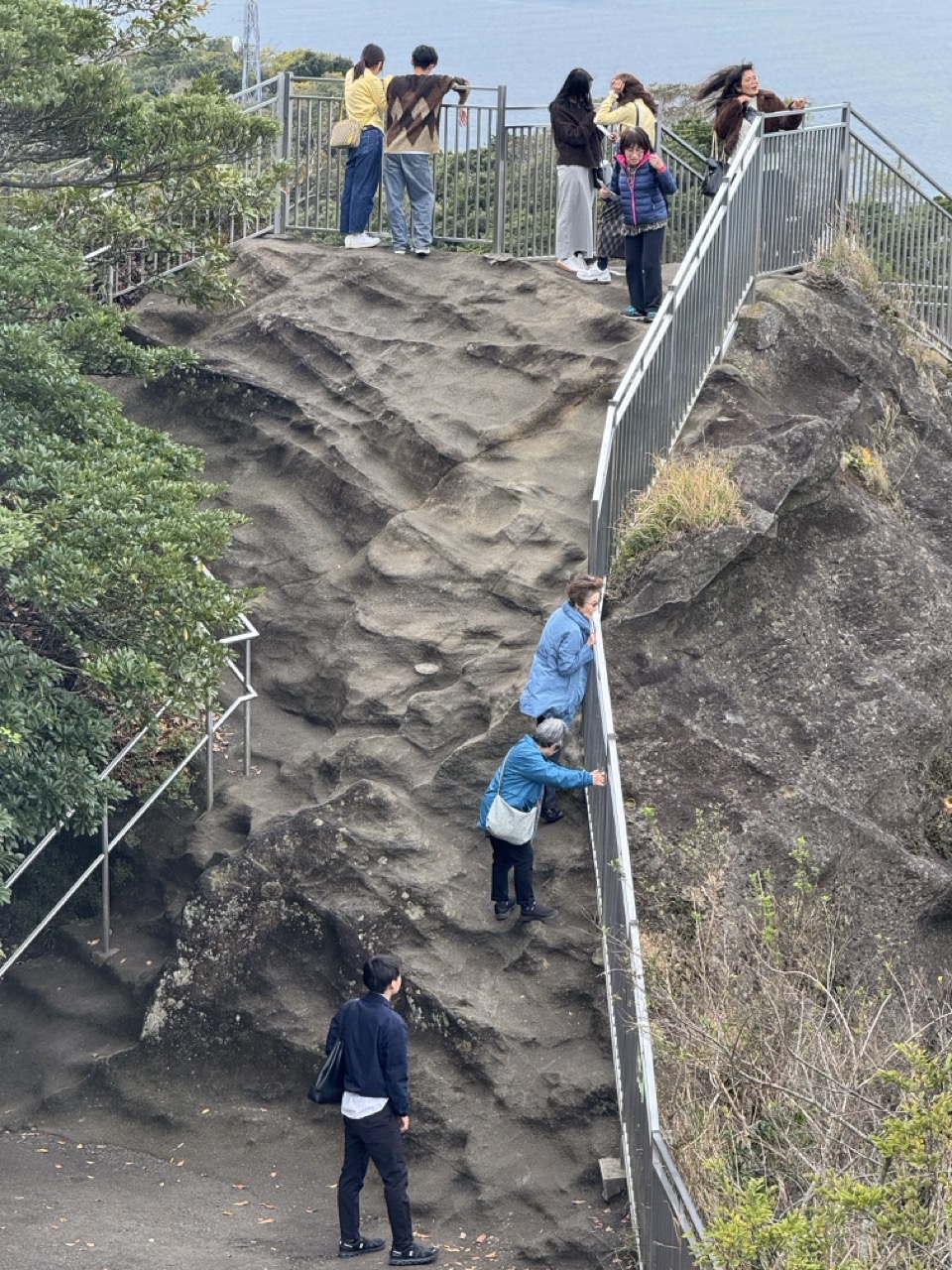
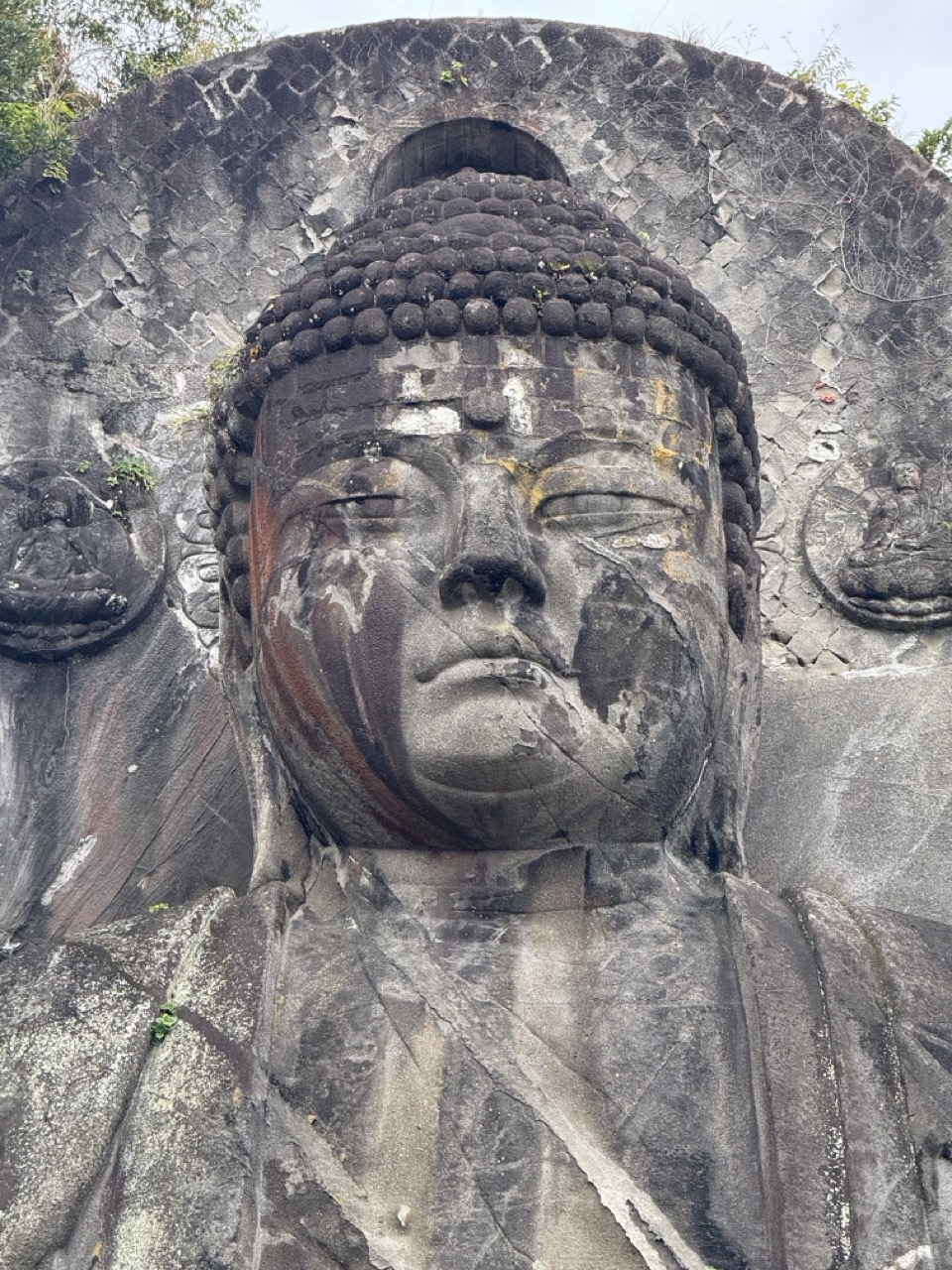
At the top, do the famous part first. Jigoku Nozoki, the View of Hell, is a rock ledge that juts out over a sheer drop, with the whole bay spread below. It is genuinely high, and there are rails, but if you dislike heights you will feel it. Take care with your phone near the edge. Then continue to the Hyakushaku Kannon, a huge figure carved into the quarry wall.
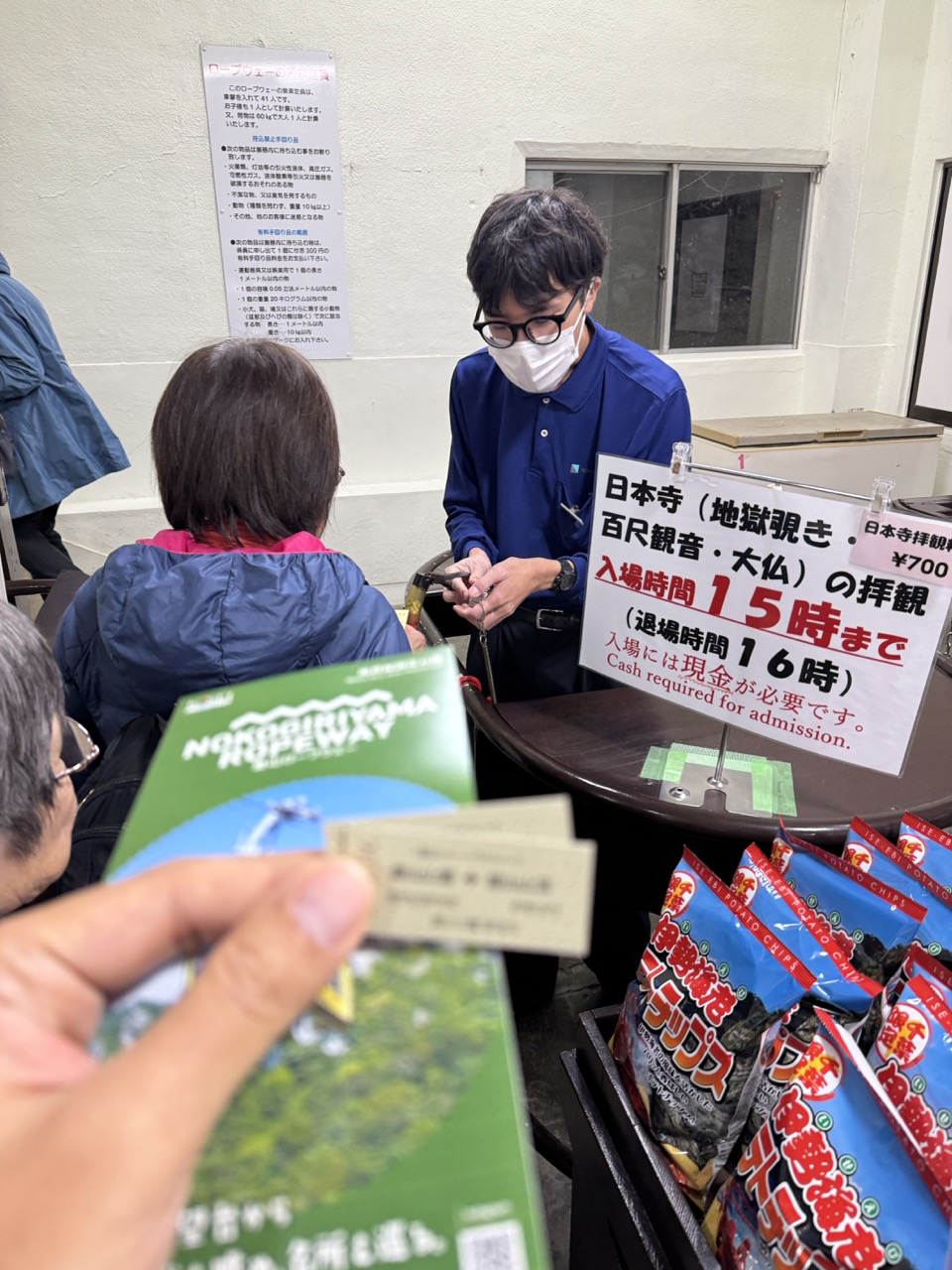
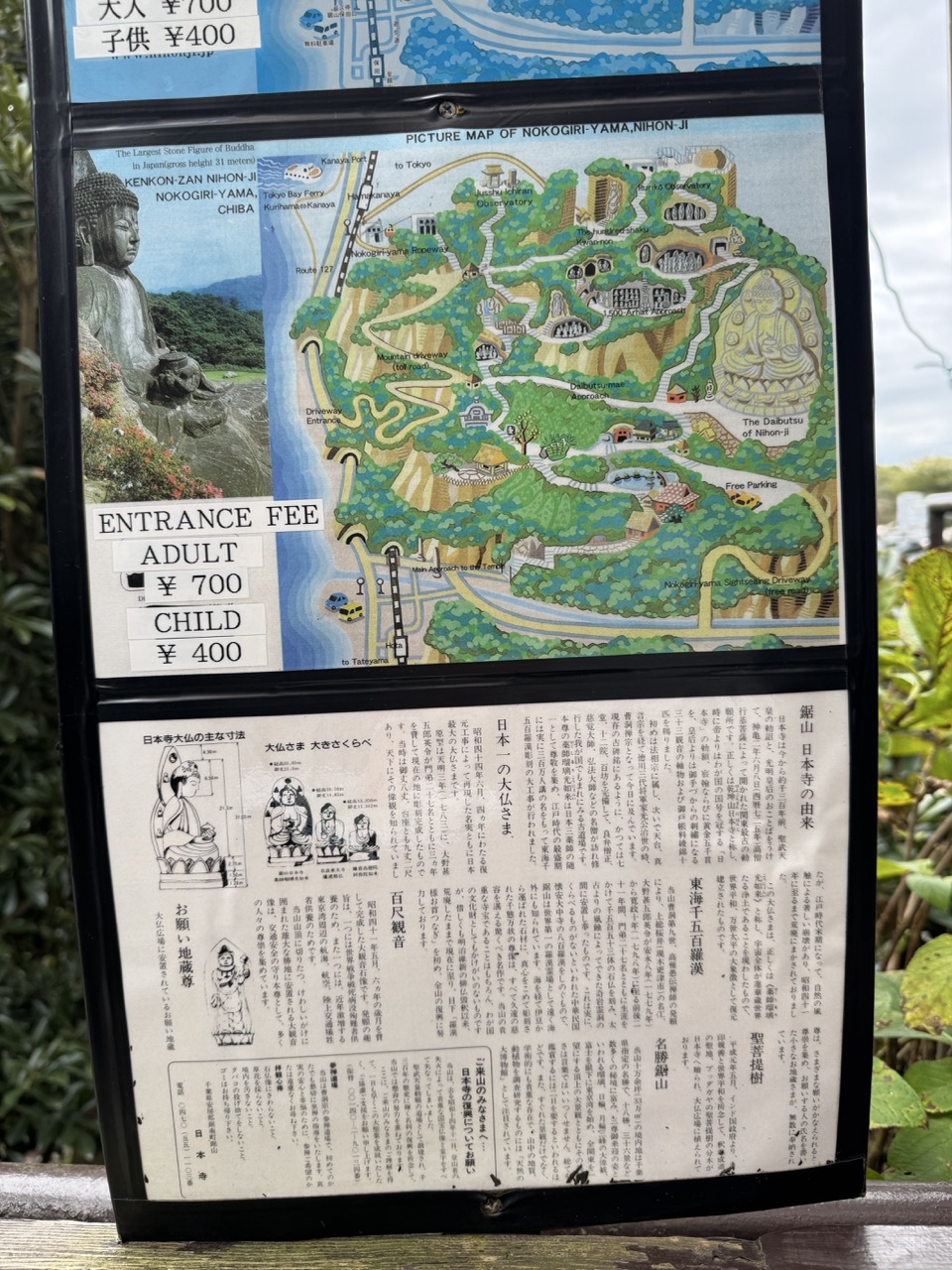
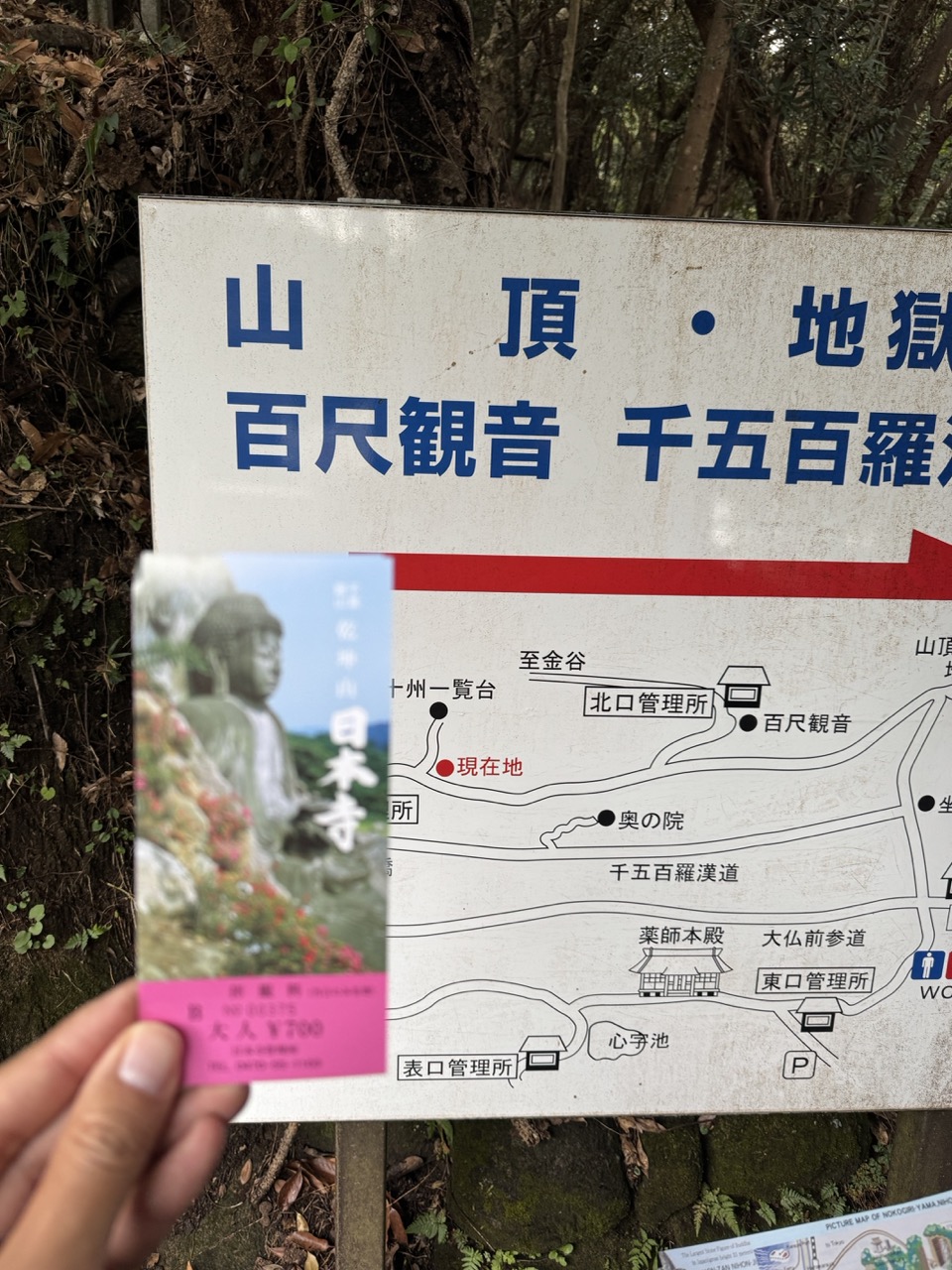
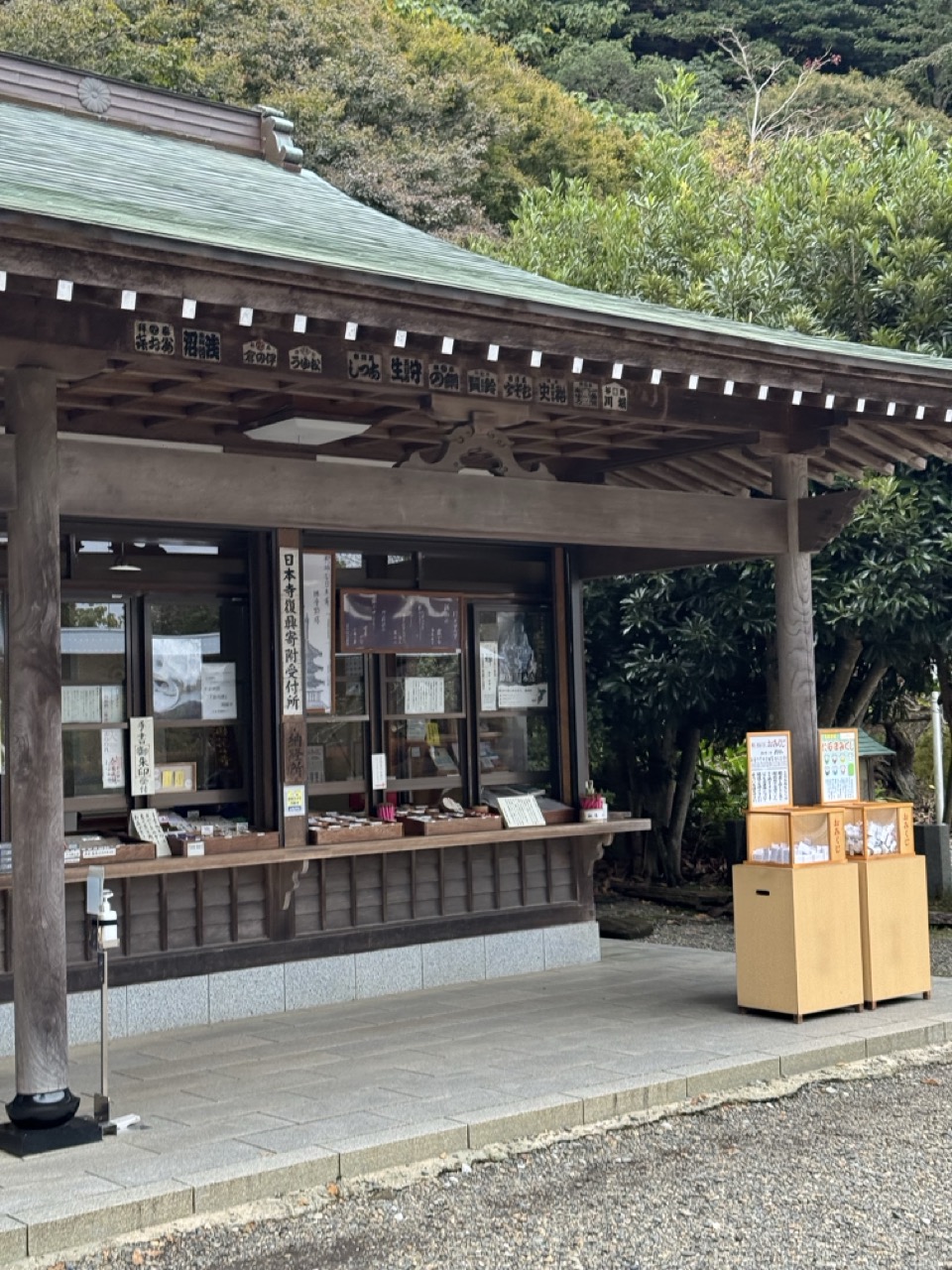
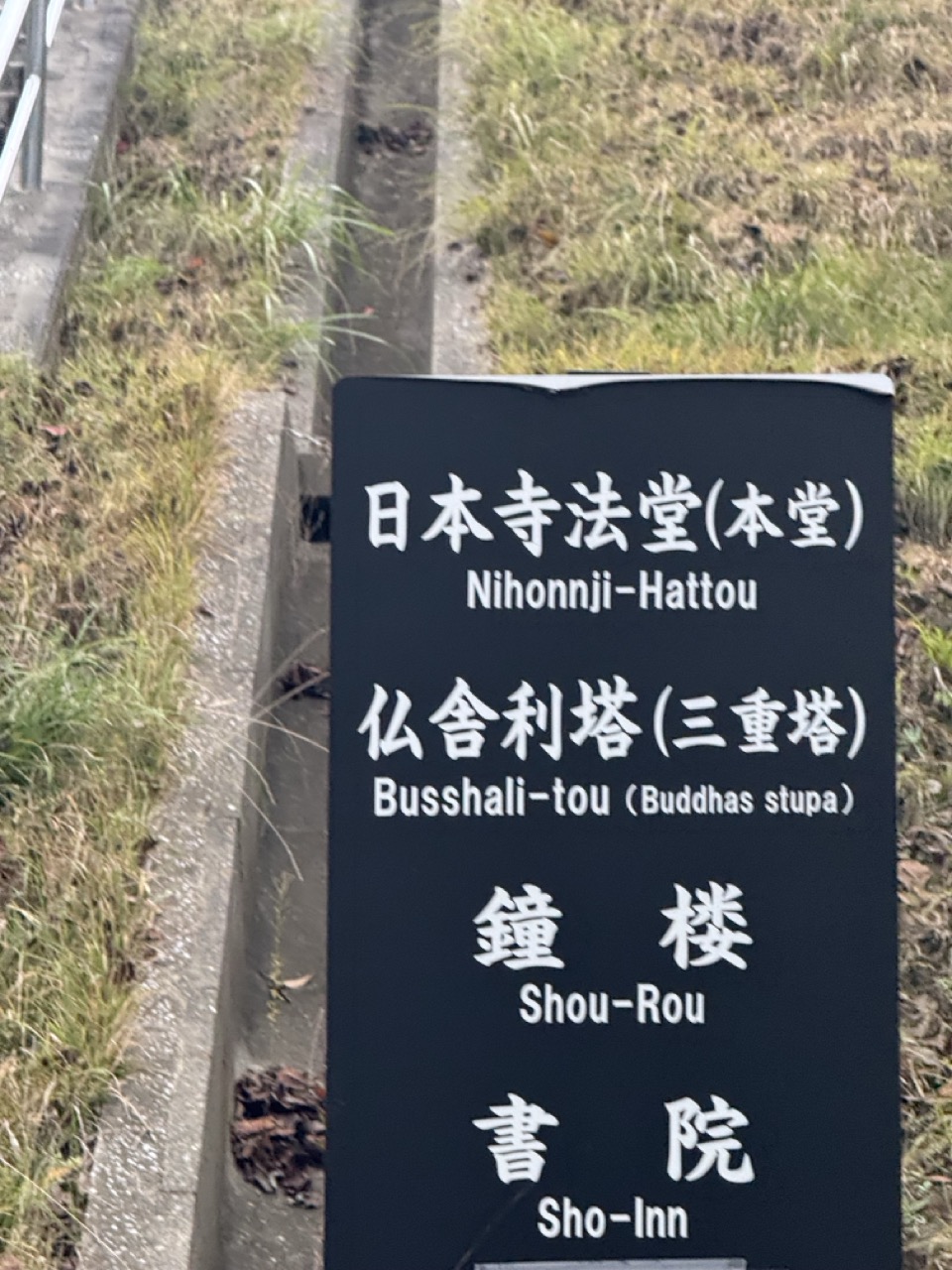
Entry to the temple grounds is separate from the ropeway ticket. Nihonji admission is 700 yen for adults, and the grounds run roughly from 9:00 to 16:00 in winter, closing around sunset. Listings disagree on exact hours and even on the price, so confirm before you go.
Walking Down Through Nihonji
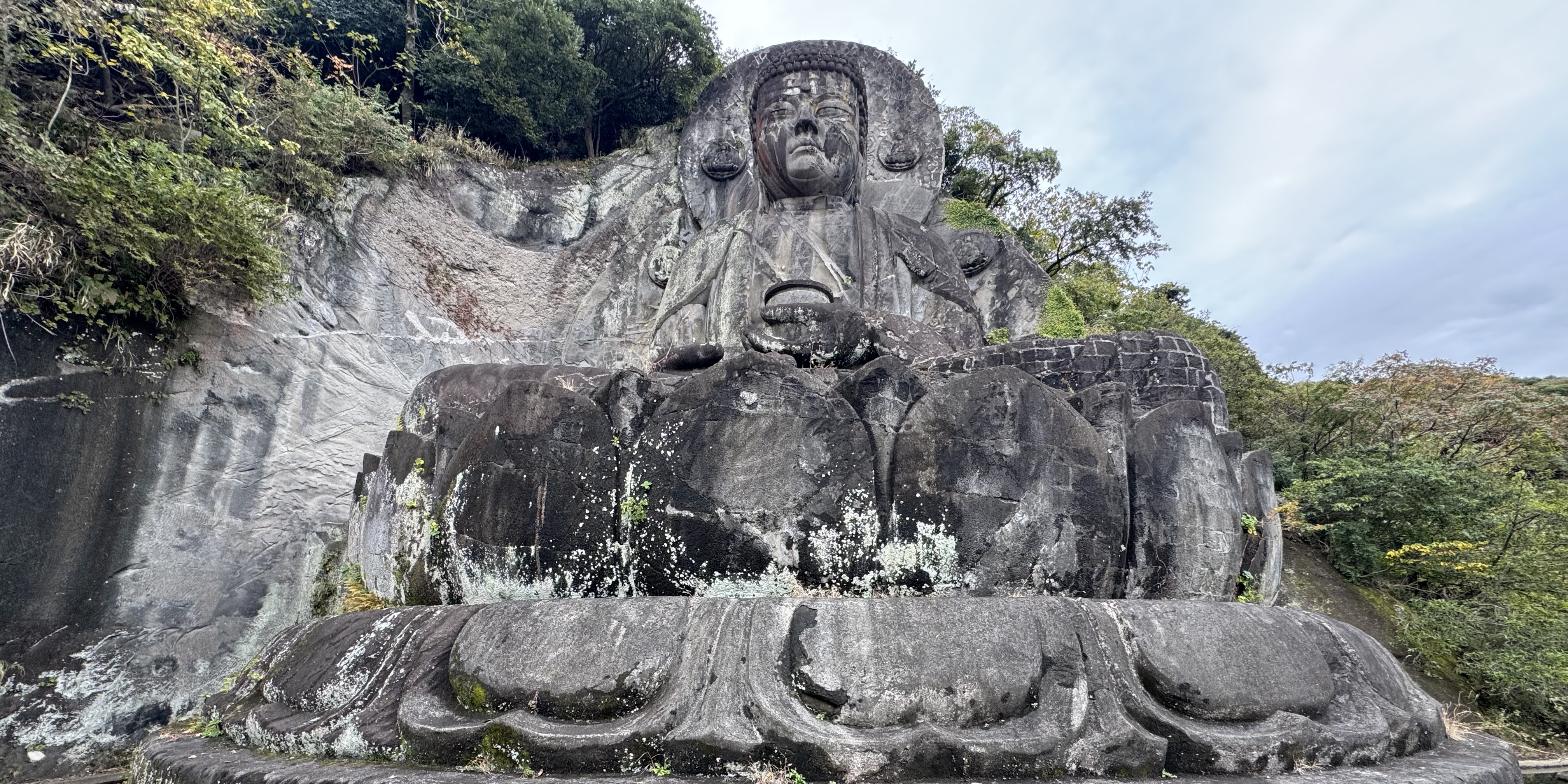
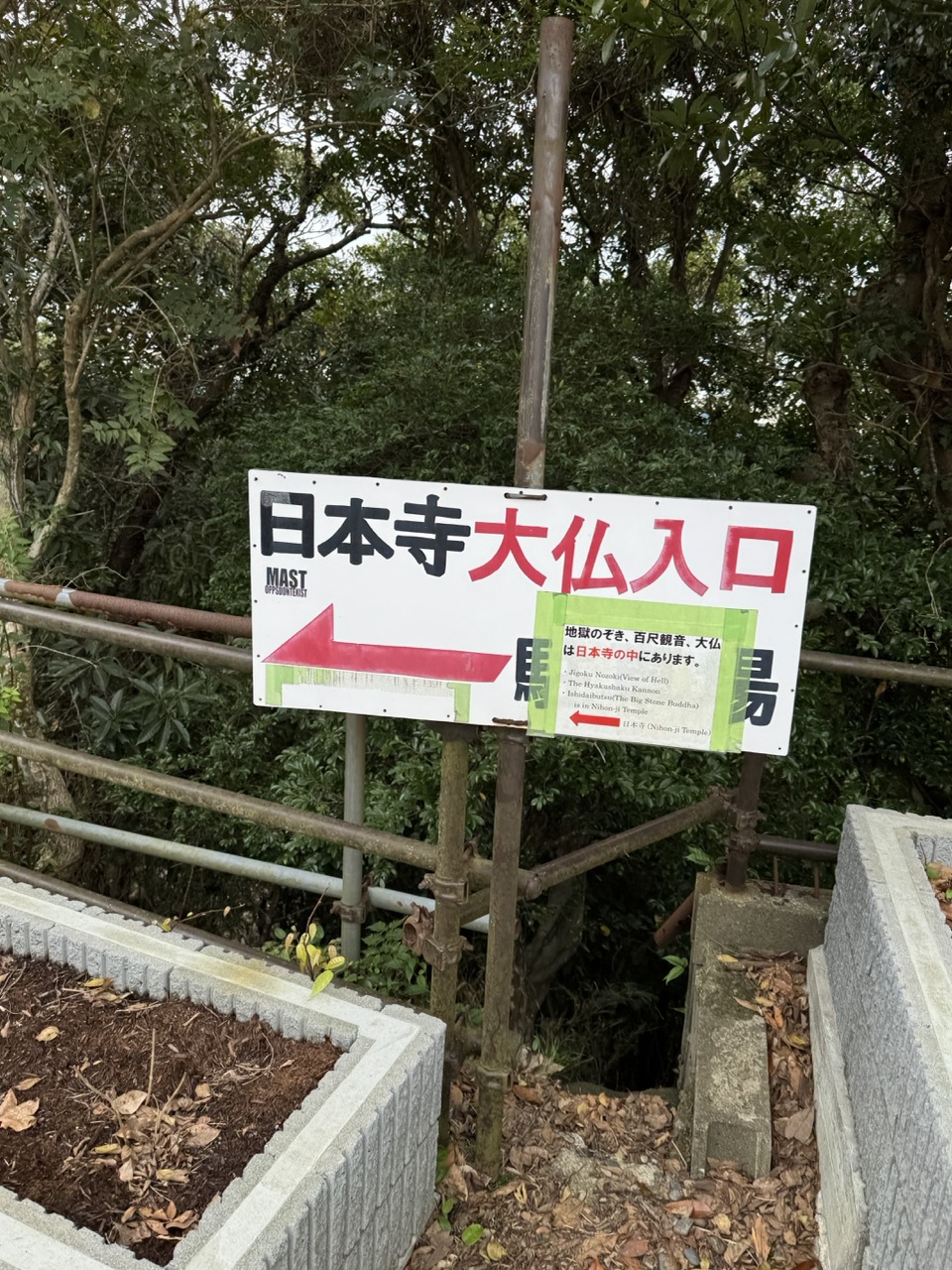
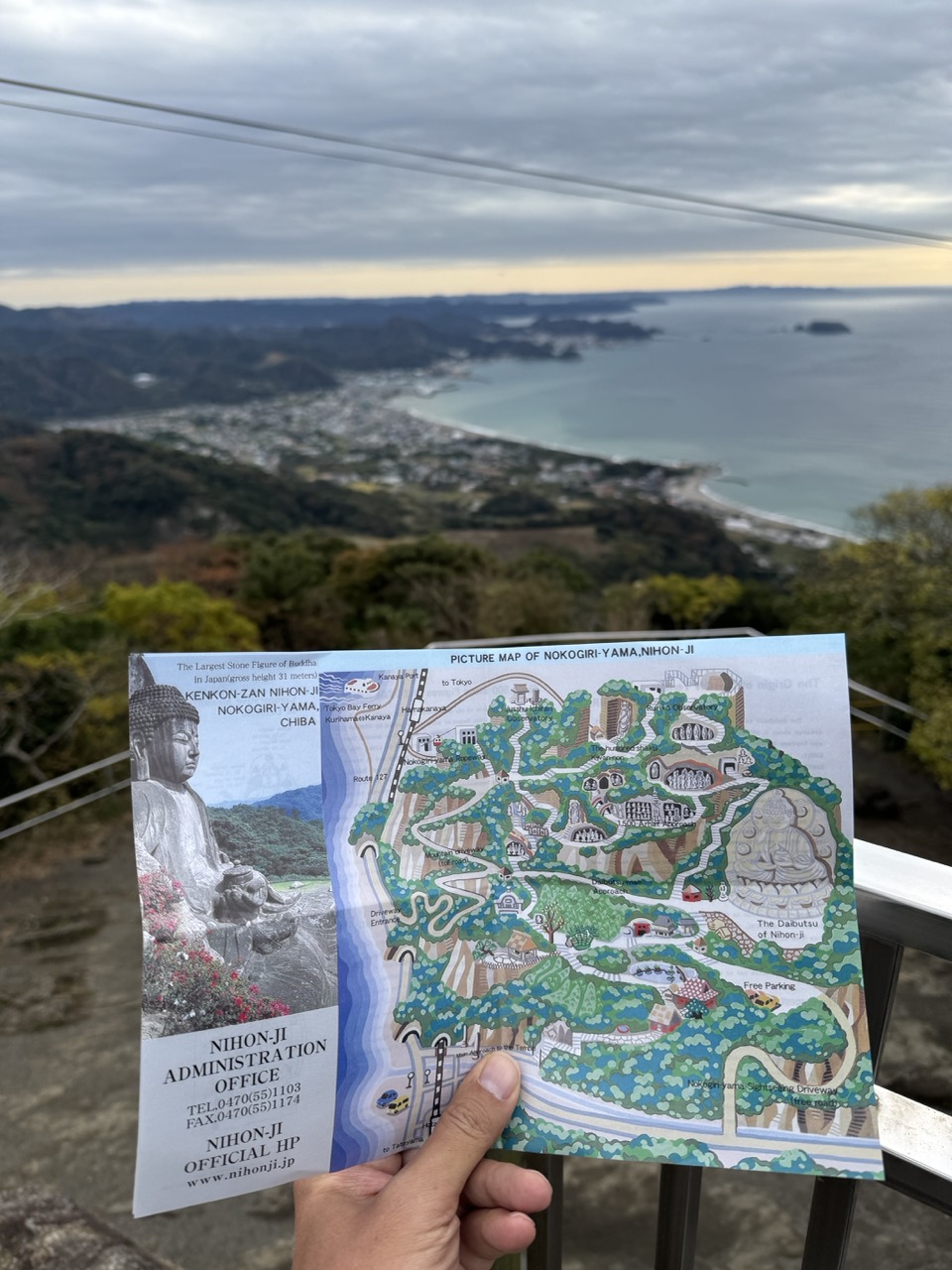
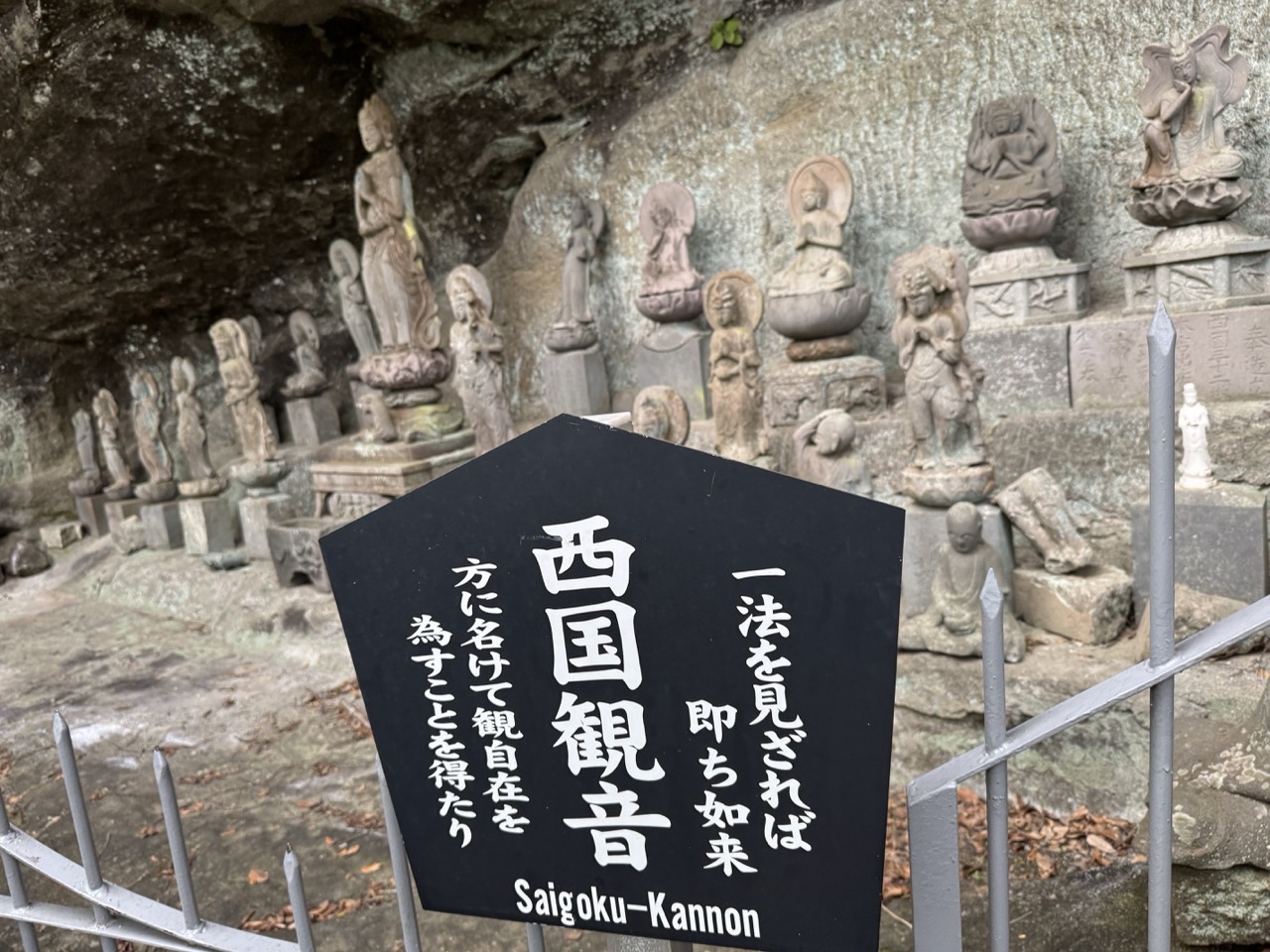
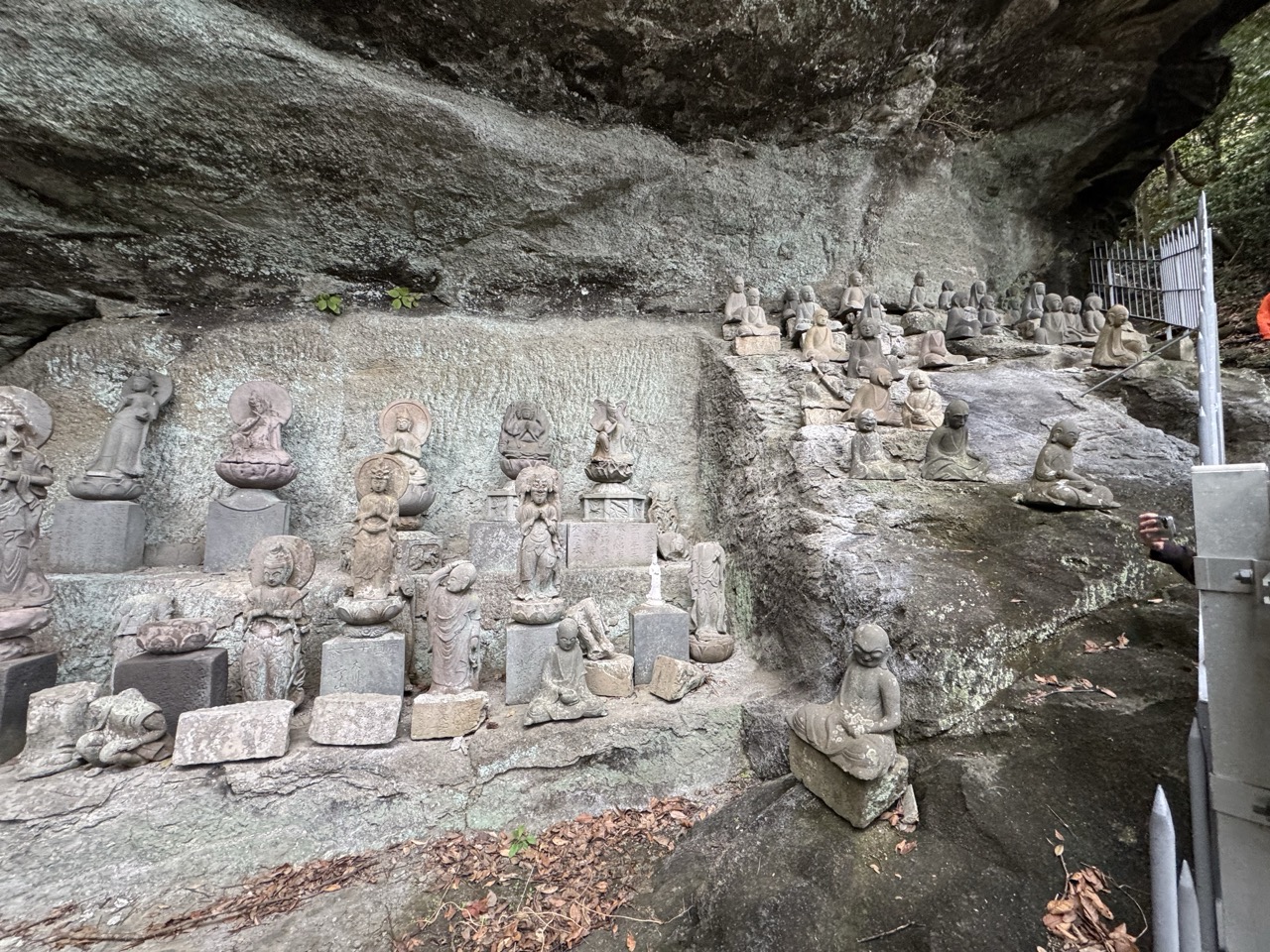
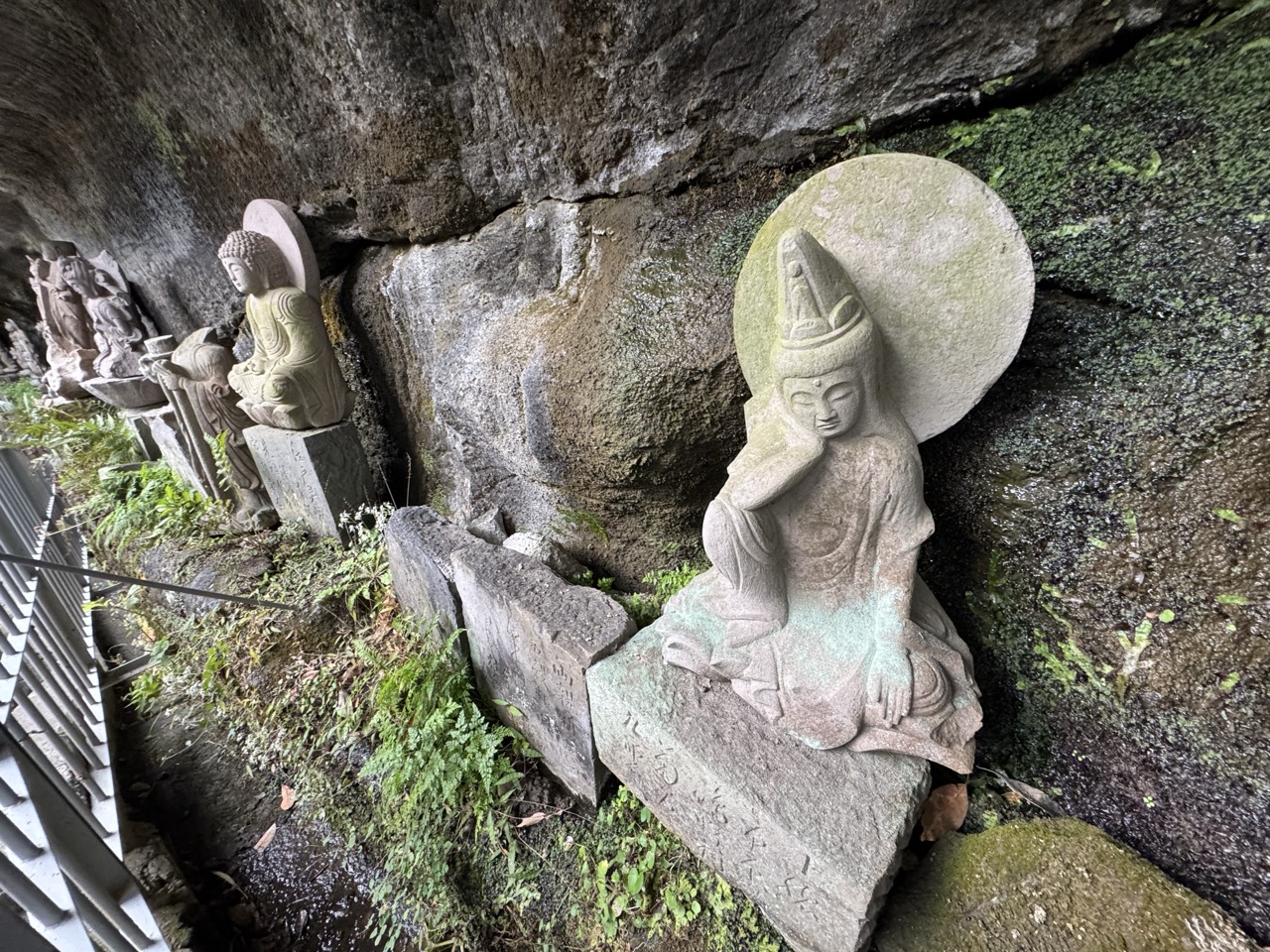
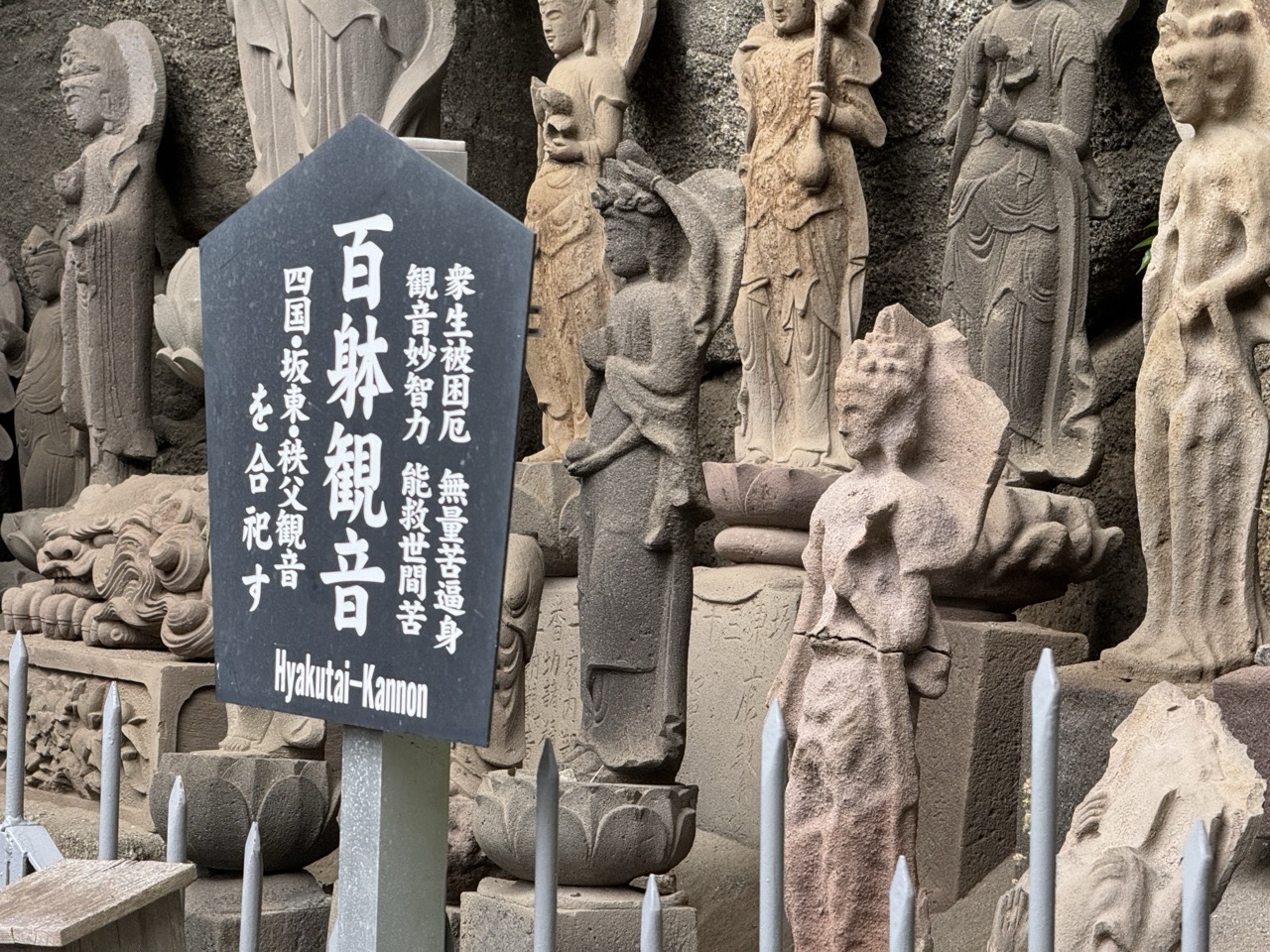
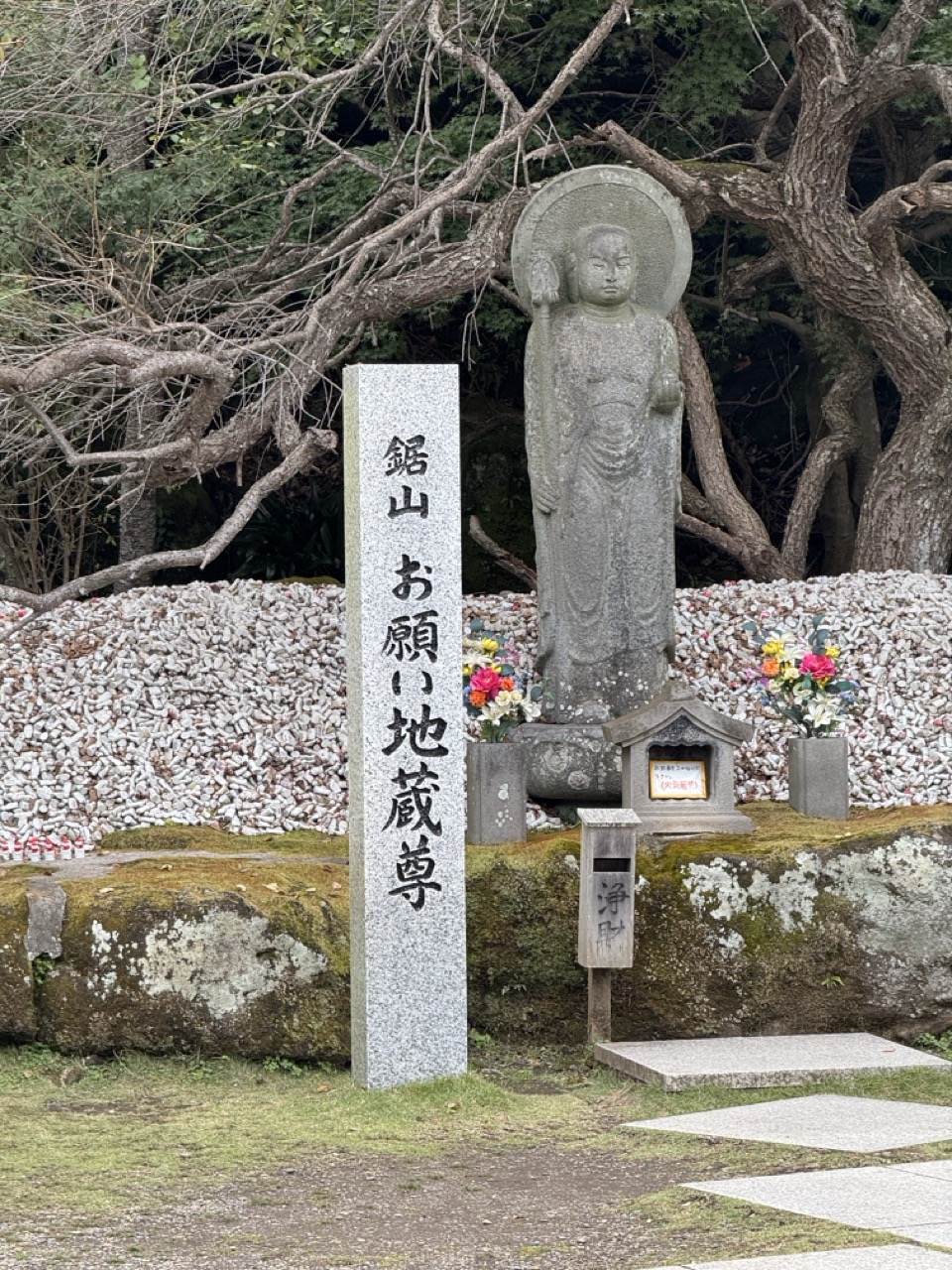
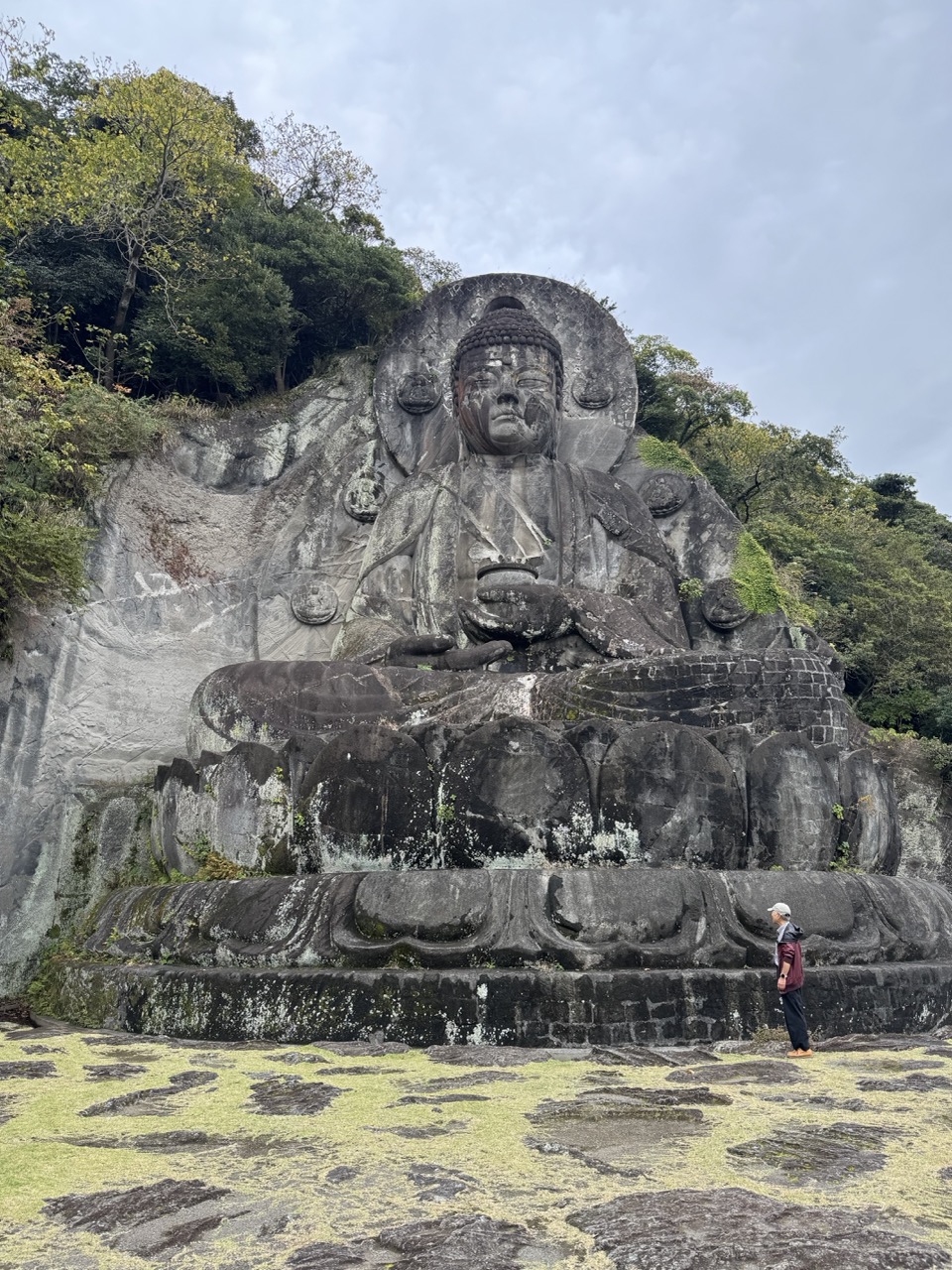
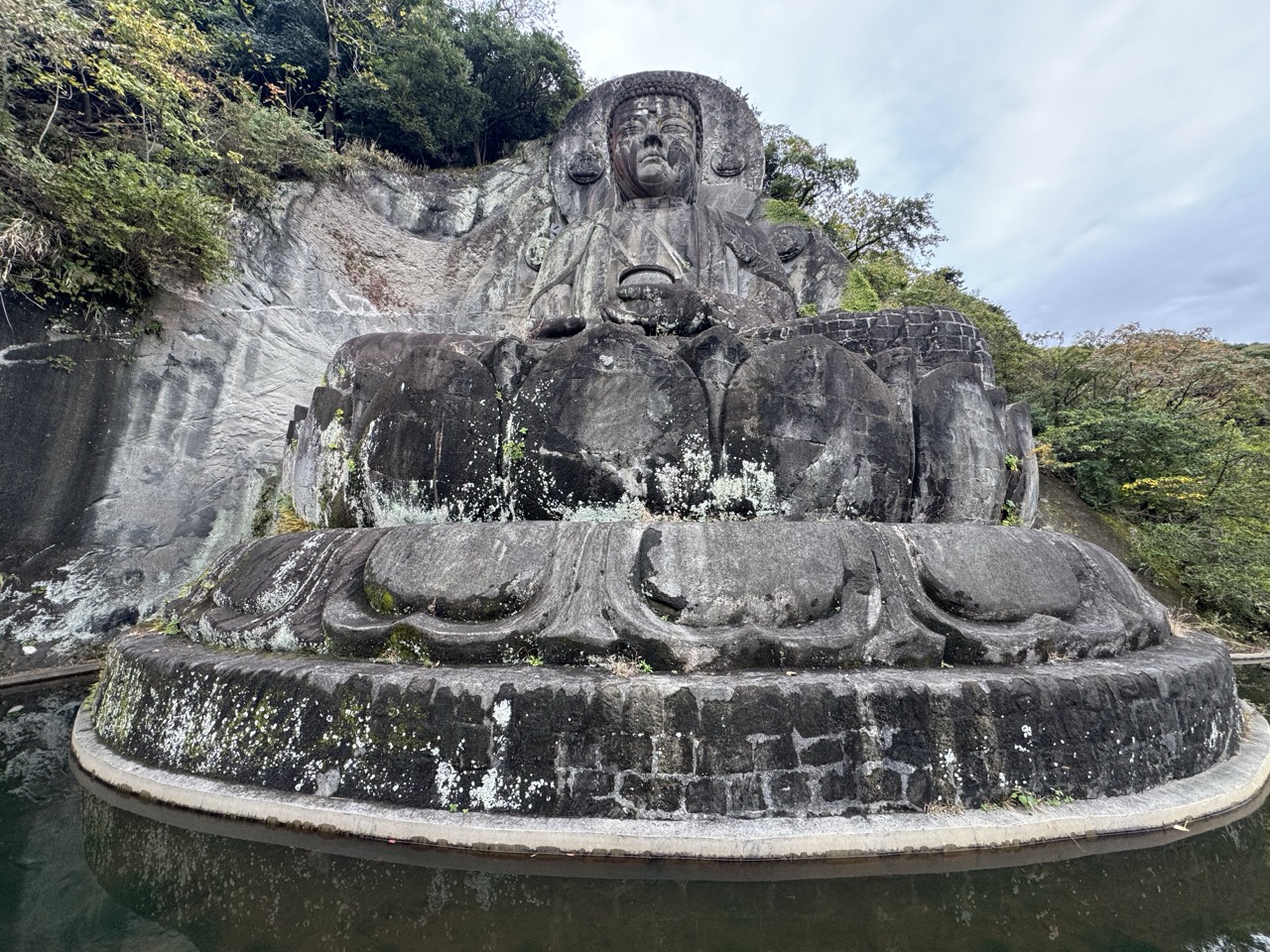
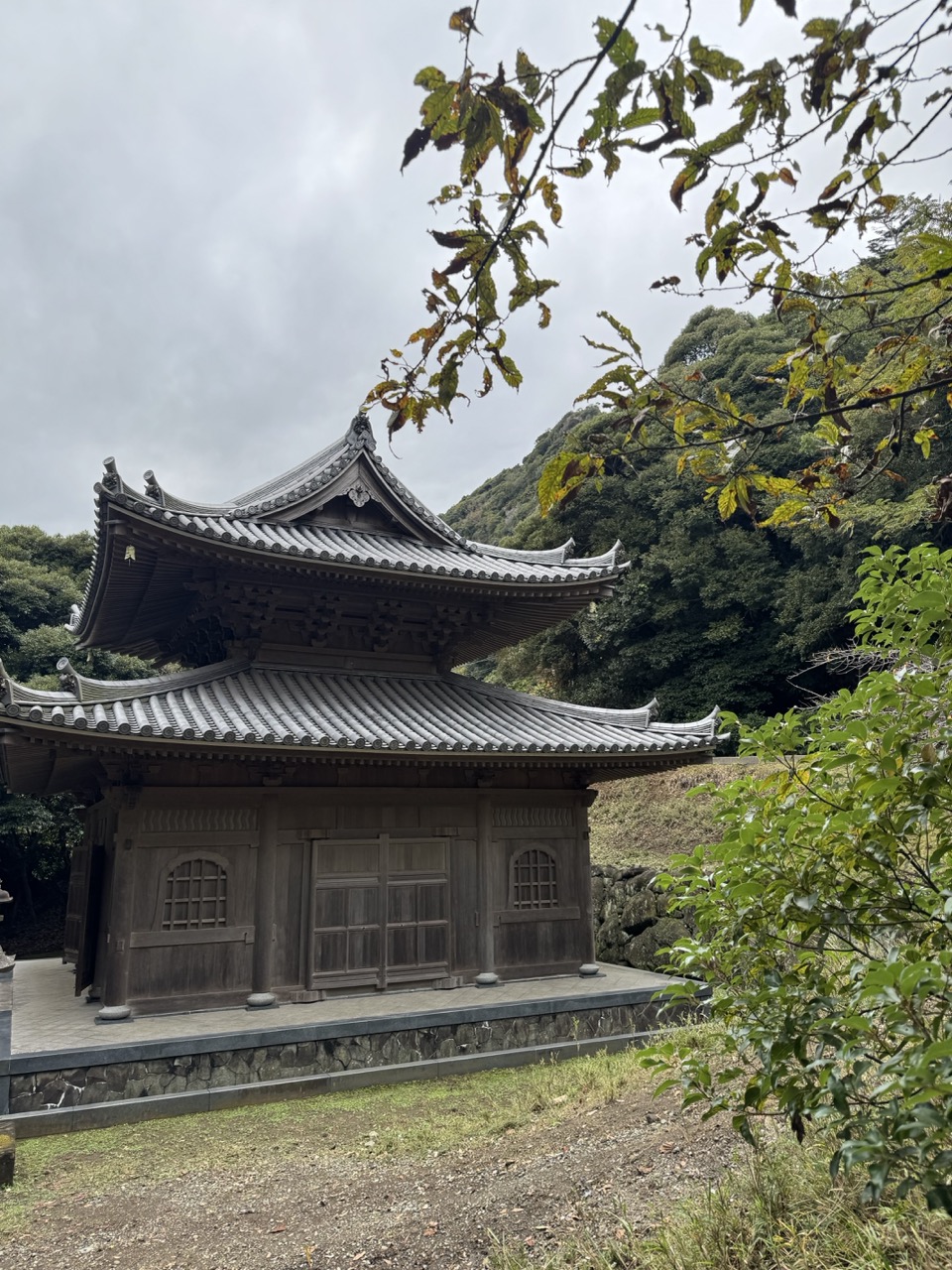
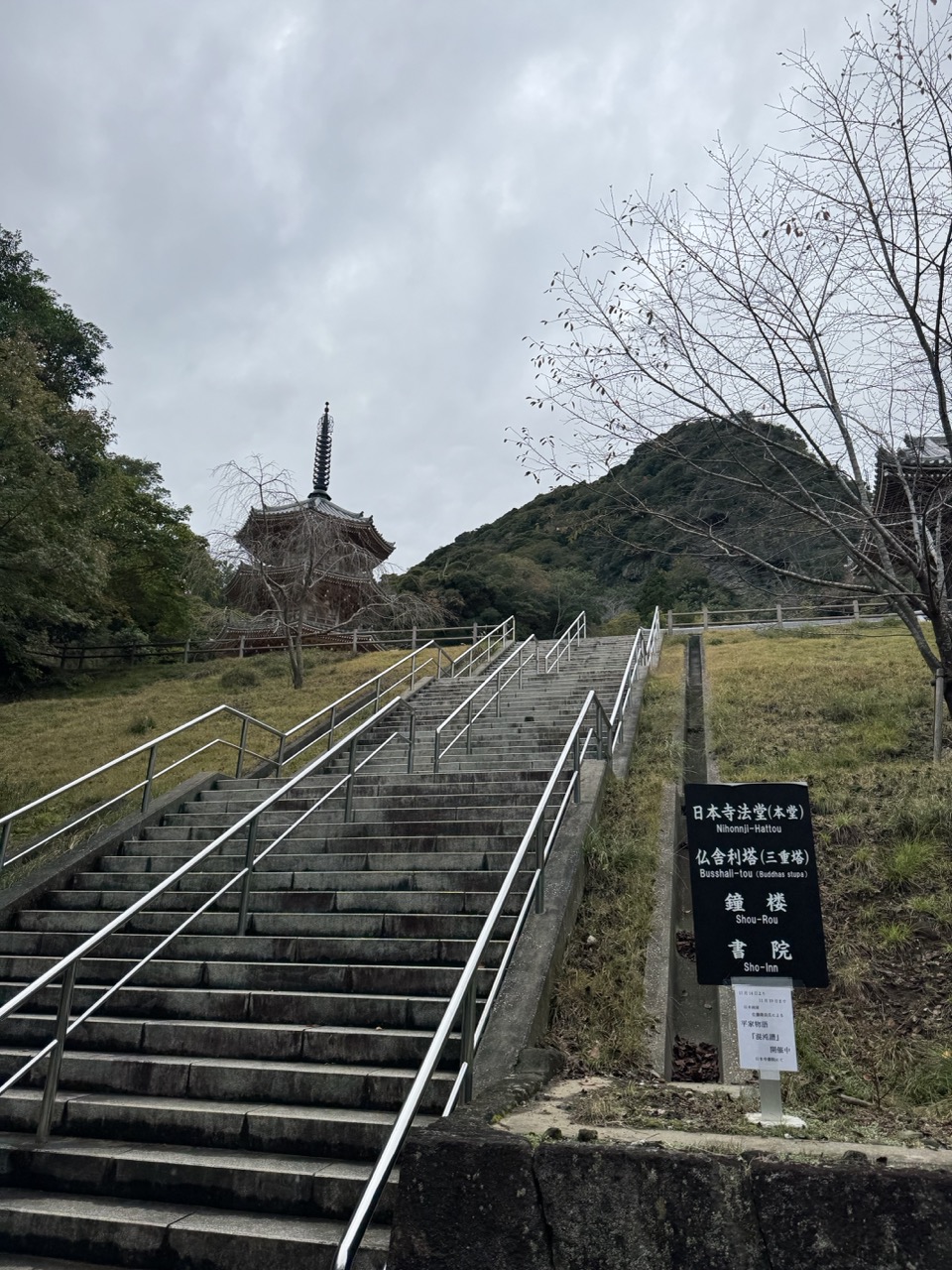
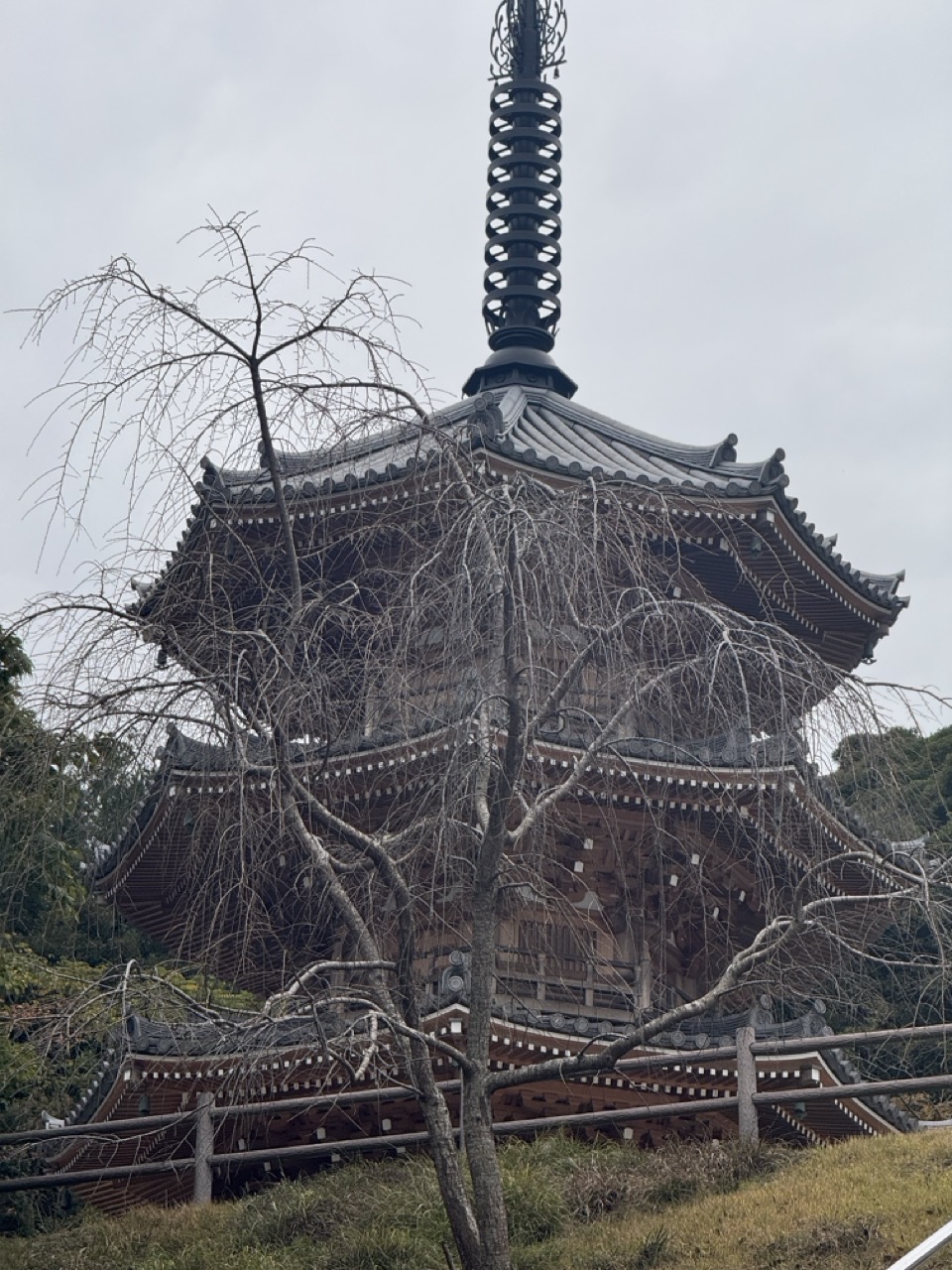
The path down is the best part of the day. There is lots of walking up and down stairs and steep paths along the way as you pass through the old quarry with about 1,500 stone Rakan statues, each with a different face, before the route ends at the Great Buddha. At 31 metres it is the largest stone carved seated Buddha in Japan and it is worth the stairs.
There are a lot of stairs. Wear proper shoes with grip, bring water, and give this section a good two hours without rushing. Do not try to fit it between two tight ferry sailings.
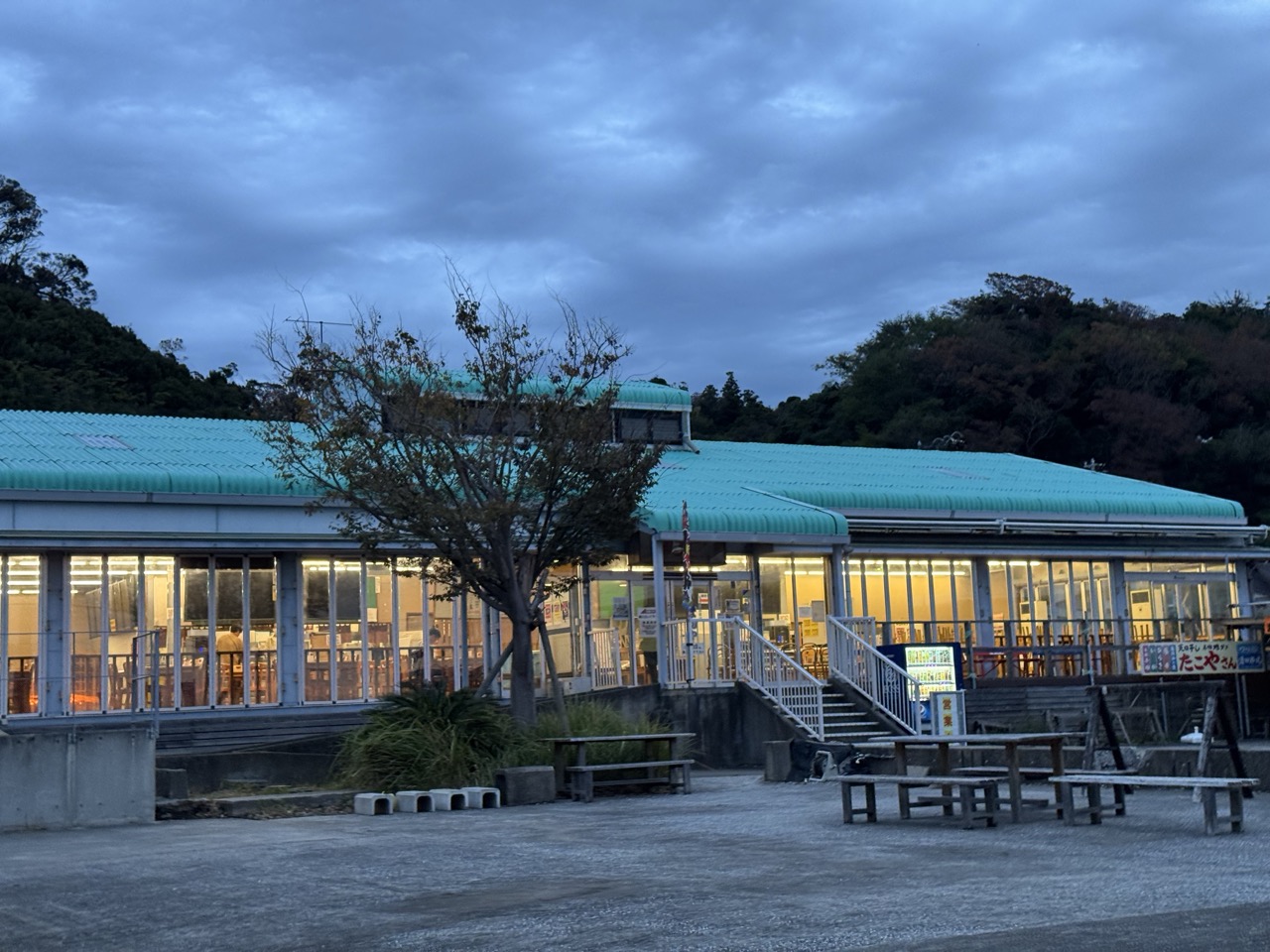
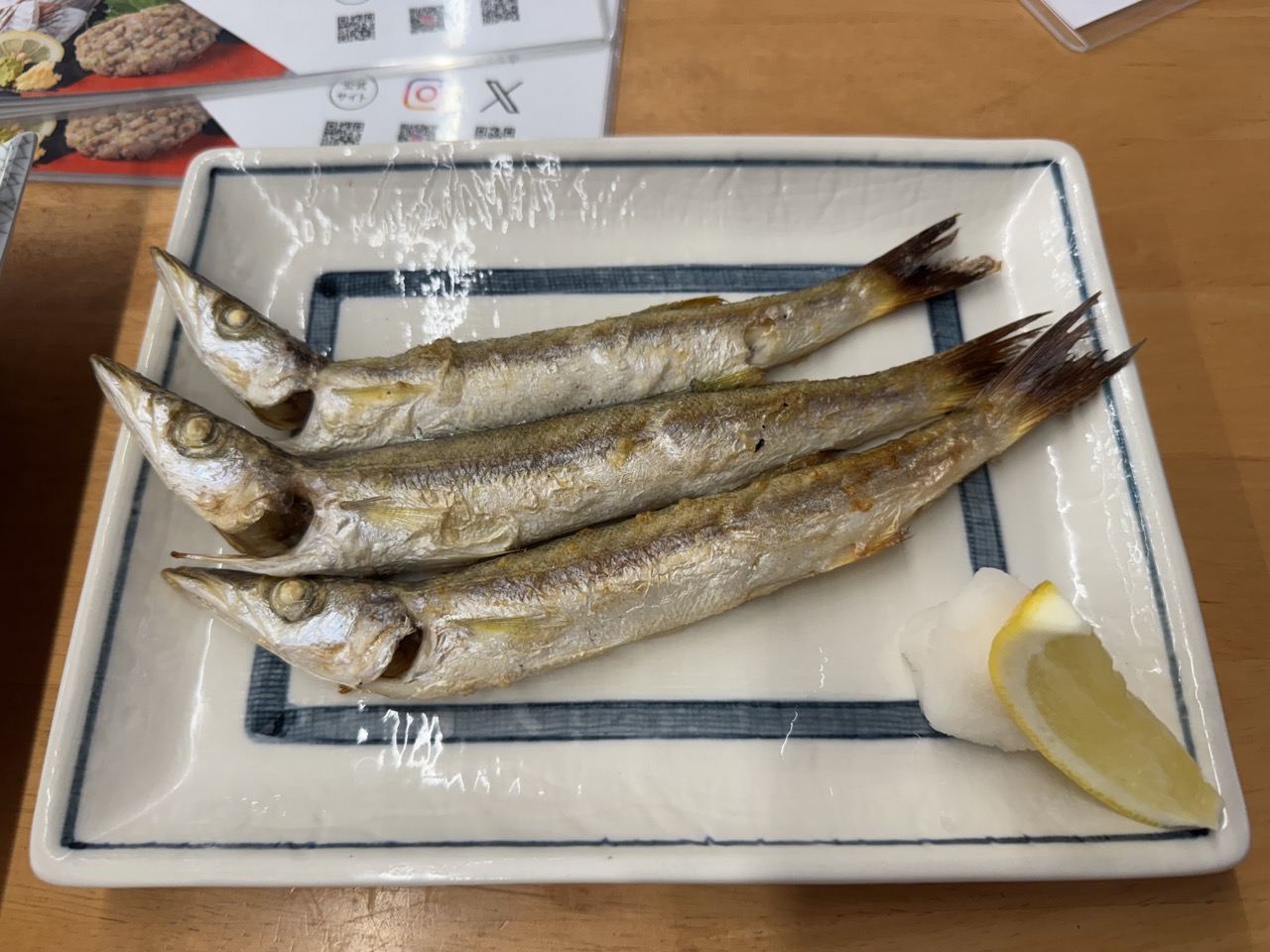
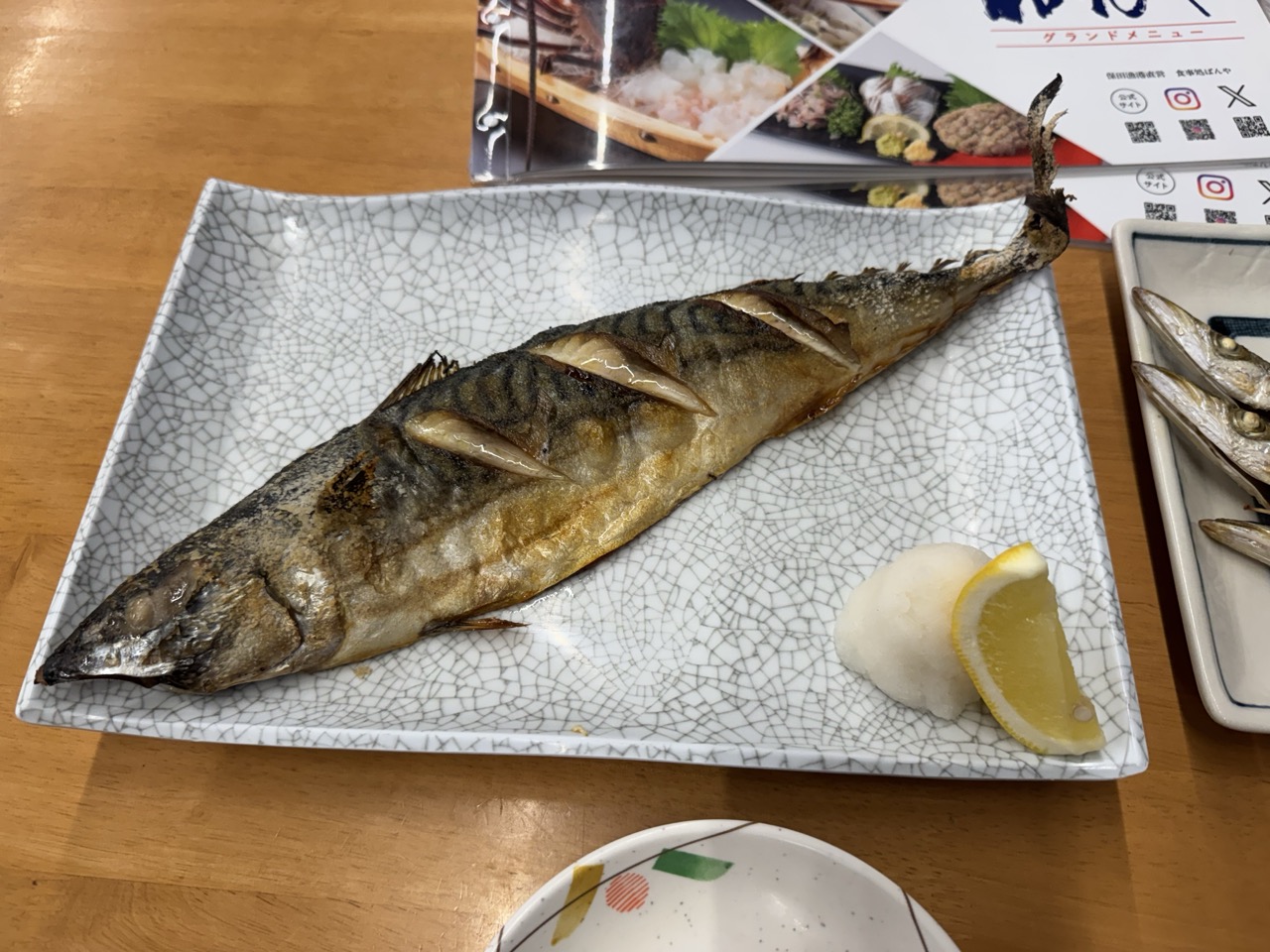
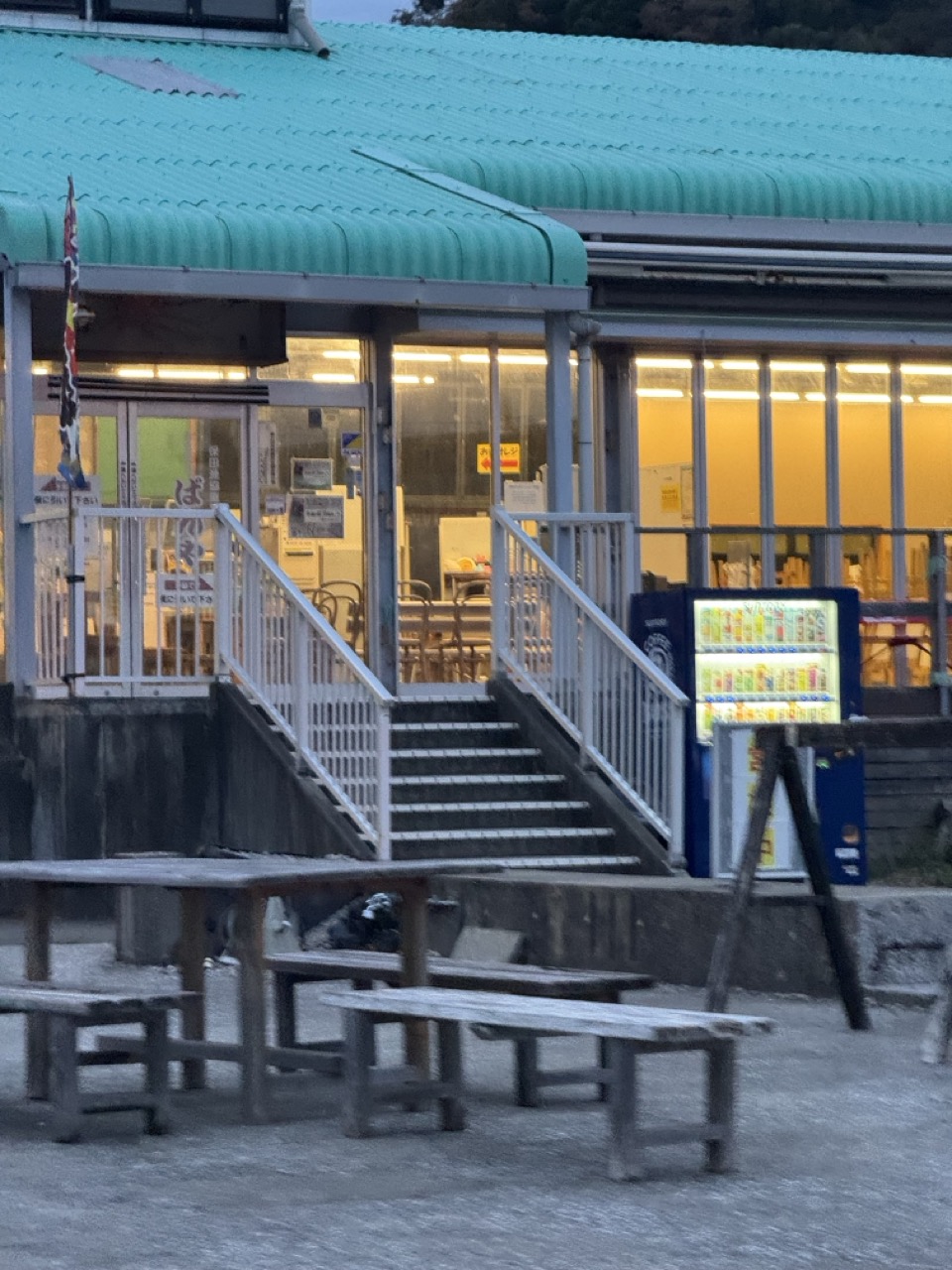
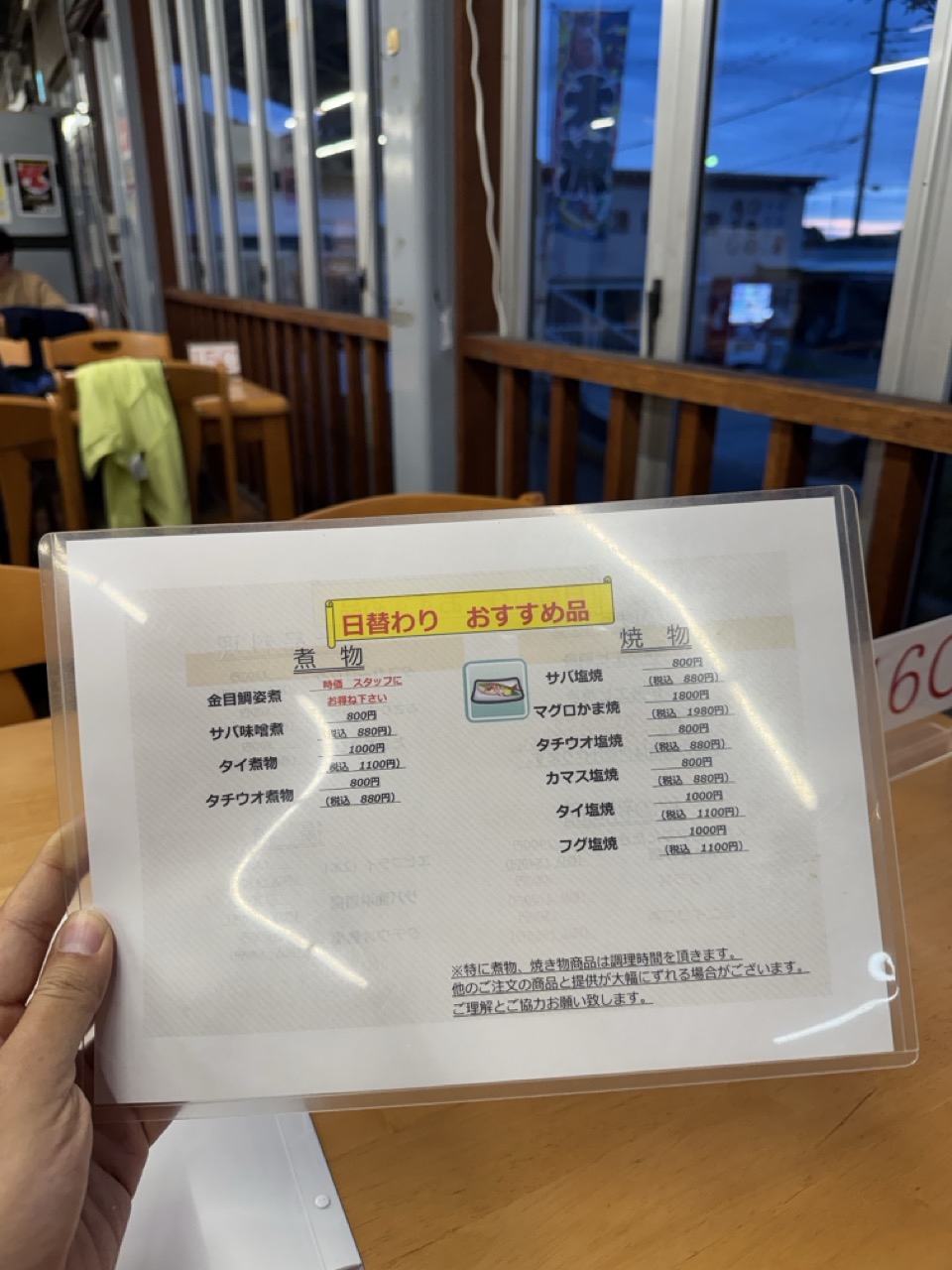
We ordered beer and sake along with two grilled fish, the barracuda and the mackerel. Both were good, but the mackerel was grilled to perfection with just the right amount of salt and was incredibly tasty. The prices were very reasonable too, at just 800 yen each. Other tables ordered the sashimi set, which looked popular.
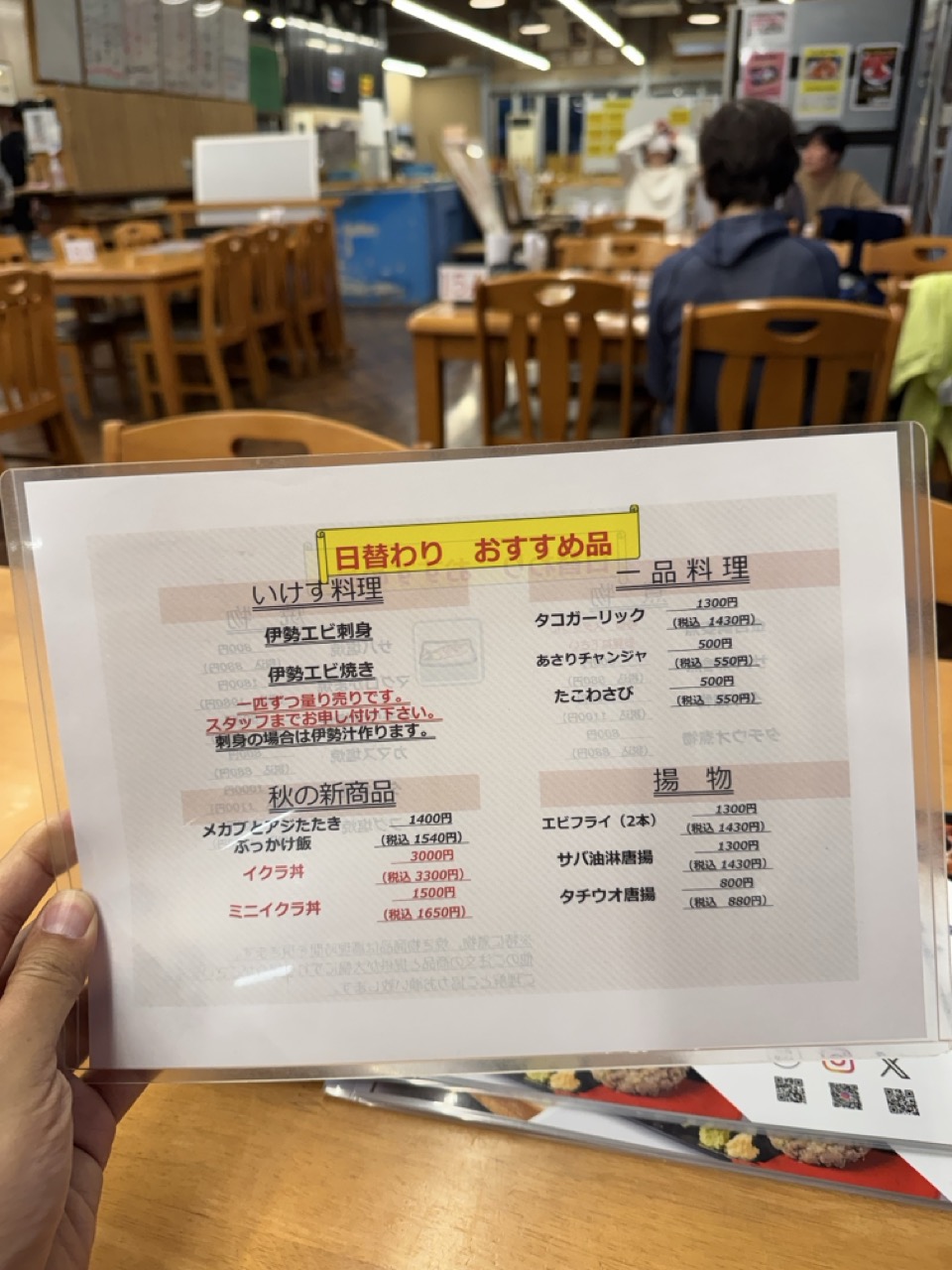
The important tip is the clock. They stop taking orders at 5:00 PM, and one listing says weekends and holidays run later, to about 6:45 in the evening. Five o’clock is early for dinner, so plan the mountain around it. We saw other diners arriving right before last call to squeeze in a meal. There is plenty left on the menu that we want to try, so we will definitely be going back.
A Drink at SANGA Soba and Coffee Stand
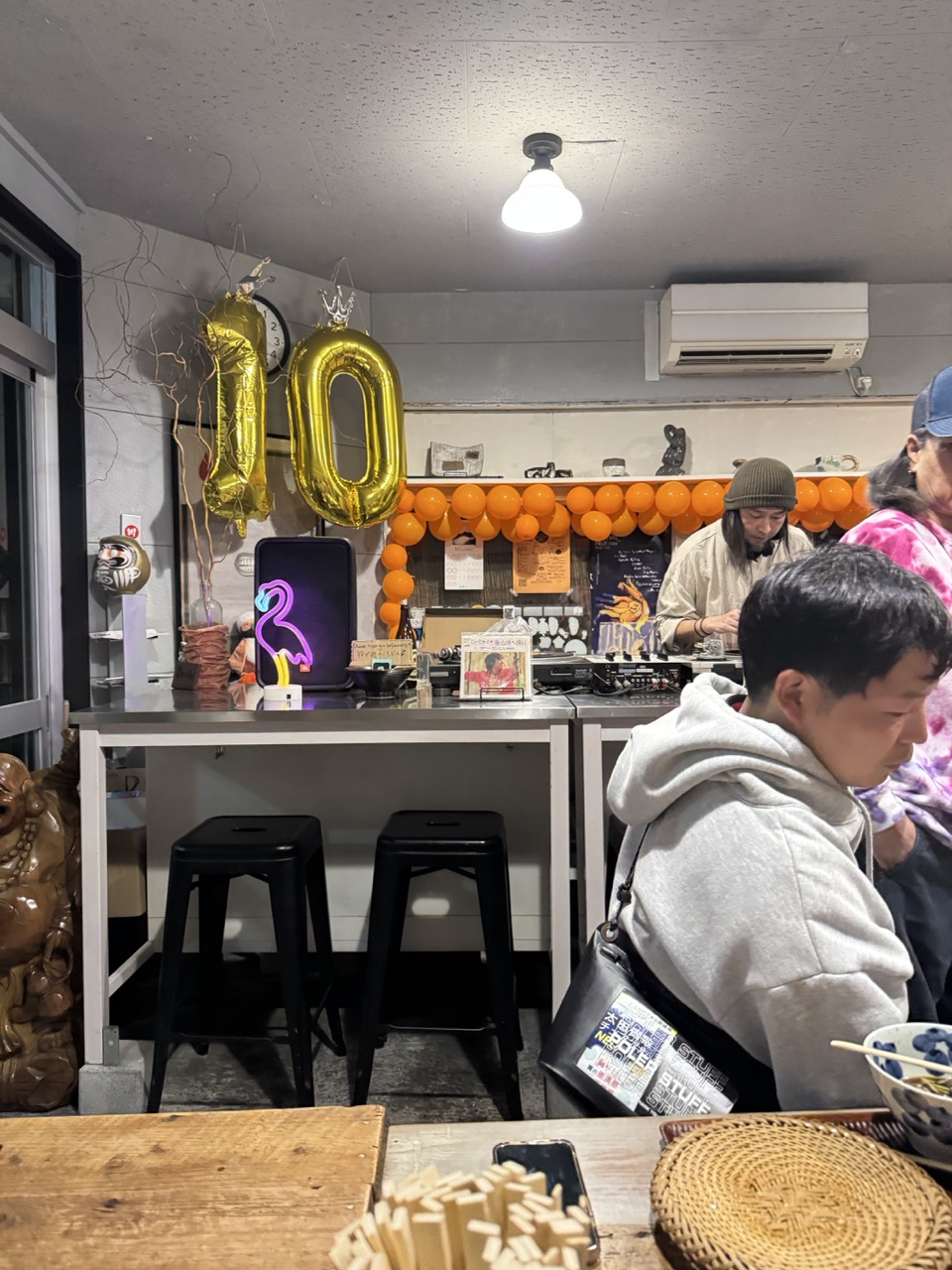
SANGA SOBA & COFFEE STAND sits right outside Hamakanaya Station, and it was an unexpected find. We were heading back toward the ferry when we passed it and noticed a DJ playing inside with lots of people enjoying the music. It turned out to be their DJ night, so out of curiosity we went in.
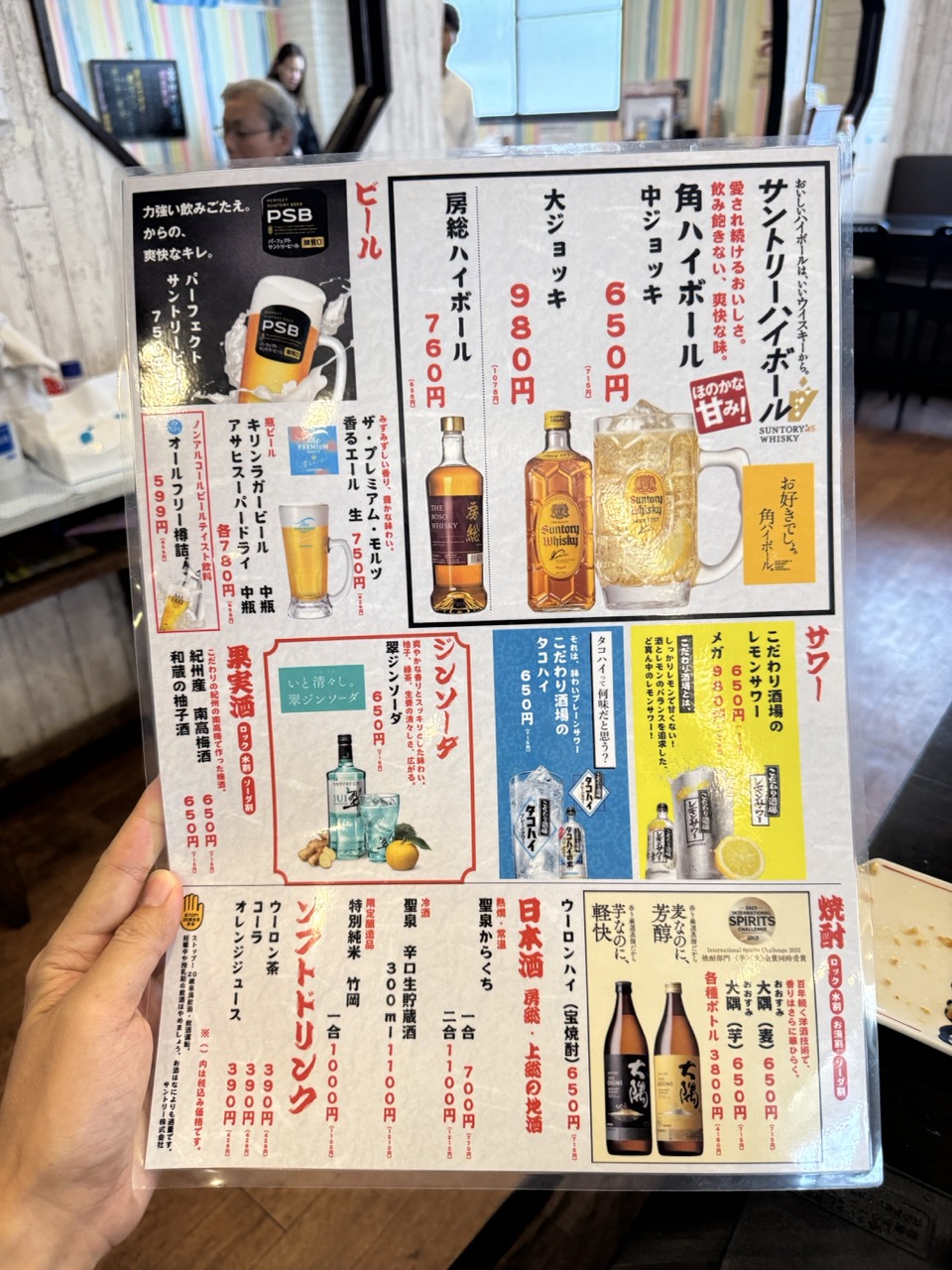
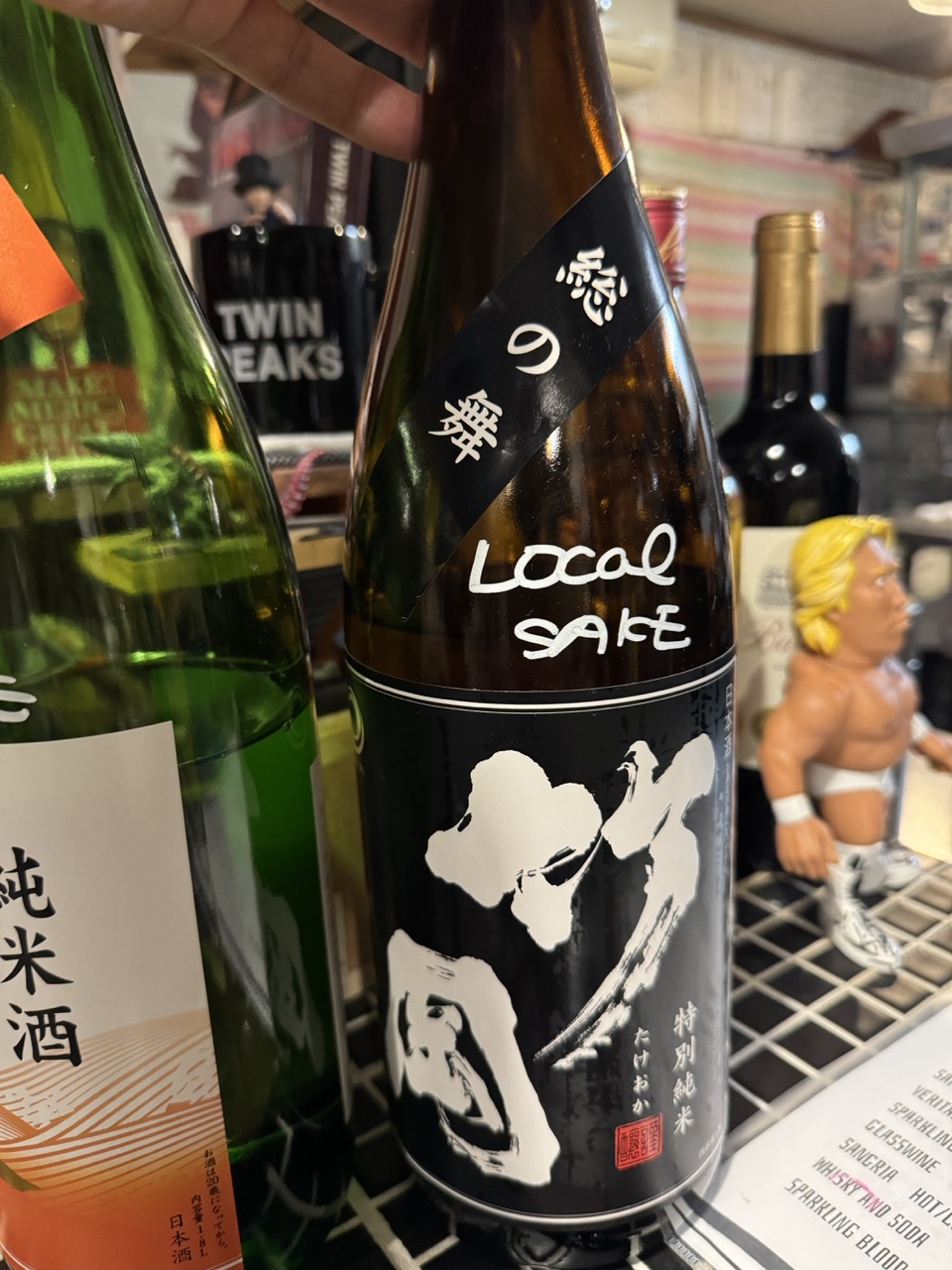
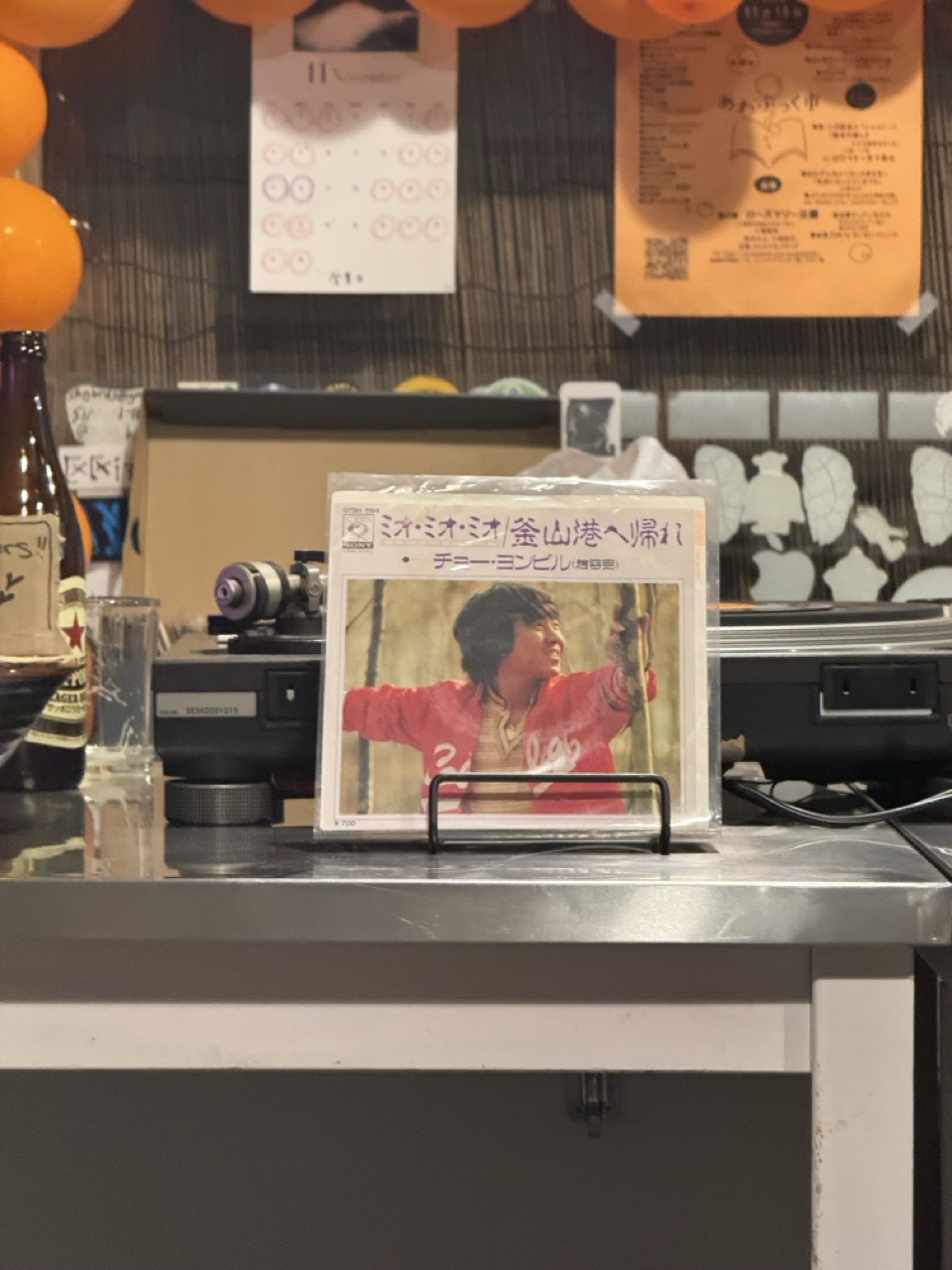
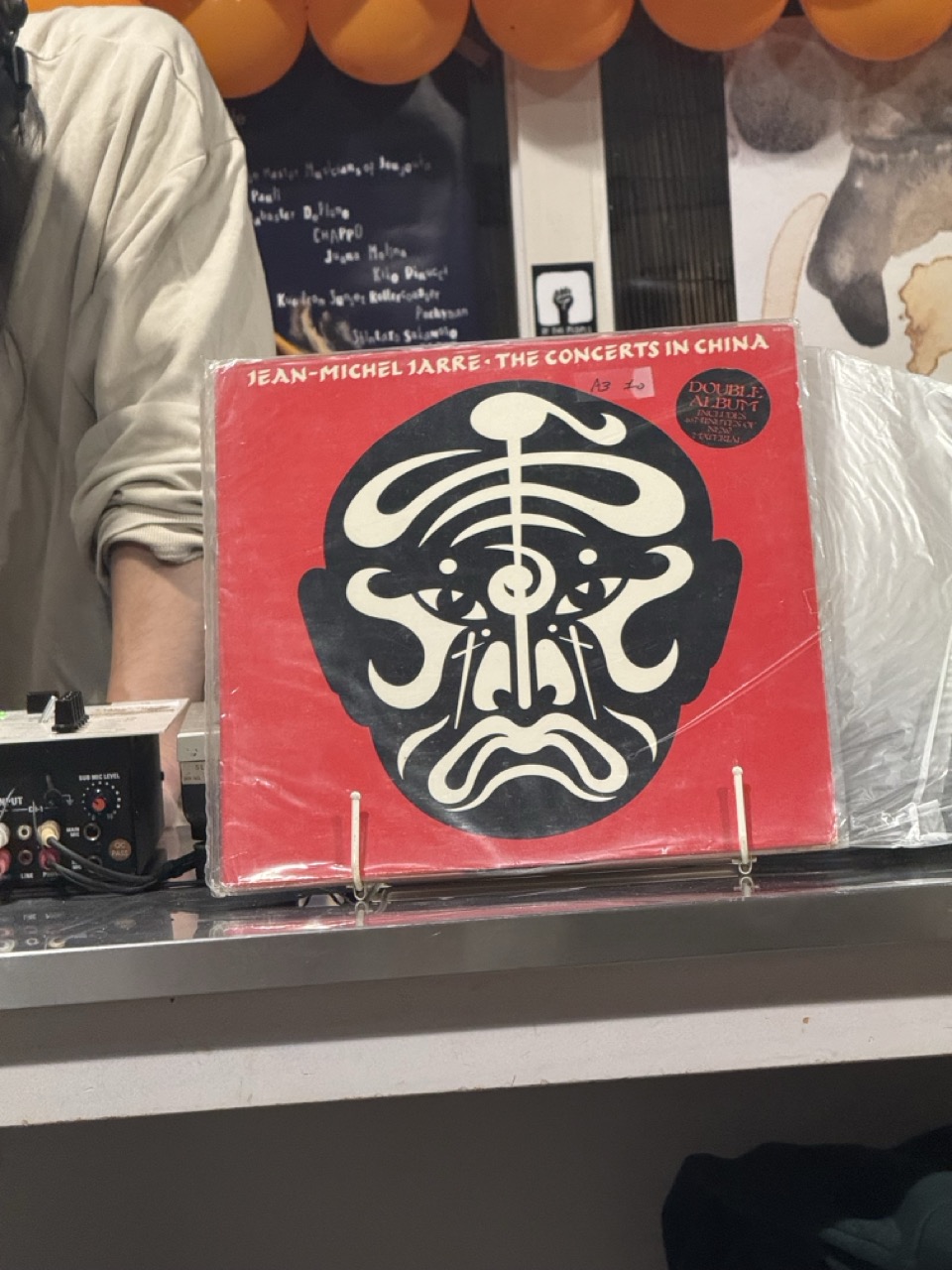
We ordered drinks to take in the atmosphere. First we tried one of the two local sake choices on offer, and it was surprisingly fresh and crisp. Later we had Sapporo beer, which seemed to be what most of the room was drinking. The DJ played vinyl records, with a good mix of older Japanese songs and Western English tracks. We enjoyed the setup, the people and the music, and we hope they hold more nights like it.
I did not eat the soba, so I cannot speak to it, but reviewers mention the duck soba as a popular order. Check whether a DJ night is on before you plan around one, because we only happened upon it.
What It Costs
The fixed costs are small. The ferry is 2,000 yen, the ropeway is 1,200 yen and Nihonji is 700 yen, so the ticketed part of the day is 3,900 yen per adult. Add the bus at 280 yen each way and the Keikyu fares from your own station. Meals at the places above ran from a fried fish set at lunch to 800 yen grilled fish at dinner, and drinks at SANGA were extra. A budget traveller can do the whole day for a modest amount, and a mid range one can add sashimi, sake and a second round without much strain.
Cash is the safer assumption. One ferry listing says cards are accepted, but I would not rely on card payment at every counter or small restaurant on the mountain.