AI Summary
We spent November 18 and 19, 2026 at Lake Kawaguchi, timing the trip for the autumn maples. This post covers the bus booking, how the two days were split, what the hotel buffet was like, and what happened when the ropeway shut down for wind. The main takeaway is that mid November is a very good time to go, but it is busy, so book the bus before anything else.
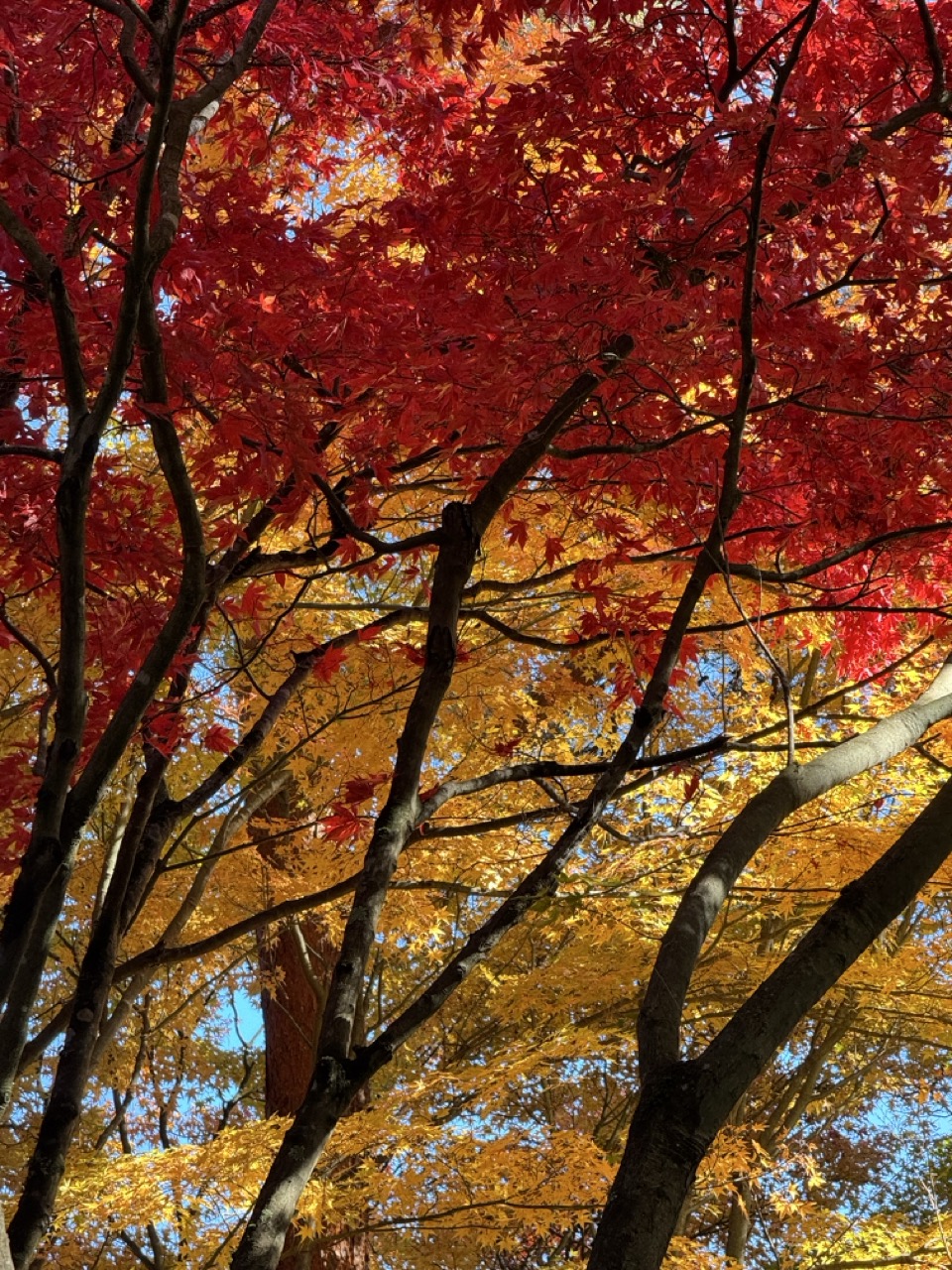
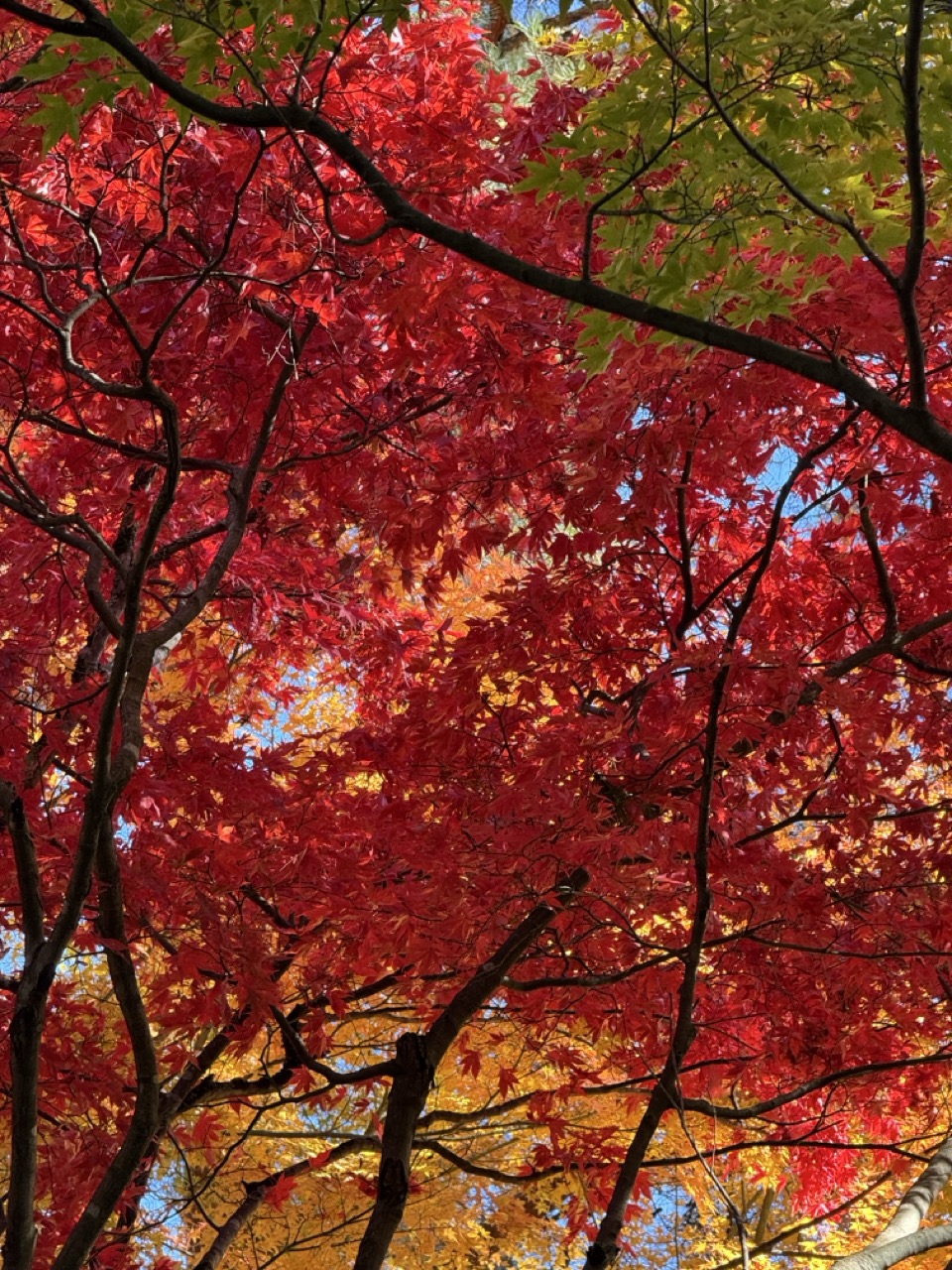
Mid November is close to the best moment for color at
Lake Kawaguchi, and it showed. One forecast
put the Momiji Corridor's peak around November 18, with the best viewing window running from November 14 to 23. The same page lists the town’s autumn leaves festival as running from November 7 to 29.
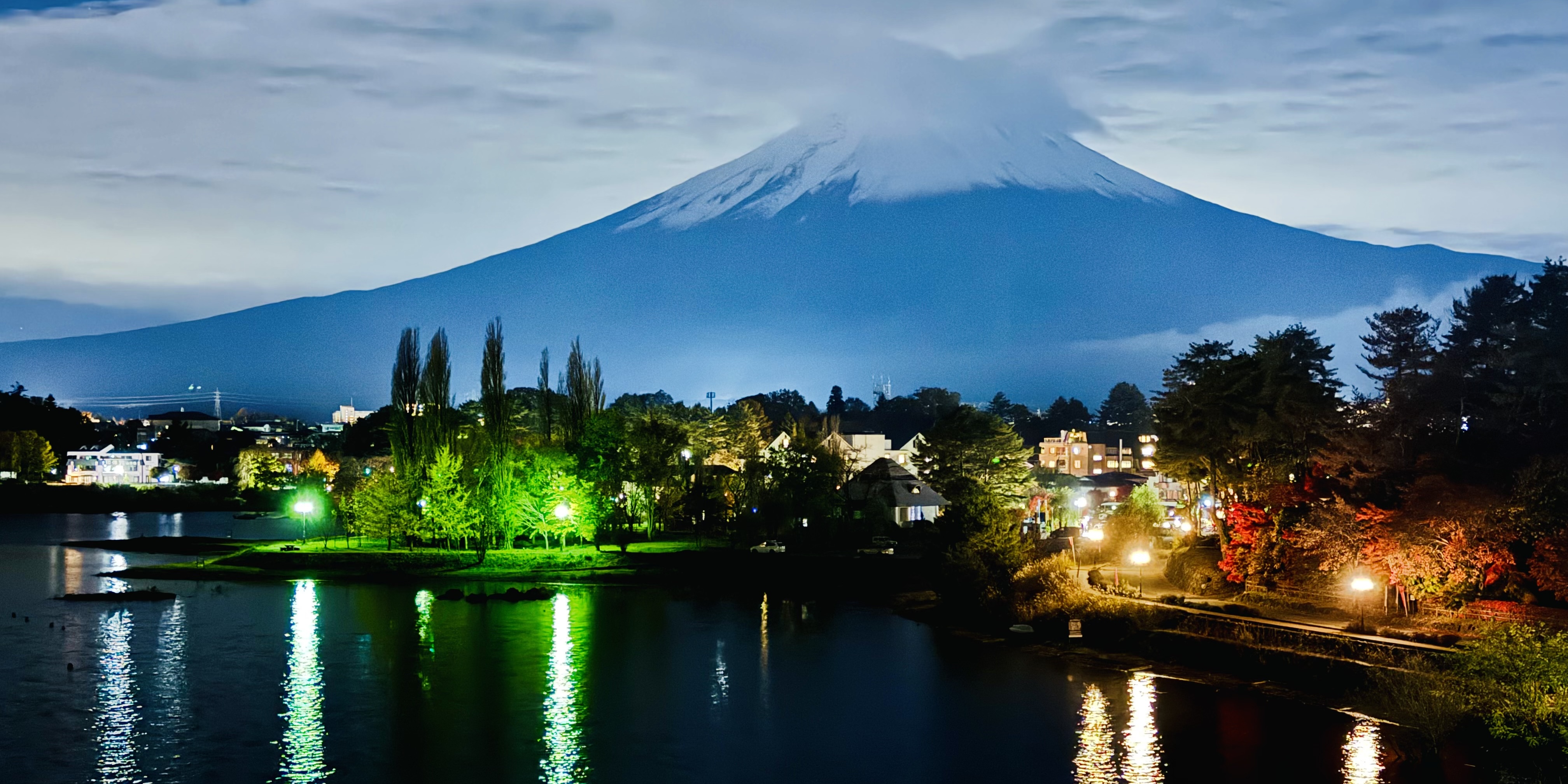
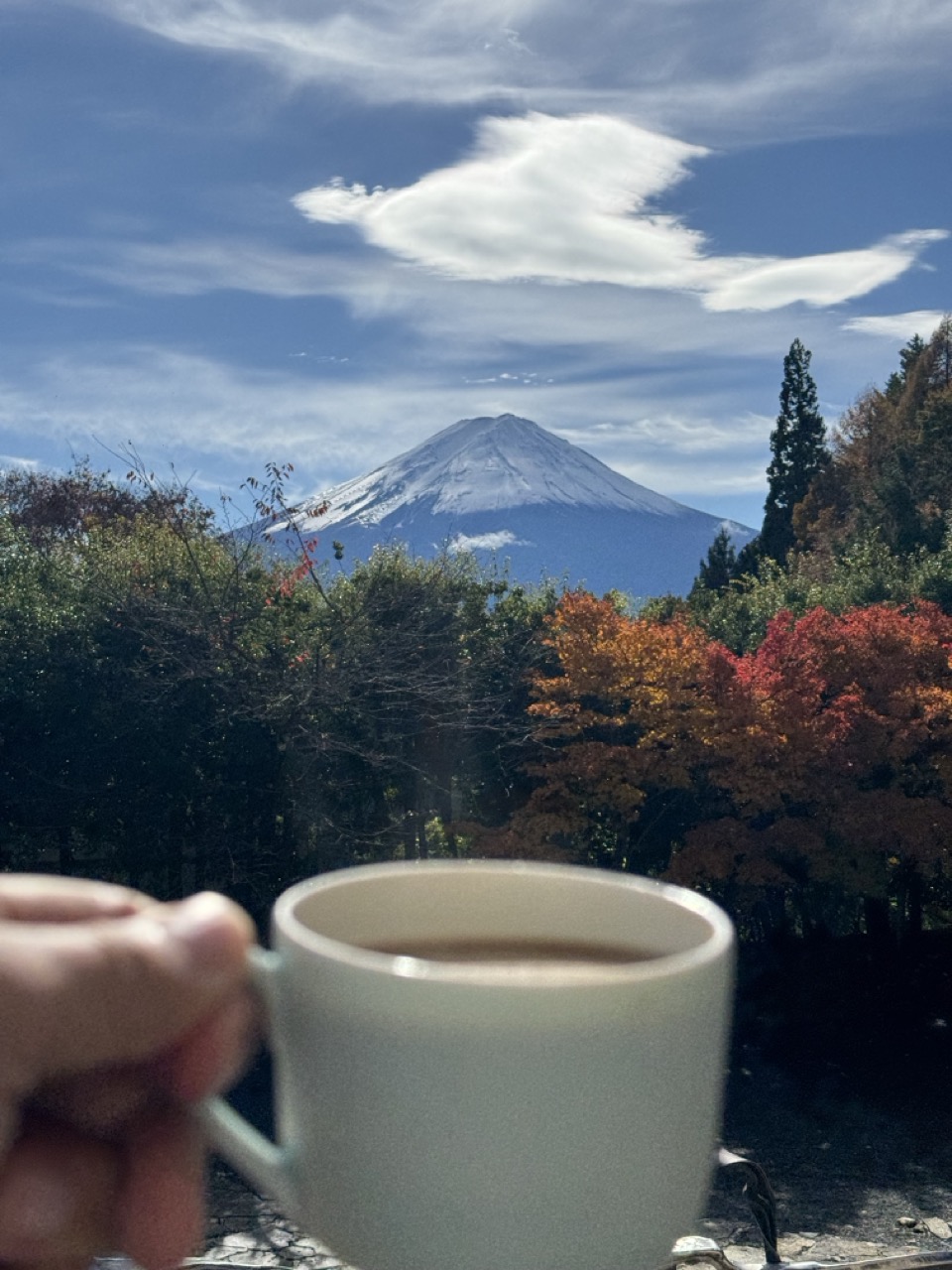
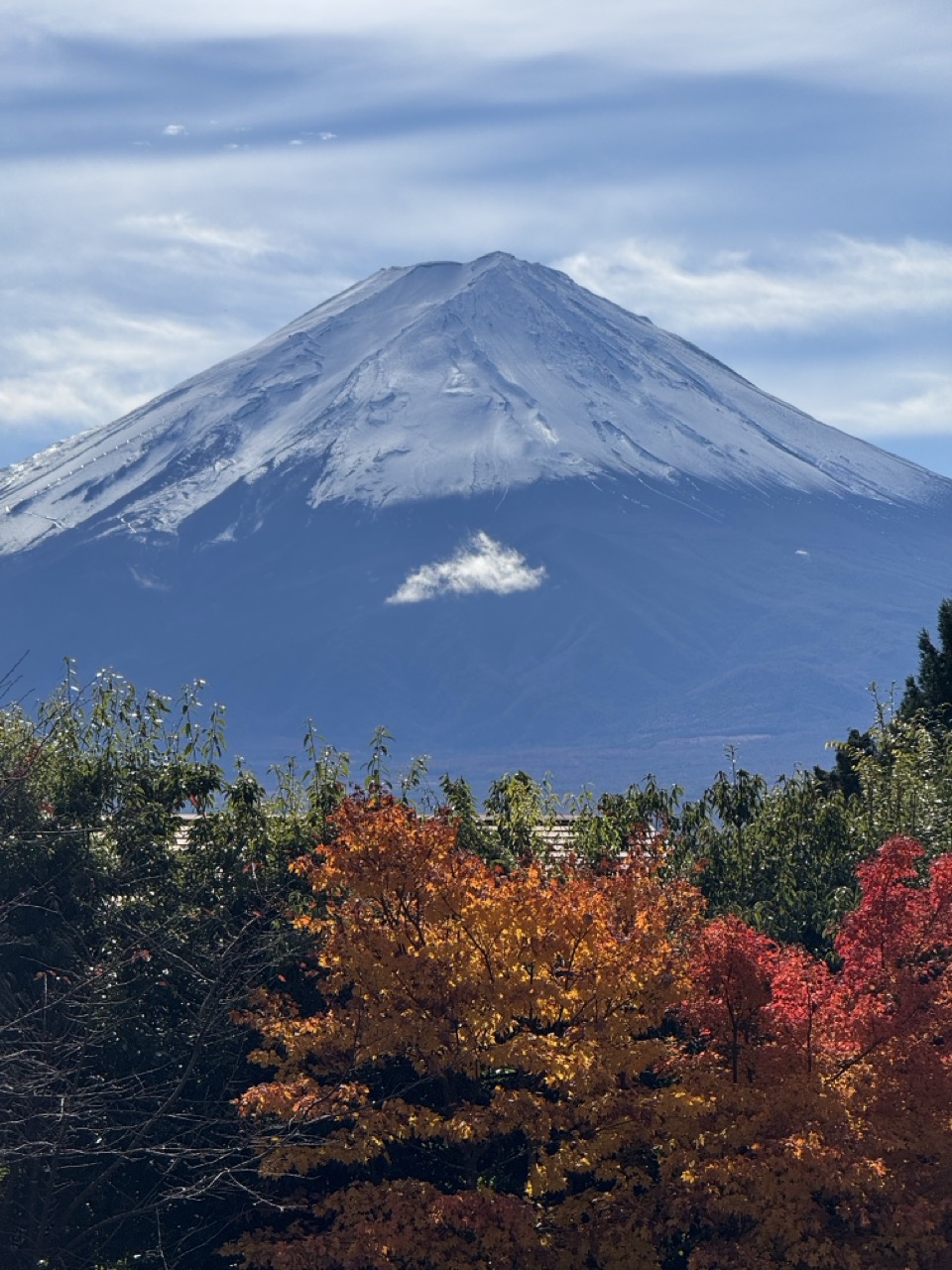
We got orange leaves almost everywhere we looked, and Mt. Fuji was in view across the trip, which is why most of the photos in this post look the way they do. We also got crowds. Plenty of other people had the same idea, so expect queues, full buses, and busy viewpoints even on a Wednesday and Thursday.
Getting There and Booking the Bus
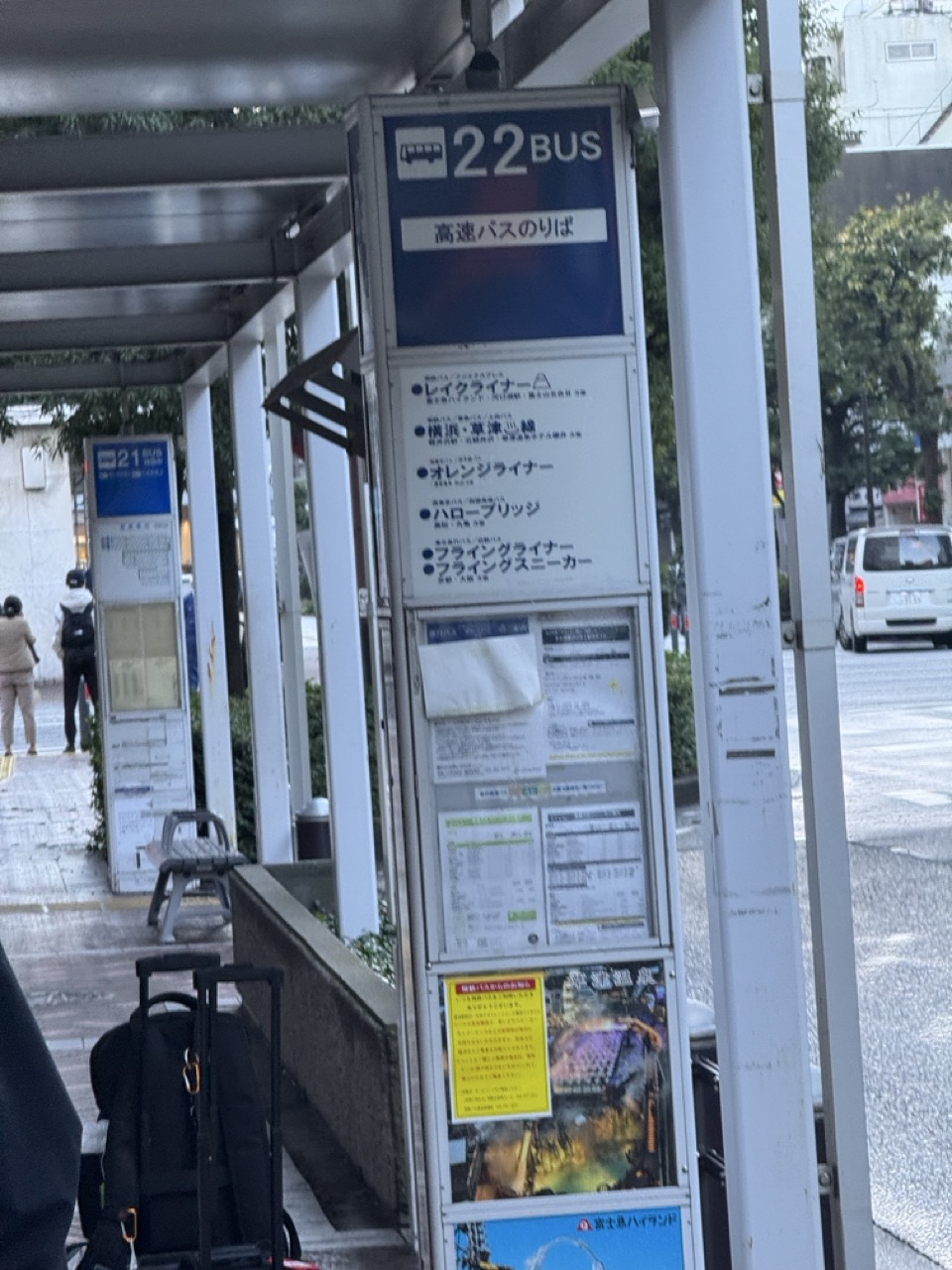
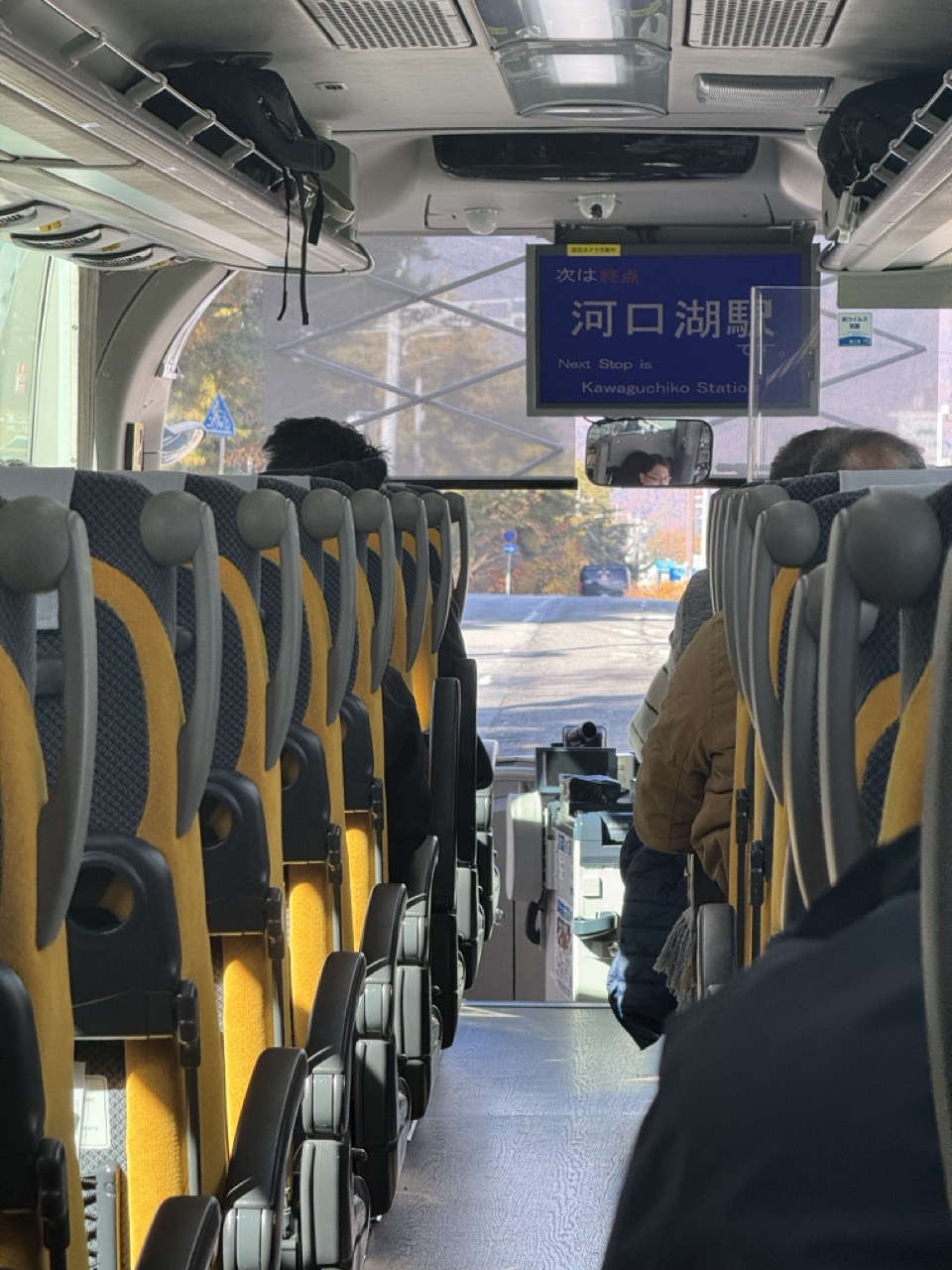
Book the bus first, then plan everything else around it. We took a booked 07:30 coach from Yokohama that was due at Kawaguchiko Station at 10:01, about two and a half hours. The Yokohama service runs on a much thinner schedule than the buses from Shinjuku. Booking ahead was cheaper for us, but the seats are limited and they fill up quickly, so a late decision can cost you a whole morning. Check the live timetable, because
Fujikyu Bus publishes the current timetables and fares can change without notice.
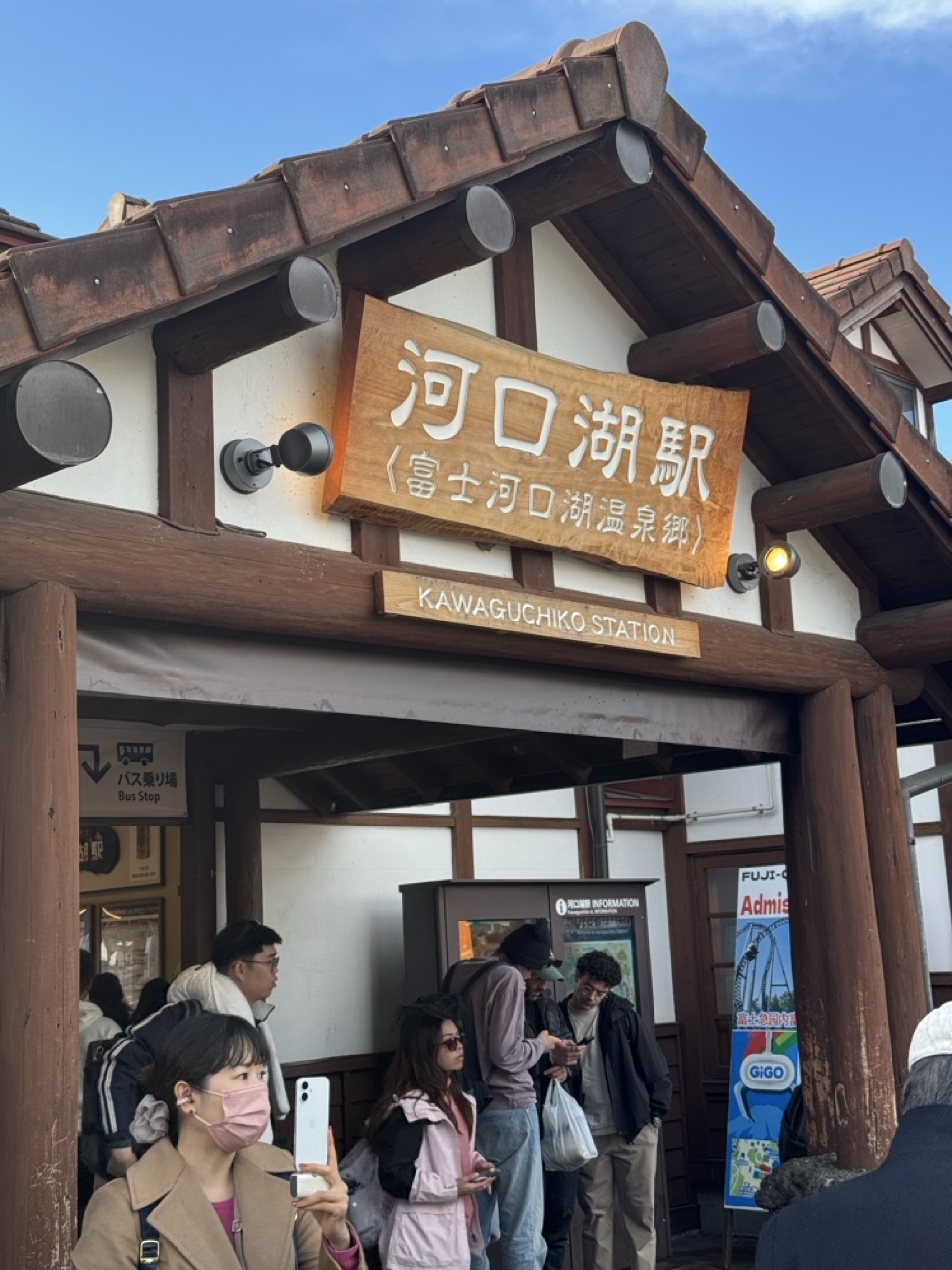
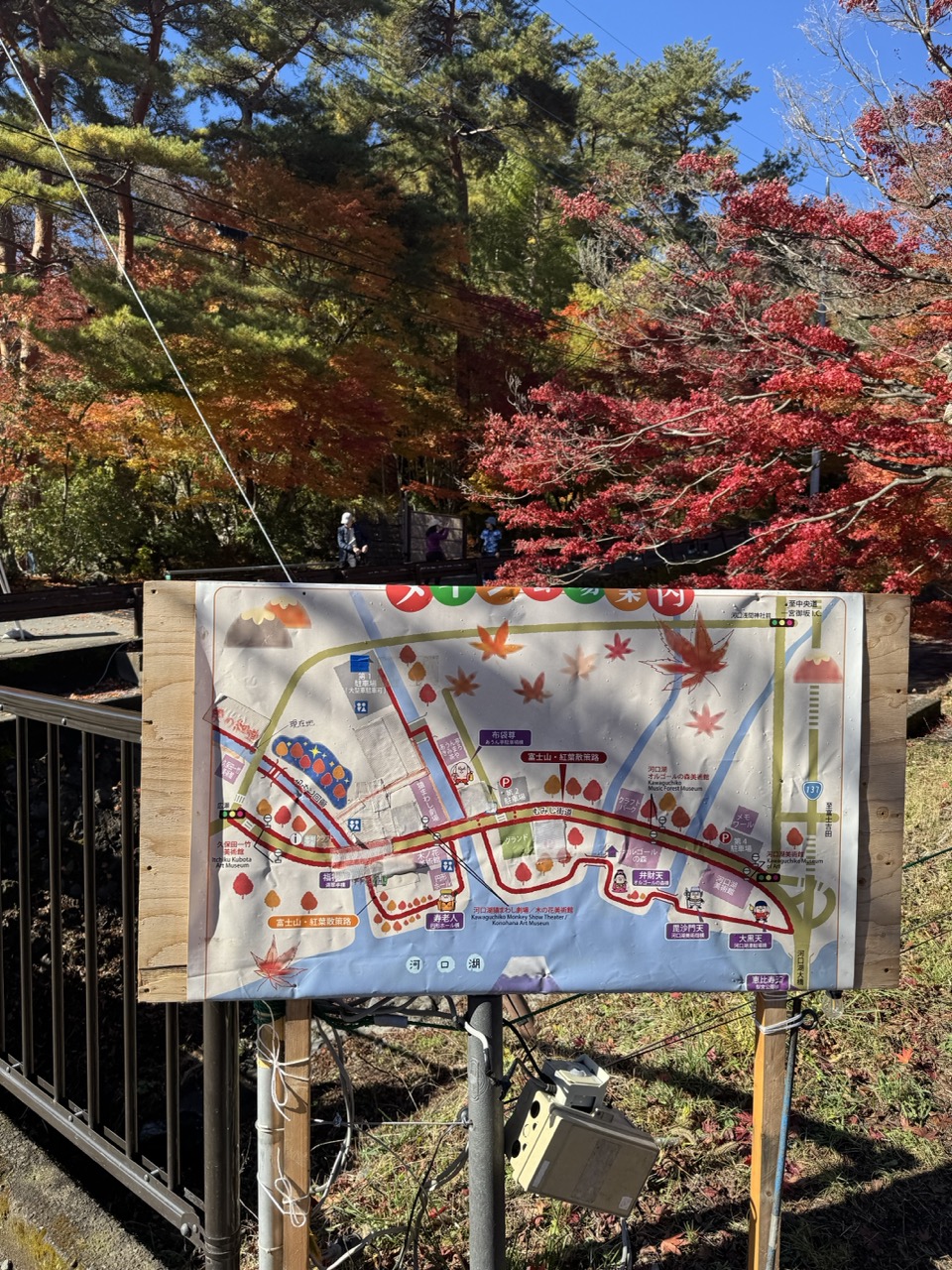
The Kawaguchiko Sightseeing Bus, known as the Red Line, does most of the work, and its numbered stops make the schedule easy to follow. Our plan used Stop 17 for the Kubota Itchiku
museum, Stop 15 for the Music Forest Museum, Stop 9 for the ropeway, and Stop 7 for the hotel.
A one day pass was ¥1,500 and a two day pass ¥2,000. The second day leans on the Fujikyu train and on walking, so the one day pass looks like enough for the first day. If you add extra stops, compare the single fares against the pass before you buy.
Day 1: Museum, Maples, and a Hoto Lunch
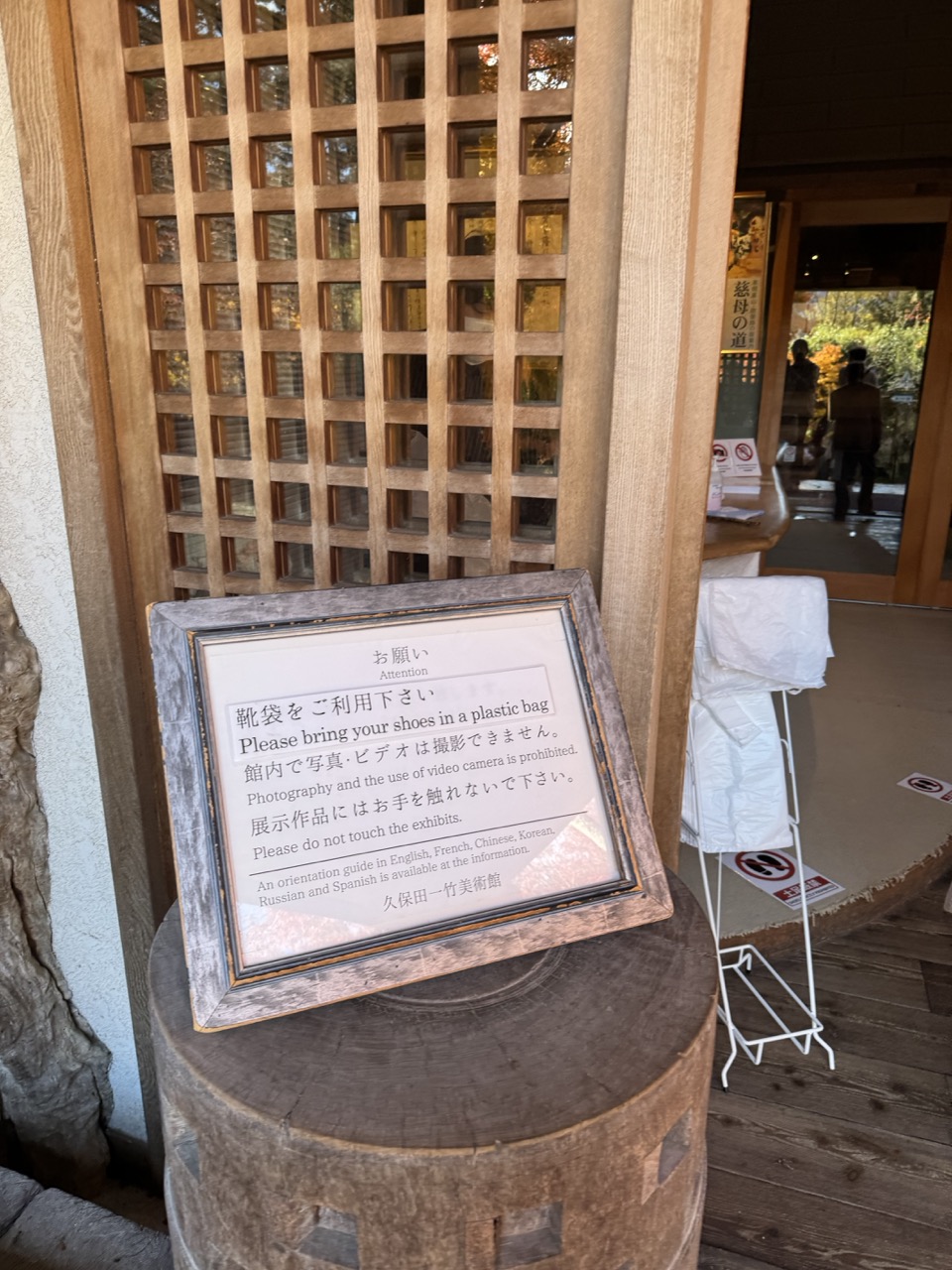
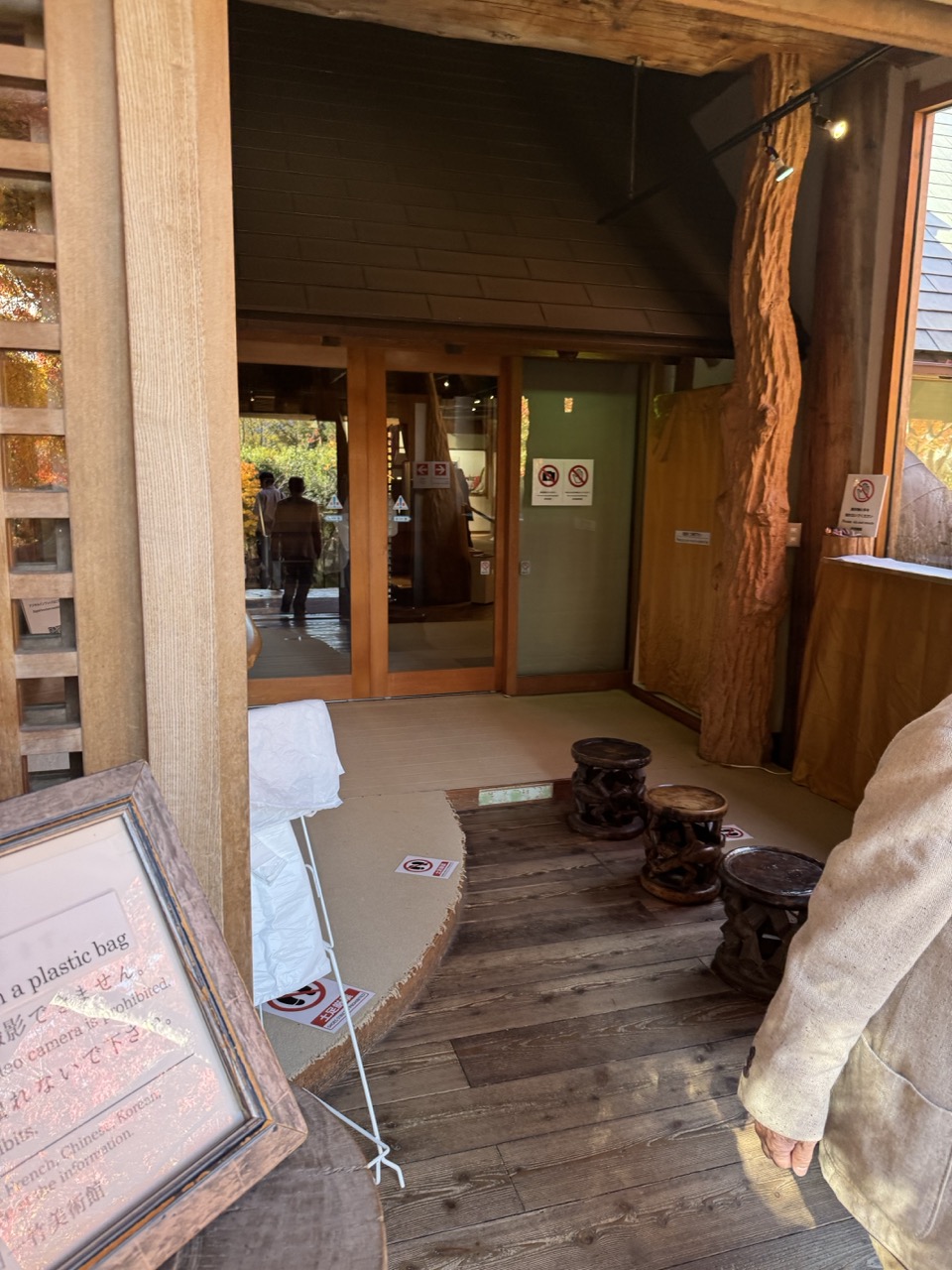
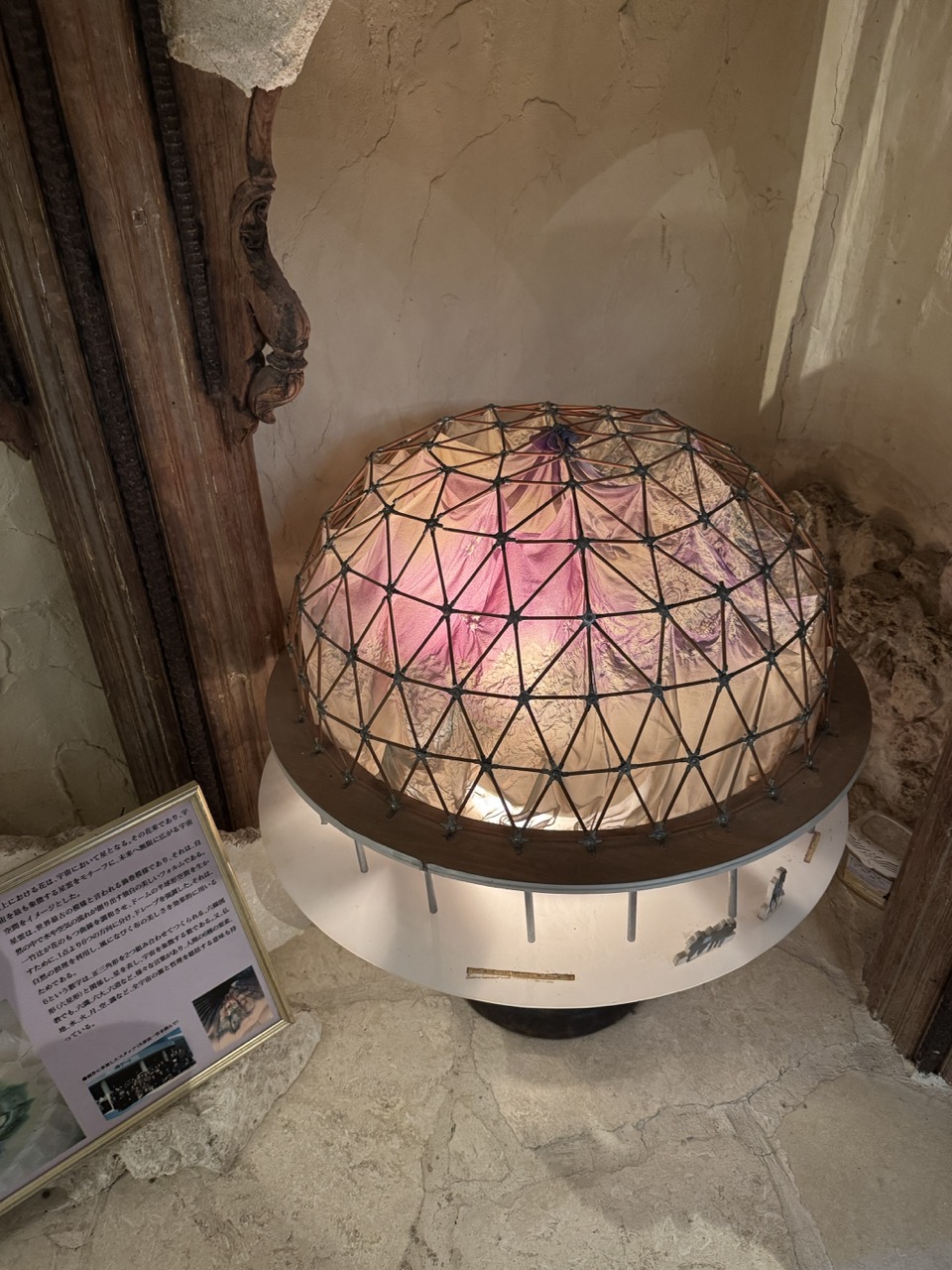
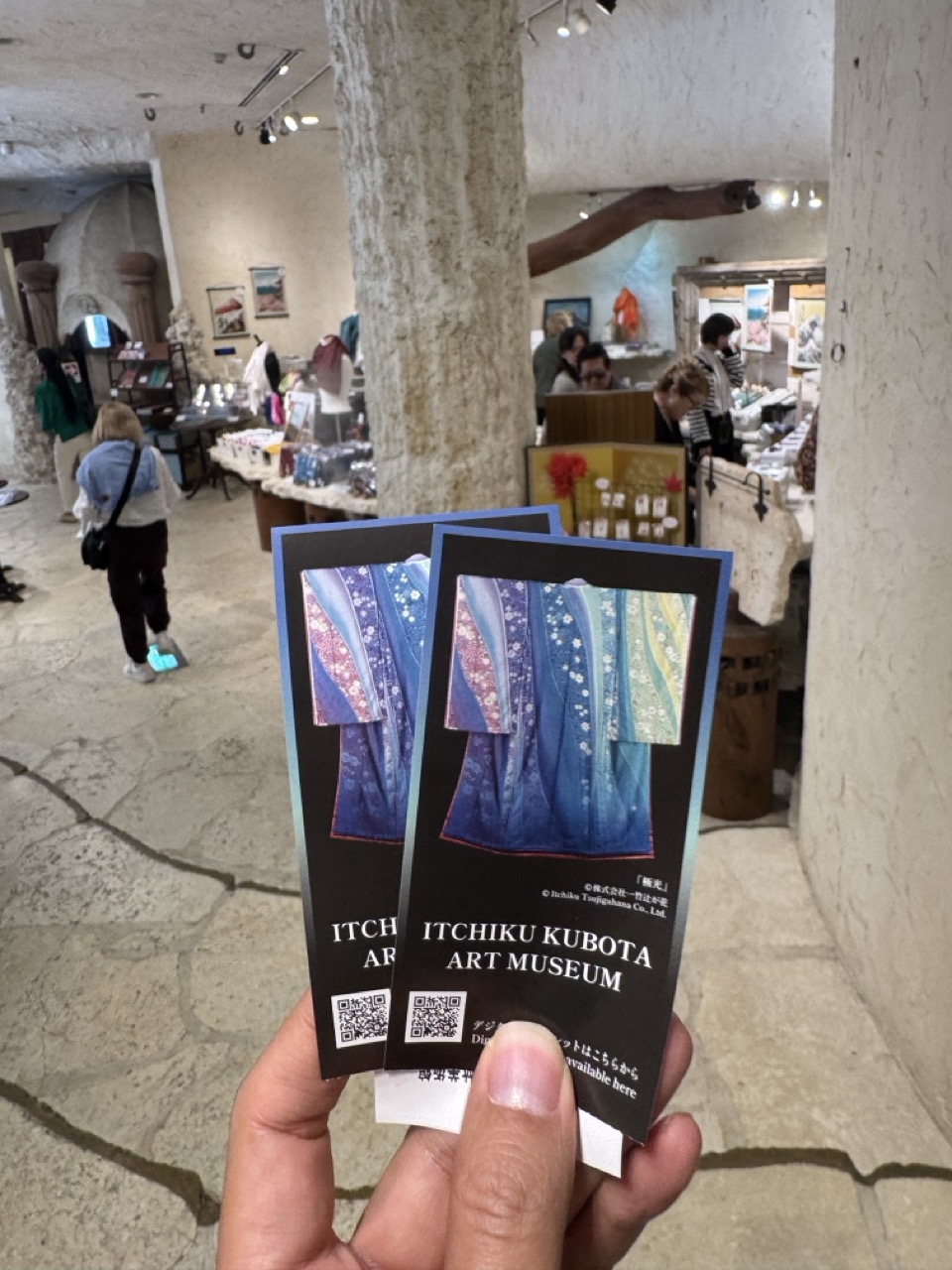
tart on the north shore, because the first stops sit close together. The plan was the Red Line at about 10:15 straight out to Stop 17, then the Kubota Itchiku Art Museum at 10:45. The museum deserves more time than you might expect. Itchiku Kubota was a textile artist who
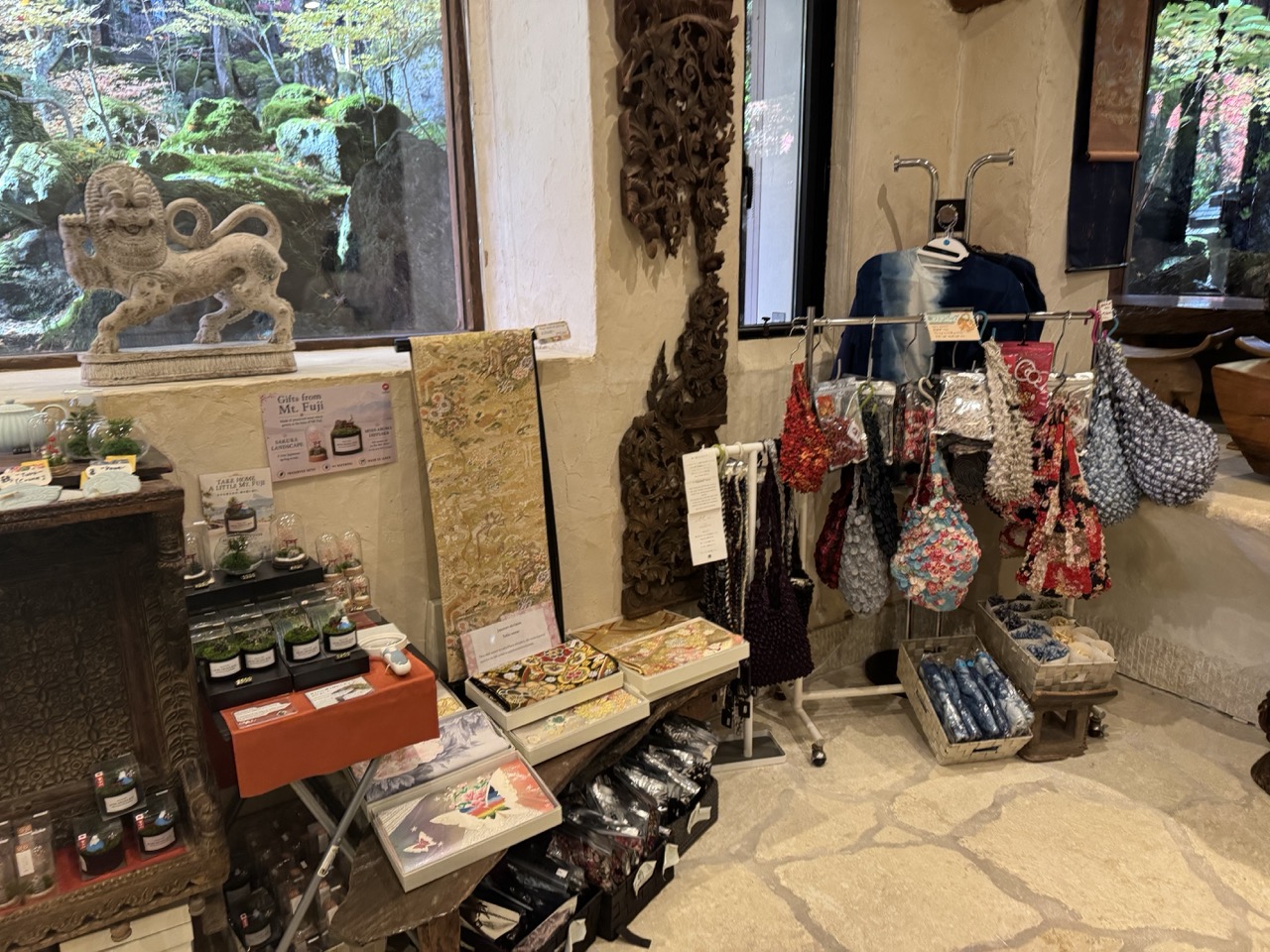
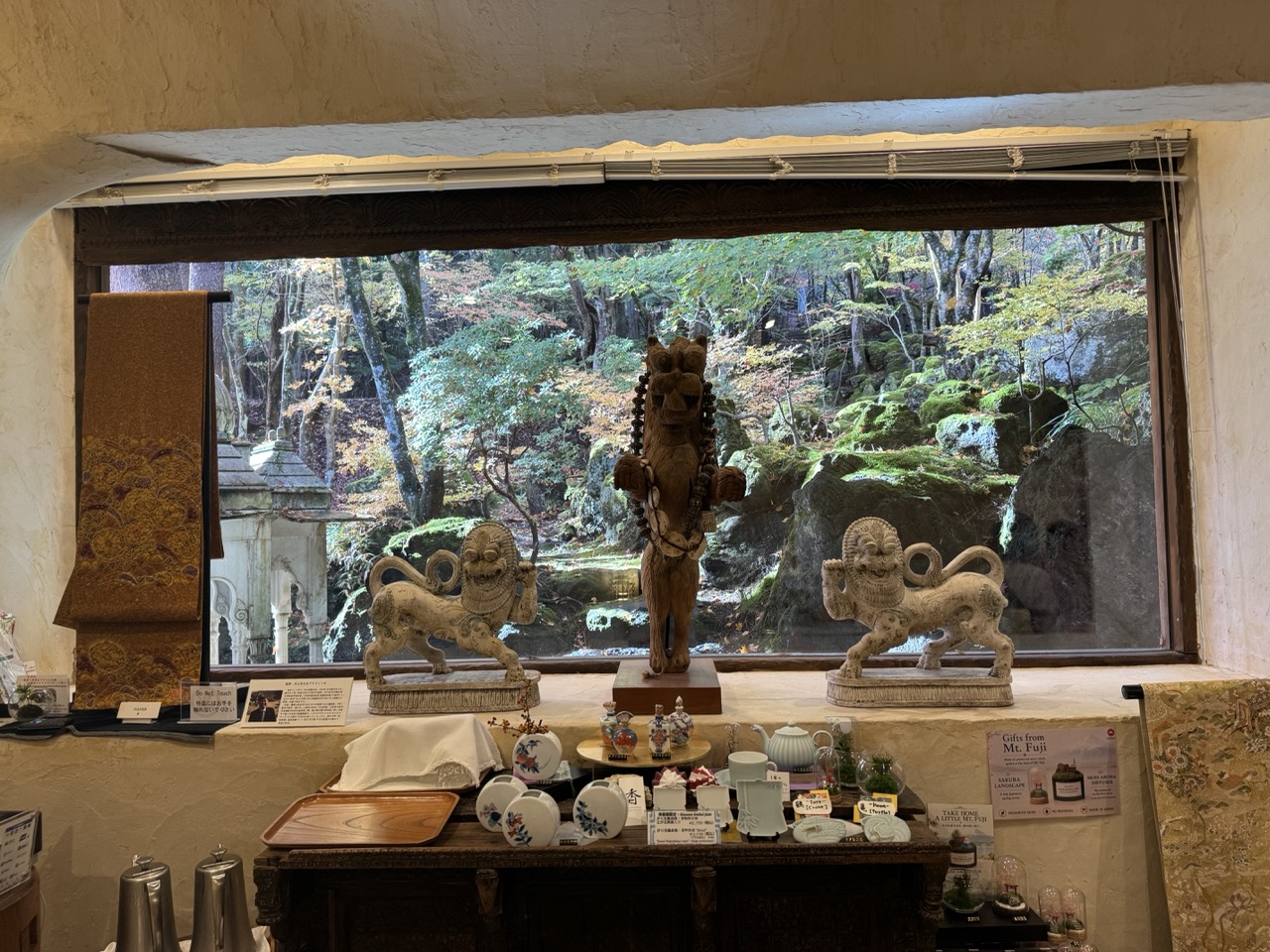
revived the lost Tsujigahana silk dyeing technique used on kimono in the Muromachi period, and the kimono on display are the main event. Up close, the colors and the fine dyed detail are what stay with you. The museum was
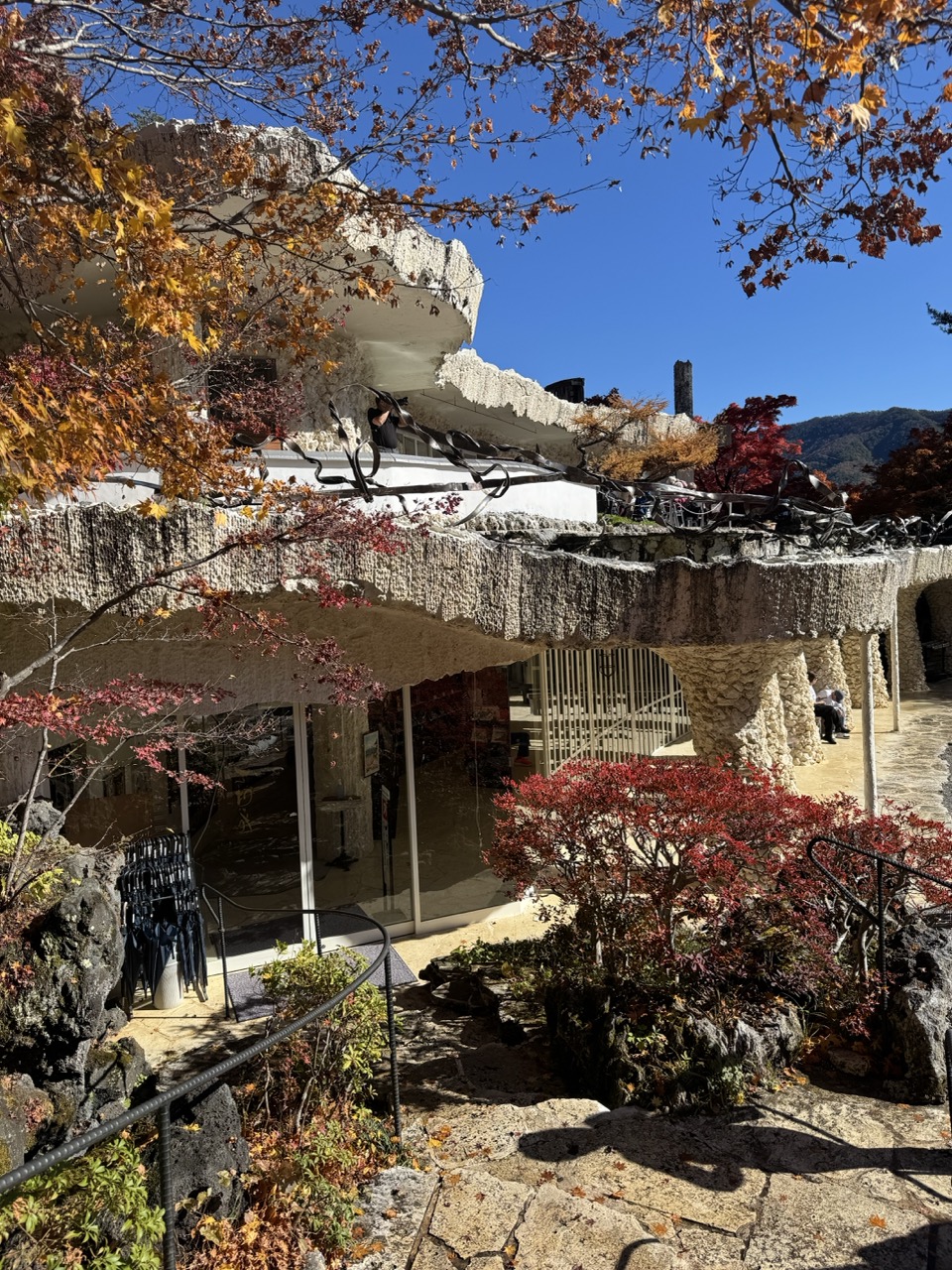
built in 1994 by Kubota himself as a permanent home for his work, and the gardens and buildings are part of that world, so leave time to walk outside and not only through the galleries. The Michelin Green Guide
awarded the museum three stars.
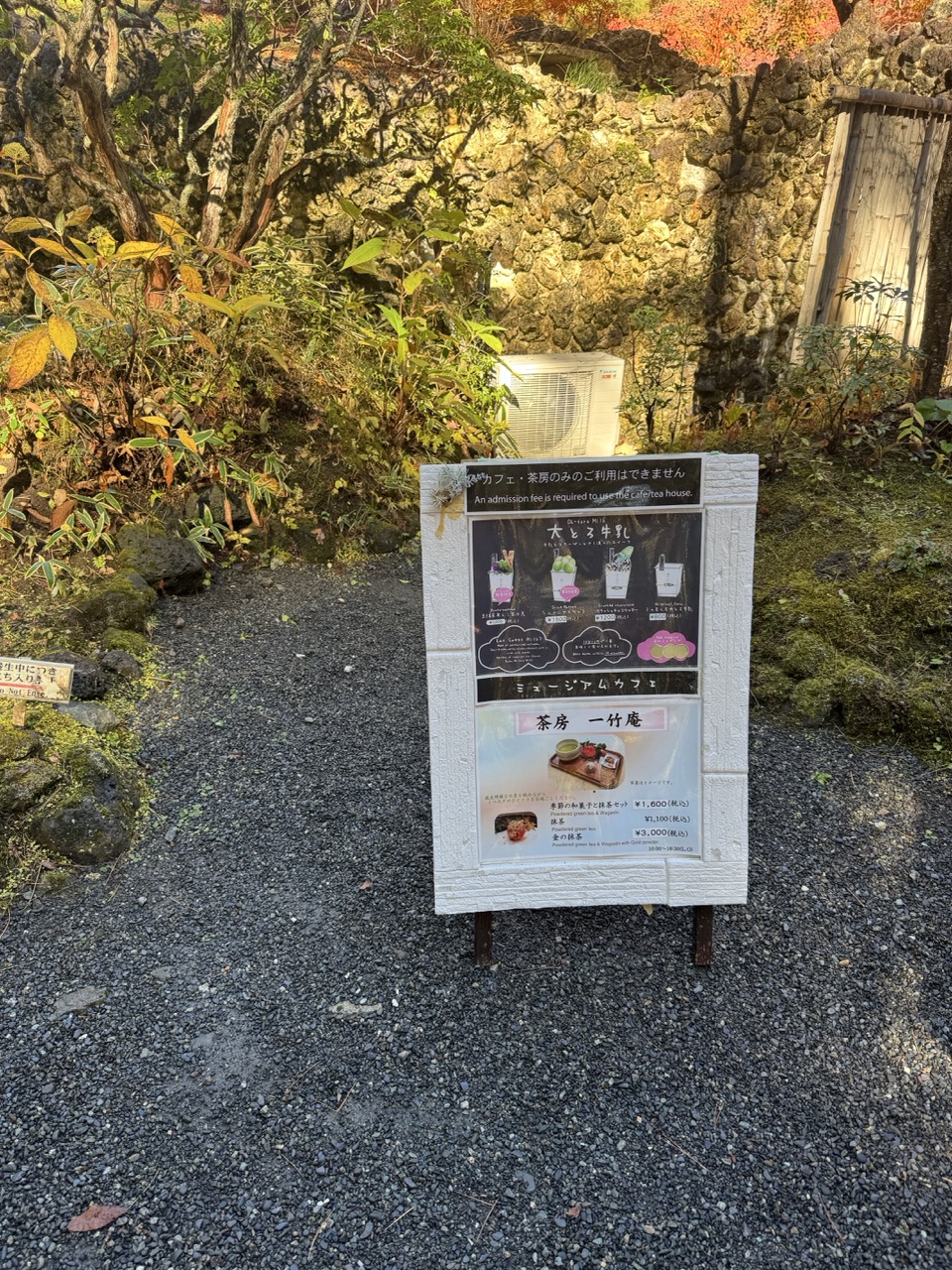
The museum also has a cafe facing Mt. Fuji, and the view alone makes it worth a stop. Orange leaves were all around the grounds, so the walk between the galleries, the
garden, and the cafe was one of the prettiest parts of the day.
Our schedule gave the museum about an hour, but with the kimono, the garden, and the cafe I would allow longer, one to one and a half hours.
Hours are 10:00 to 17:00 with a ¥1,500 ticket, and entry stops 30 minutes before closing.
A 5 to 10 minute walk away is the Momiji Corridor, a stretch of maples along a stream, and we planned about 30 minutes there. Entry is free and the festival lights it after sunset until about 9 pm, but
the sightseeing bus that serves it stops running far earlier, so work out your ride back before you stay for the lights.
Lunch was planned at Hoto Fudo North Main Store. Hoto is Yamanashi’s local dish, thick flat noodles in a miso broth with pumpkin and vegetables, and a bowl is filling.
The main store opens at 11:00 and closes at 20:00 or earlier when the noodles run out, and the listed budget is ¥1,000 to ¥2,000. Bring cash. The station branch is
listed as cash only, with portions big enough that some visitors struggle to finish, and our own schedule notes the main store as cash only too.
Where We Stayed and Why the Buffet Stole the Show
We stayed at Fuji Lake Hotel, Stop 7 on the Red Line. It is an older building but with strong views of the lake and Mt. Fuji.
Adults pay a bathing tax of ¥150 each at the front desk.
The first thing to do on arrival is book the private onsen at ¥3850. The lady at the personal check in service suggested it, and it requires a reservation, with only about 5 to 6 slots open for the whole day. The private onsen is on the 6th floor and has a direct view of Mt. Fuji. We were told the first booking, at 3:30 in the afternoon, is the best one for seeing the mountain, so we took that slot immediately. If you arrive later in the day, the good slots may already be gone, so ask about it at the desk before you head to your room.
The buffet dinner and the breakfast buffet were the best part of the stay for us. The drinks alone made it memorable: draft Asahi beer, an automatic sake dispenser, a good variety of wine, and a station where you mix your own cocktails. The food side had plenty of Japanese options too, including sushi and sashimi.
Dinner is a Japanese and Western buffet, and the hotel also runs a separate kaiseki style restaurant if you prefer a quieter meal. What your rate includes can differ from plan to plan, so check it before you pour a third glass.
Checkout is 10:00 for the west wing and 11:00 for the east wing, which let us eat breakfast without watching the clock.
Day 2: Sunrise, the Pagoda, and the Ropeway That Never Ran
The second day started early, and it was worth it. We woke up to catch the Mt. Fuji sunrise at 6:24 am from the observatory deck at the hotel, which has a clear view of the mountain at that hour. It was one of the best views of the whole trip, and you do not need to leave the building for it.
Because we were up so early, we stayed at the hotel until checkout at 11:00 and took the morning slowly. Then we headed to Chureito Pagoda, which sits at the top of 398 steps.
Entry is free and the viewpoint is open around the clock. From Kawaguchiko Station the Fujikyu train to Shimoyoshida takes about 13 minutes. Allow time for the walk after that, since
the walk to the shrine at about 25 minutes.
Lunch at Miura Udon with Yoshida Udon
Tucked into a quiet street about nine minutes from Shimoyoshida Station, Miura Udon is the original home of Yoshida udon, Fujiyoshida's beloved local noodle. Forget everything you know about soft, delicate udon: these noodles are famously thick, dense and unapologetically chewy, served in a hearty miso and soy broth with cabbage and tender horse meat for just ¥600 a bowl. It is a small lunch-only shop that locals swear by, the kind of place that closes by 2pm and sometimes sells out entirely, so arriving early is part of the ritual.
The plan for the afternoon was the Mt. Fuji Panoramic Ropeway at around 3pm, but unfortunately it was closed because of the strong wind, so we never got to go up. That is normal behavior for this lift, because
it can stop for lightning, high wind, or heavy snow. The round trip fare of ¥1,200 and hours of 8:30 to 17:00. On the day, check
the ropeway's own site before you walk over.
What I Would Do Differently
The trip worked wonderfully, and a few things to note while planning the trip.
- Book both buses as early as possible, since the Yokohama schedule is limited and seats go quickly.
- Book the private onsen as soon as you arrive, because only a handful of slots open each day.
- Set an alarm for the sunrise at the hotel observatory deck.
- Check the Music Forest Museum calendar for the day you plan to go, because listings show it closed on Wednesdays.
- Do not leave the ropeway for the afternoon, since a wind closure then leaves no time for a second try.
- Carry plenty of cash for the food and local restaurants.
Two days is enough to see Mt. Fuji, the maples, and one of the best known pagoda views in Japan, as long as you accept some crowds and a weather dependent ropeway. If you are going next autumn, book the buses first, pick a hotel with a good buffet, and leave a little slack in the second day.
Recent Posts